Program in Neuroscience, Washington University, St. Louis, Missouri, USA,
Cogn Affect Behav Neurosci. 2013 Dec;13(4):771-89. doi: 10.3758/s13415-013-0167-5.
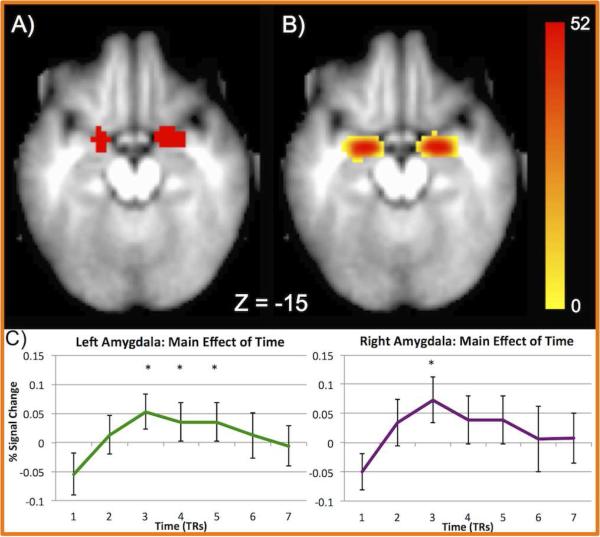
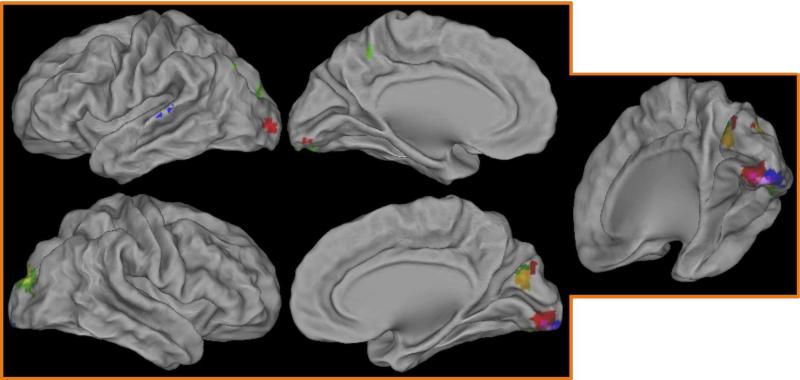
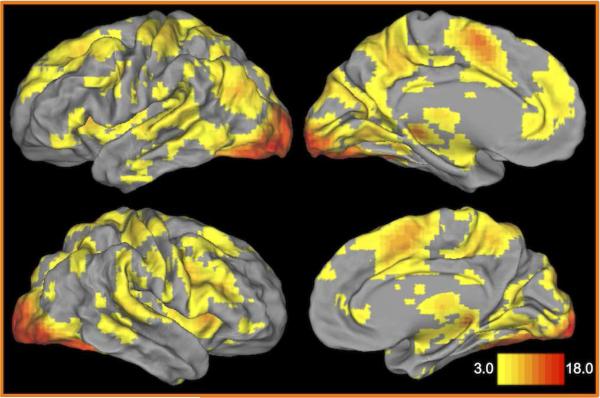
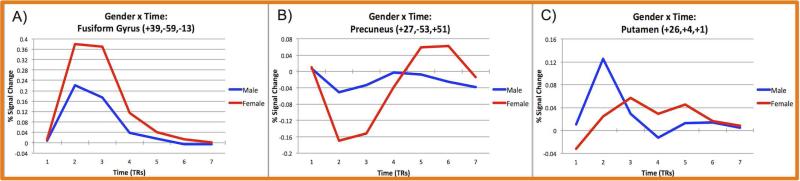
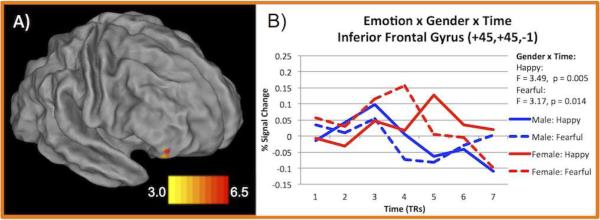
The amygdala is a key region in emotion processing. In particular, fMRI studies have demonstrated that the amygdala is active during the viewing of emotional faces. Previous research has consistently found greater amygdala responses to fearful than to neutral faces in adults, convergent with a focus in the animal literature on the amygdala's role in fear processing. Studies have shown that the amygdala also responds differentially to other facial emotion types in adults. Yet the literature regarding when this differential amygdala responsivity develops is limited and mixed. Thus, the goal of the present study was to examine amygdala responses to emotional and neutral faces in a relatively large sample of healthy school-age children (N = 52). Although the amygdala was active in response to emotional and neutral faces, the results did not support the hypothesis that the amygdala responds differentially to emotional faces in 7- to 12-year-old children. Nonetheless, amygdala activity was correlated with the severity of subclinical depression symptoms and with emotional regulation skills. Additionally, sex differences were observed in frontal, temporal, and visual regions, as well as effects of pubertal development in visual regions. These findings suggest important differences in amygdala reactivity in childhood.
杏仁核是情绪处理的关键区域。特别是, fMRI 研究表明,杏仁核在观看情绪面孔时会活跃。先前的研究一致发现,成年人对恐惧面孔的杏仁核反应大于对中性面孔的反应,这与动物文献中对杏仁核在恐惧处理中的作用的关注是一致的。研究表明,杏仁核在成年人中对其他面部情绪类型也有不同的反应。然而,关于这种杏仁核反应差异发展的文献是有限的,而且相互矛盾。因此,本研究的目的是在一个相对较大的健康学龄儿童样本(N=52)中检查杏仁核对情绪和中性面孔的反应。尽管杏仁核对情绪和中性面孔都有反应,但结果并不支持杏仁核对 7 至 12 岁儿童的情绪面孔有不同反应的假设。尽管如此,杏仁核活动与亚临床抑郁症状的严重程度以及情绪调节技能相关。此外,在前额、颞叶和视觉区域观察到性别差异,以及在视觉区域观察到青春期发育的影响。这些发现表明,在儿童时期,杏仁核的反应性存在重要差异。