Soler Bistué Alfonso J C, Birshan Daniel, Tomaras Andrew P, Dandekar Manisha, Tran Tung, Newmark Jason, Bui Duyen, Gupta Nisha, Hernandez Keziah, Sarno Renee, Zorreguieta Angeles, Actis Luis A, Tolmasky Marcelo E
Center for Applied Biotechnology Studies, Department of Biological Science, College of Natural Science and Mathematics, California State University Fullerton, Fullerton, California, United States of America.
PLoS One. 2008 Mar 19;3(3):e1800. doi: 10.1371/journal.pone.0001800.
Dissemination of antimicrobial resistance genes has become an important public health and biodefense threat. Plasmids are important contributors to the rapid acquisition of antibiotic resistance by pathogenic bacteria.
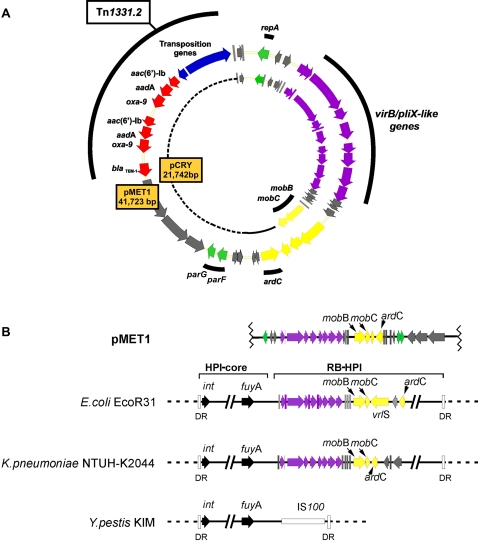
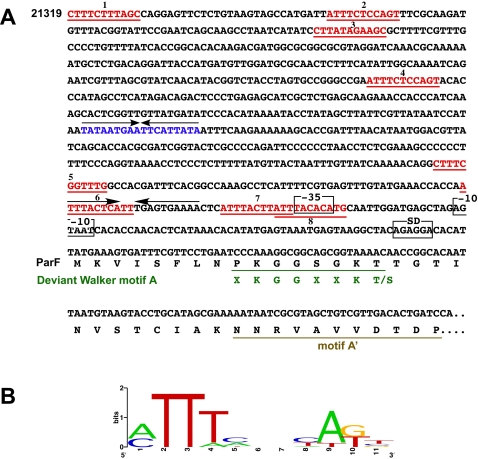
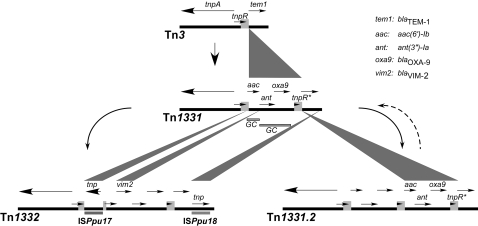
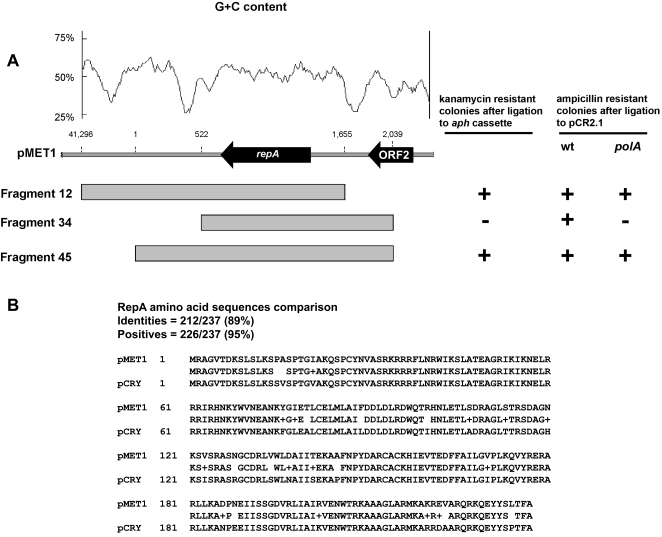
The nucleotide sequence of the Klebsiella pneumoniae multiresistance plasmid pMET1 comprises 41,723 bp and includes Tn1331.2, a transposon that carries the bla(TEM-1) gene and a perfect duplication of a 3-kbp region including the aac(6')-Ib, aadA1, and bla(OXA-9) genes. The replication region of pMET1 has been identified. Replication is independent of DNA polymerase I, and the replication region is highly related to that of the cryptic Yersinia pestis 91001 plasmid pCRY. The potential partition region has the general organization known as the parFG locus. The self-transmissible pMET1 plasmid includes a type IV secretion system consisting of proteins that make up the mating pair formation complex (Mpf) and the DNA transfer (Dtr) system. The Mpf is highly related to those in the plasmid pCRY, the mobilizable high-pathogenicity island from E. coli ECOR31 (HPI(ECOR31)), which has been proposed to be an integrative conjugative element (ICE) progenitor of high-pathogenicity islands in other Enterobacteriaceae including Yersinia species, and ICE(Kp1), an ICE found in a K. pneumoniae strain causing primary liver abscess. The Dtr MobB and MobC proteins are highly related to those of pCRY, but the endonuclease is related to that of plasmid pK245 and has no significant homology with the protein of similar function in pCRY. The region upstream of mobB includes the putative oriT and shares 90% identity with the same region in the HPI(ECOR31).
The comparative analyses of pMET1 with pCRY, HPI(ECOR31), and ICE(Kp1 )show a very active rate of genetic exchanges between Enterobacteriaceae including Yersinia species, which represents a high public health and biodefense threat due to transfer of multiple resistance genes to pathogenic Yersinia strains.
抗菌耐药基因的传播已成为重要的公共卫生和生物防御威胁。质粒是病原菌快速获得抗生素耐药性的重要因素。
肺炎克雷伯菌多重耐药质粒pMET1的核苷酸序列包含41,723 bp,包括Tn1331.2,这是一个携带bla(TEM-1)基因的转座子,以及一个3-kbp区域的完美重复序列,该区域包含aac(6')-Ib、aadA1和bla(OXA-9)基因。已鉴定出pMET1的复制区域。复制不依赖于DNA聚合酶I,且复制区域与隐秘的鼠疫耶尔森菌91001质粒pCRY的复制区域高度相关。潜在的分配区域具有称为parFG位点的一般结构。自我传递性pMET1质粒包括一个IV型分泌系统,该系统由构成交配配对形成复合物(Mpf)的蛋白质和DNA转移(Dtr)系统组成。Mpf与质粒pCRY、来自大肠杆菌ECOR31的可移动高致病性岛(HPI(ECOR31))中的Mpf高度相关,HPI(ECOR31)被认为是包括耶尔森菌属在内的其他肠杆菌科中高致病性岛的整合接合元件(ICE)祖细胞,以及ICE(Kp1),一种在引起原发性肝脓肿的肺炎克雷伯菌菌株中发现的ICE。Dtr MobB和MobC蛋白与pCRY的高度相关,但内切核酸酶与质粒pK245的相关,且与pCRY中具有相似功能的蛋白质无明显同源性。mobB上游区域包括假定的oriT,与HPI(ECOR31)中的相同区域具有90%的同一性。
对pMET1与pCRY、HPI(ECOR31)和ICE(Kp1)的比较分析表明,包括耶尔森菌属在内的肠杆菌科之间的基因交换率非常高,由于多种耐药基因转移到致病性耶尔森菌菌株,这代表着很高的公共卫生和生物防御威胁。