Schweinsburg Alecia D, Nagel Bonnie J, Schweinsburg Brian C, Park Ann, Theilmann Rebecca J, Tapert Susan F
University of California San Diego, Department of Psychology, 9500 Gilman Dr., 0109, La Jolla, CA 92093-0109, USA.
Psychiatry Res. 2008 May 30;163(1):40-51. doi: 10.1016/j.pscychresns.2007.04.018. Epub 2008 Mar 19.
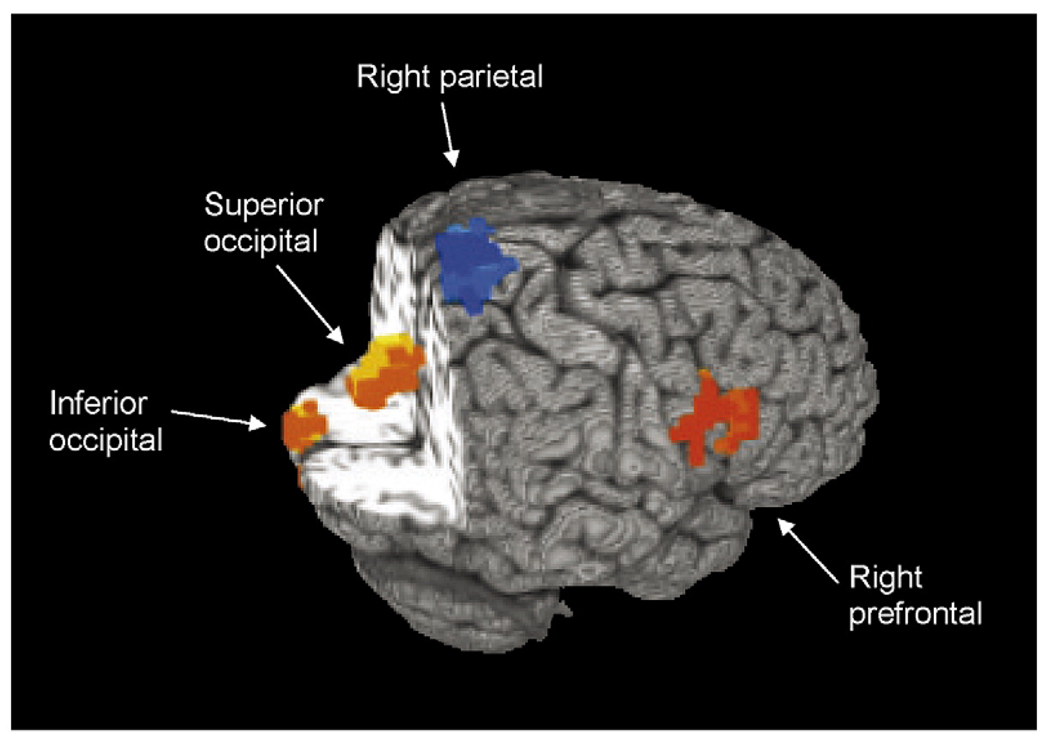
Marijuana is the most widely used illicit substance among teenagers, yet little is known about the possible neural influence of heavy marijuana use during adolescence. We previously demonstrated an altered functional magnetic resonance imaging (fMRI) activity related to spatial working memory (SWM) among adolescents who were heavy users of after an average of 8 days of abstinence, but the persisting neural effects remain unclear. To characterize the potentially persisting neurocognitive effects of heavy marijuana use in adolescence, we examined fMRI response during SWM among abstinent marijuana-using teens. Participants were 15 MJ teens and 17 demographically similar non-using controls, ages 16-18. Teens underwent biweekly urine toxicology screens to ensure abstinence for 28 days before fMRI acquisition. Groups performed similarly on the SWM task, but MJ teens demonstrated lower activity in right dorsolateral prefrontal and occipital cortices, yet significantly more activation in right posterior parietal cortex. MJ teens showed abnormalities in brain response during a SWM task compared with controls, even after 1 month of abstinence. The activation pattern among MJ teens may reflect different patterns of utilization of spatial rehearsal and attention strategies, and could indicate altered neurodevelopment or persisting abnormalities associated with heavy marijuana use in adolescence.
大麻是青少年中使用最广泛的非法物质,但对于青春期大量使用大麻可能产生的神经影响却知之甚少。我们之前证明,在平均8天的戒断期后,大量使用大麻的青少年在与空间工作记忆(SWM)相关的功能磁共振成像(fMRI)活动上出现了改变,但持续的神经影响仍不清楚。为了描述青春期大量使用大麻可能持续存在的神经认知影响,我们检查了戒断大麻的青少年在执行SWM任务时的fMRI反应。参与者为15名使用大麻的青少年和17名年龄在16 - 18岁、人口统计学特征相似的非使用者对照组。青少年每两周接受一次尿液毒理学筛查,以确保在进行fMRI扫描前28天保持戒断状态。两组在SWM任务中的表现相似,但使用大麻的青少年在右侧背外侧前额叶和枕叶皮质的活动较低,而在右侧顶叶后皮质的激活明显更多。与对照组相比,即使在戒断1个月后,使用大麻的青少年在SWM任务期间的大脑反应仍存在异常。使用大麻的青少年的激活模式可能反映了空间排练和注意力策略的不同使用模式,并且可能表明与青春期大量使用大麻相关的神经发育改变或持续异常。