Malaval Luc, Wade-Guéye Ndéyé Marième, Boudiffa Maya, Fei Jia, Zirngibl Ralph, Chen Frieda, Laroche Norbert, Roux Jean-Paul, Burt-Pichat Brigitte, Duboeuf François, Boivin Georges, Jurdic Pierre, Lafage-Proust Marie-Hélène, Amédée Joëlle, Vico Laurence, Rossant Janet, Aubin Jane E
Institut National de Santé et de Recherche Médicale U890, IFR 143, Université Jean-Monnet, Saint-Etienne, F42023, France.
J Exp Med. 2008 May 12;205(5):1145-53. doi: 10.1084/jem.20071294. Epub 2008 May 5.
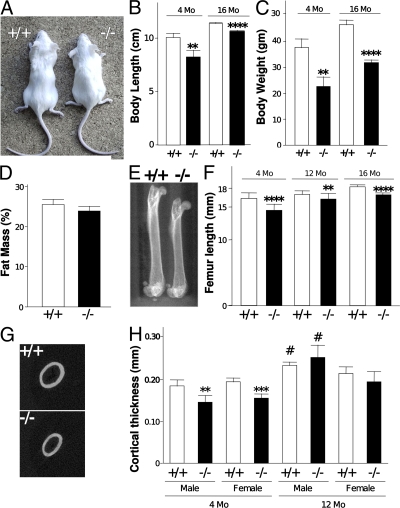
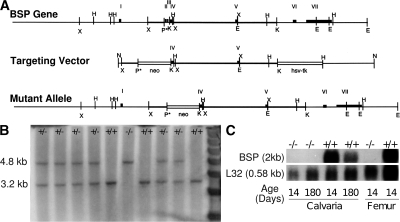
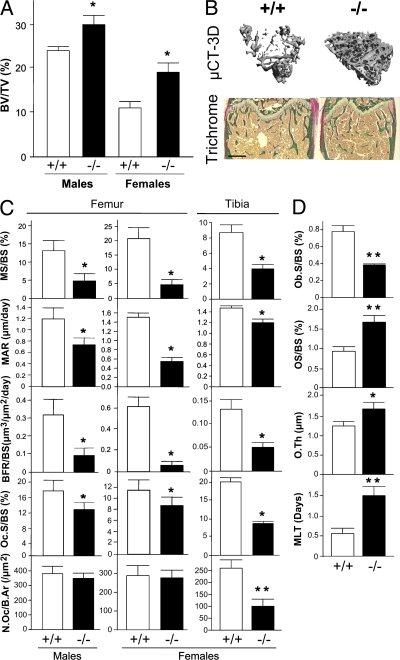
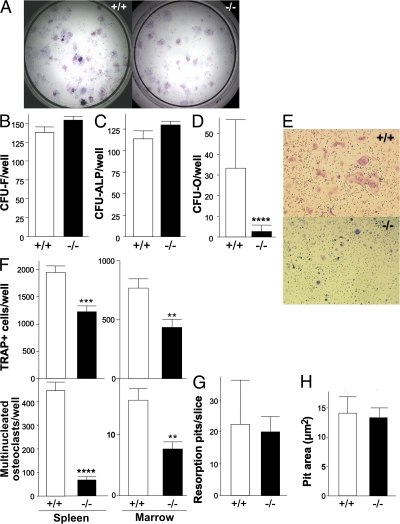
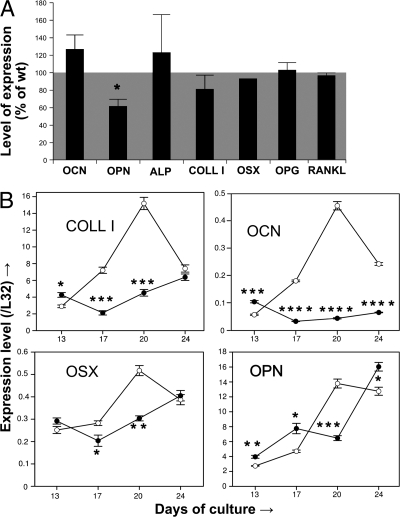
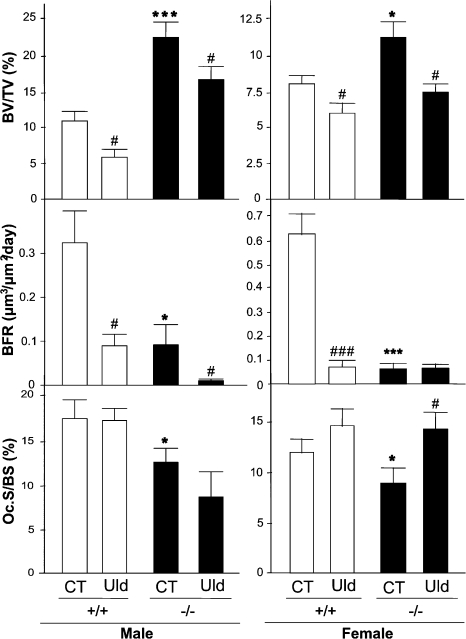
Bone sialoprotein (BSP) and osteopontin (OPN) are both highly expressed in bone, but their functional specificities are unknown. OPN knockout (-/-) mice do not lose bone in a model of hindlimb disuse (tail suspension), showing the importance of OPN in bone remodeling. We report that BSP(-/-) mice are viable and breed normally, but their weight and size are lower than wild-type (WT) mice. Bone is undermineralized in fetuses and young adults, but not in older (> or =12 mo) BSP(-/-) mice. At 4 mo, BSP(-/-) mice display thinner cortical bones than WT, but greater trabecular bone volume with very low bone formation rate, which indicates reduced resorption, as confirmed by lower osteoclast surfaces. Although the frequency of total colonies and committed osteoblast colonies is the same, fewer mineralized colonies expressing decreased levels of osteoblast markers form in BSP(-/-) versus WT bone marrow stromal cultures. BSP(-/-) hematopoietic progenitors form fewer osteoclasts, but their resorptive activity on dentin is normal. Tail-suspended BSP(-/-) mice lose bone in hindlimbs, as expected. In conclusion, BSP deficiency impairs bone growth and mineralization, concomitant with dramatically reduced bone formation. It does not, however, prevent the bone loss resulting from loss of mechanical stimulation, a phenotype that is clearly different from OPN(-/-) mice.
骨唾液蛋白(BSP)和骨桥蛋白(OPN)在骨组织中均高表达,但其功能特异性尚不清楚。在一种后肢废用模型(尾部悬吊)中,OPN基因敲除(-/-)小鼠并未出现骨质流失,这表明OPN在骨重塑中具有重要作用。我们报告称,BSP基因敲除(-/-)小鼠能够存活且繁殖正常,但其体重和体型小于野生型(WT)小鼠。胎儿和年轻成年BSP基因敲除(-/-)小鼠的骨骼矿化不足,但老年(≥12月龄)BSP基因敲除(-/-)小鼠则无此现象。4月龄时,BSP基因敲除(-/-)小鼠的皮质骨比野生型小鼠薄,但小梁骨体积更大,骨形成率极低,这表明骨吸收减少,破骨细胞表面减少也证实了这一点。虽然总集落和定向成骨细胞集落的频率相同,但与野生型骨髓基质培养相比,BSP基因敲除(-/-)小鼠形成的矿化集落较少,且成骨细胞标志物水平降低。BSP基因敲除(-/-)造血祖细胞形成的破骨细胞较少,但其对牙本质的吸收活性正常。正如预期的那样,尾部悬吊的BSP基因敲除(-/-)小鼠后肢出现骨质流失。总之,BSP缺乏会损害骨生长和矿化,同时骨形成显著减少。然而,它并不能预防因机械刺激丧失导致的骨质流失,这一表型与OPN基因敲除(-/-)小鼠明显不同。