Bakkum Douglas J, Chao Zenas C, Potter Steve M
Laboratory for Neuroengineering, Coulter Department of Biomedical Engineering, Georgia Institute of Technology and Emory University School of Medicine, Atlanta, Georgia, United States of America.
PLoS One. 2008 May 7;3(5):e2088. doi: 10.1371/journal.pone.0002088.
The precise temporal control of neuronal action potentials is essential for regulating many brain functions. From the viewpoint of a neuron, the specific timings of afferent input from the action potentials of its synaptic partners determines whether or not and when that neuron will fire its own action potential. Tuning such input would provide a powerful mechanism to adjust neuron function and in turn, that of the brain. However, axonal plasticity of action potential timing is counter to conventional notions of stable propagation and to the dominant theories of activity-dependent plasticity focusing on synaptic efficacies.
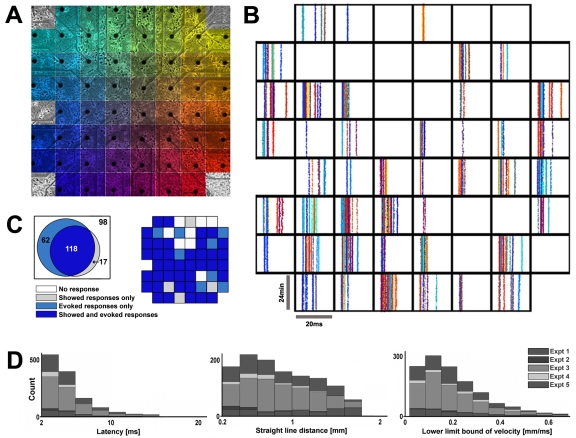
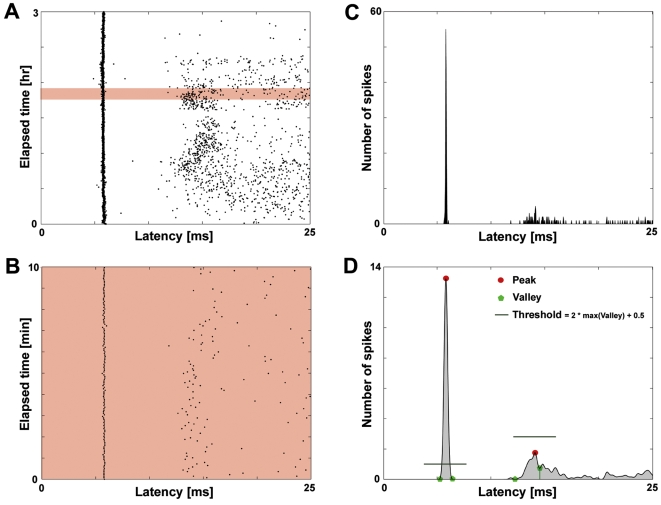
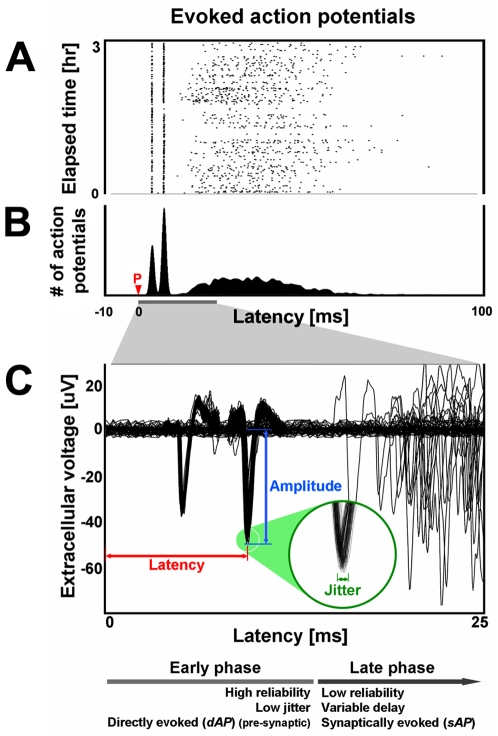
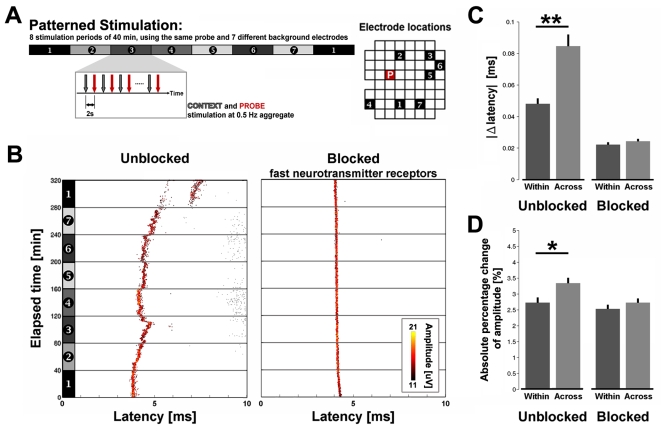
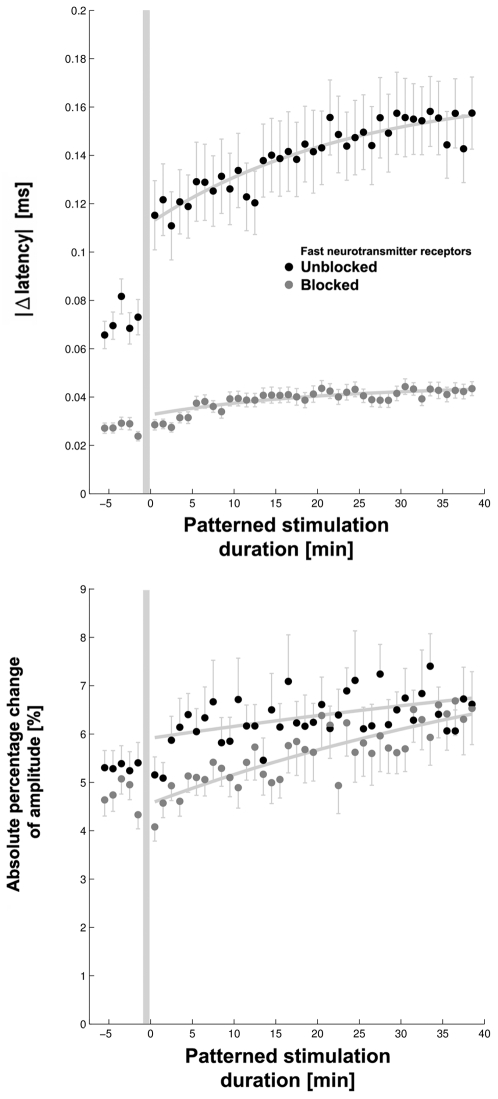
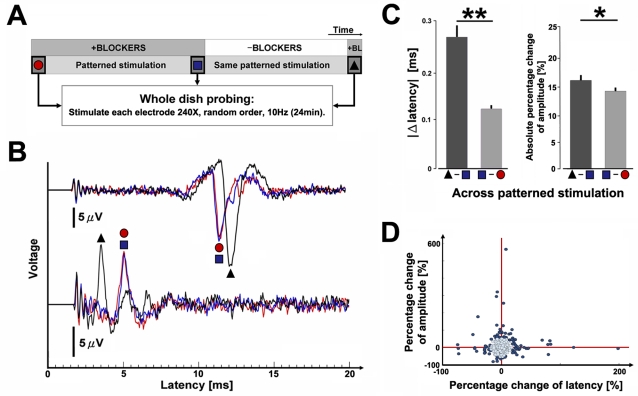
METHODOLOGY/PRINCIPAL FINDINGS: Here we show the occurrence of activity-dependent plasticity of action potential propagation delays (up to 4 ms or 40% after minutes and 13 ms or 74% after hours) and amplitudes (up to 87%). We used a multi-electrode array to induce, detect, and track changes in propagation in multiple neurons while they adapted to different patterned stimuli in controlled neocortical networks in vitro. The changes did not occur when the same stimulation was repeated while blocking ionotropic gabaergic and glutamatergic receptors. Even though induction of changes in action potential timing and amplitude depended on synaptic transmission, the expression of these changes persisted in the presence of the synaptic receptor blockers.
CONCLUSIONS/SIGNIFICANCE: We conclude that, along with changes in synaptic efficacy, propagation plasticity provides a cellular mechanism to tune neuronal network function in vitro and potentially learning and memory in the brain.
神经元动作电位的精确时间控制对于调节多种脑功能至关重要。从神经元的角度来看,其突触伙伴动作电位传入输入的特定时间决定了该神经元是否以及何时会产生自身的动作电位。调节这种输入将提供一种强大的机制来调整神经元功能,进而调整大脑功能。然而,动作电位时间的轴突可塑性与稳定传播的传统观念以及专注于突触效能的活动依赖性可塑性的主流理论相悖。
方法/主要发现:在此我们展示了动作电位传播延迟(数分钟后可达4毫秒或40%,数小时后可达13毫秒或74%)和幅度(高达87%)的活动依赖性可塑性的发生。我们使用多电极阵列在多个神经元适应体外受控新皮质网络中的不同模式刺激时诱导、检测和追踪传播变化。当在阻断离子型γ-氨基丁酸能和谷氨酸能受体的同时重复相同刺激时,变化并未发生。尽管动作电位时间和幅度变化的诱导依赖于突触传递,但这些变化在存在突触受体阻滞剂的情况下仍持续存在。
结论/意义:我们得出结论,除了突触效能的变化外,传播可塑性提供了一种细胞机制,以在体外调节神经元网络功能,并可能调节大脑中的学习和记忆。