Zhang Yuhang, Andl Thomas, Yang Steven H, Teta Monica, Liu Fei, Seykora John T, Tobias John W, Piccolo Stefano, Schmidt-Ullrich Ruth, Nagy Andras, Taketo Makoto M, Dlugosz Andrzej A, Millar Sarah E
Department of Dermatology and Cell and Developmental Biology, University of Pennsylvania School of Medicine, Philadelphia, PA 19104, USA.
Development. 2008 Jun;135(12):2161-72. doi: 10.1242/dev.017459. Epub 2008 May 14.
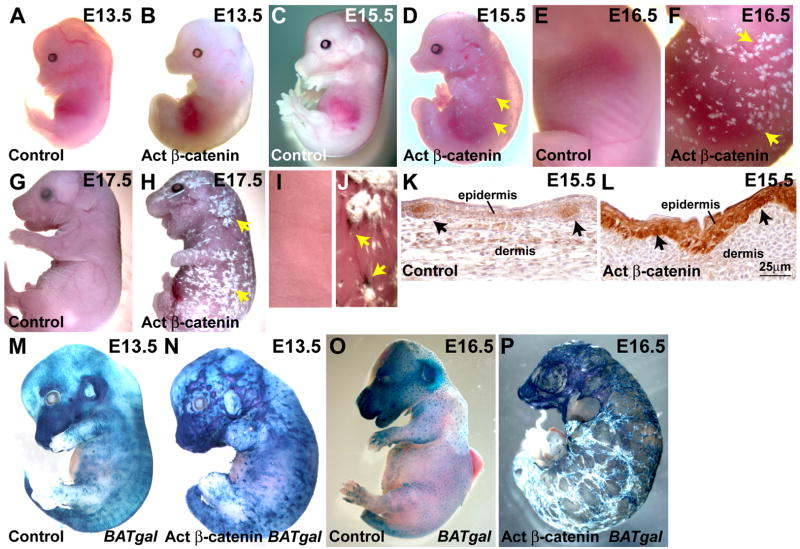
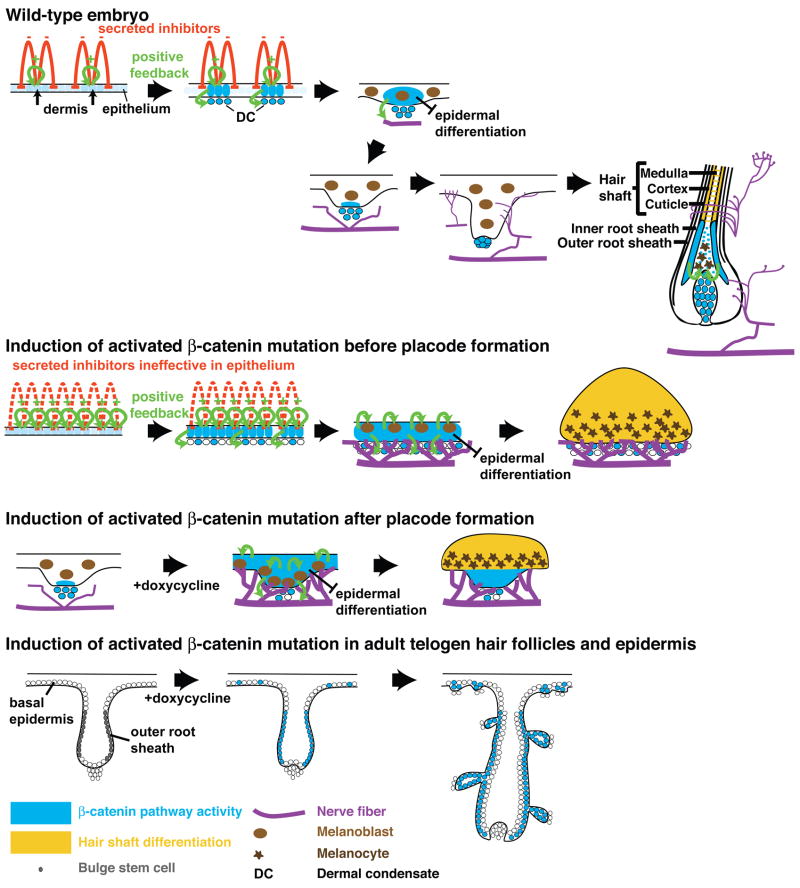
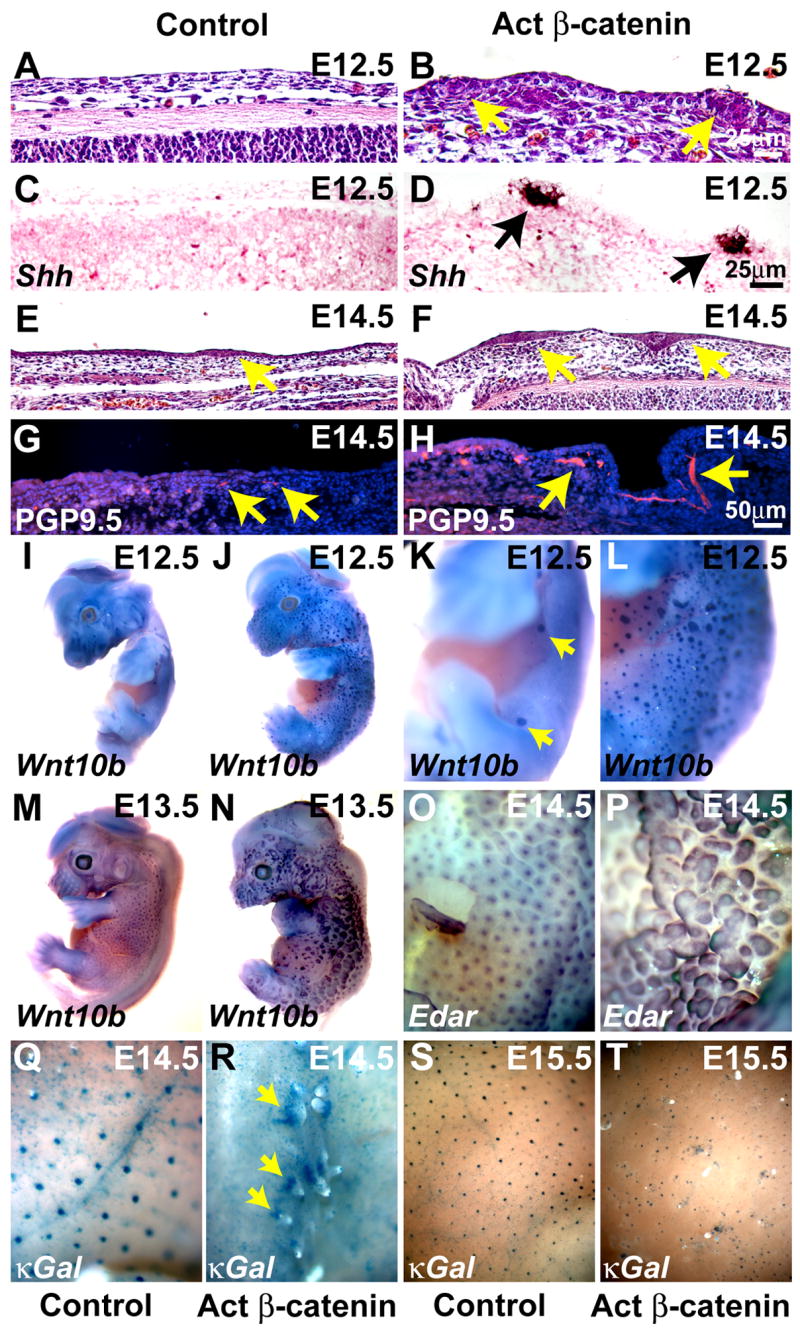
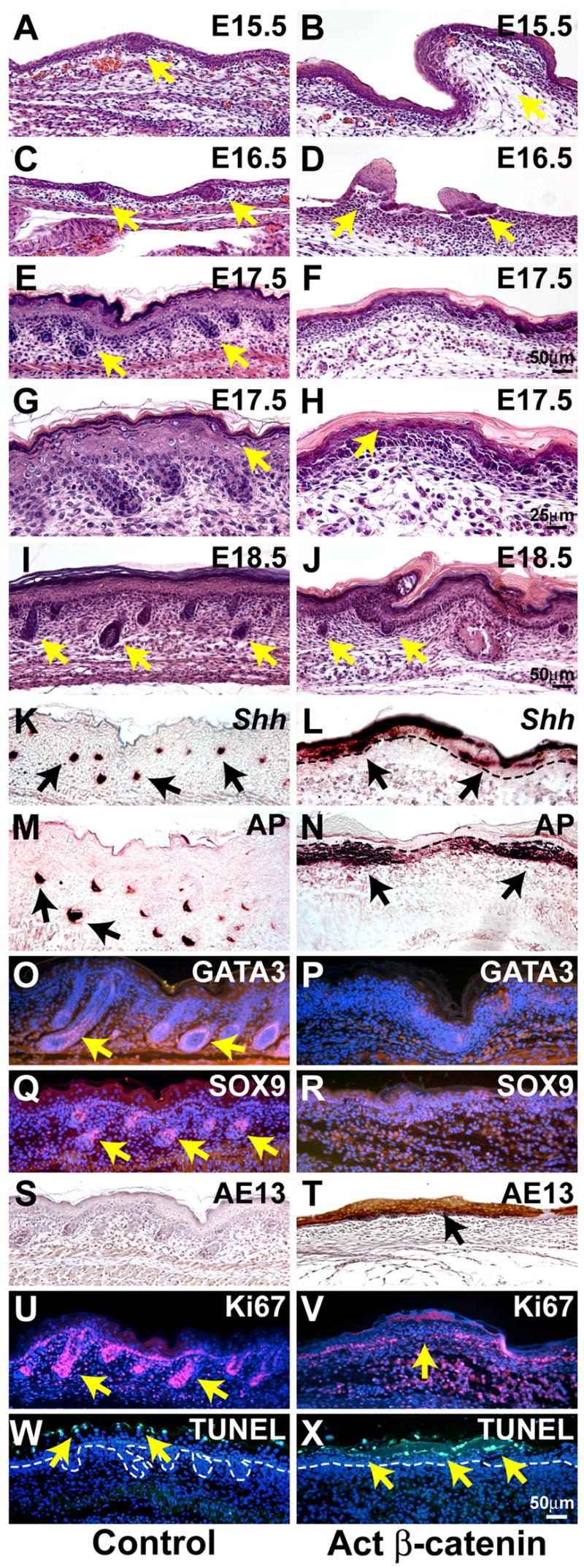
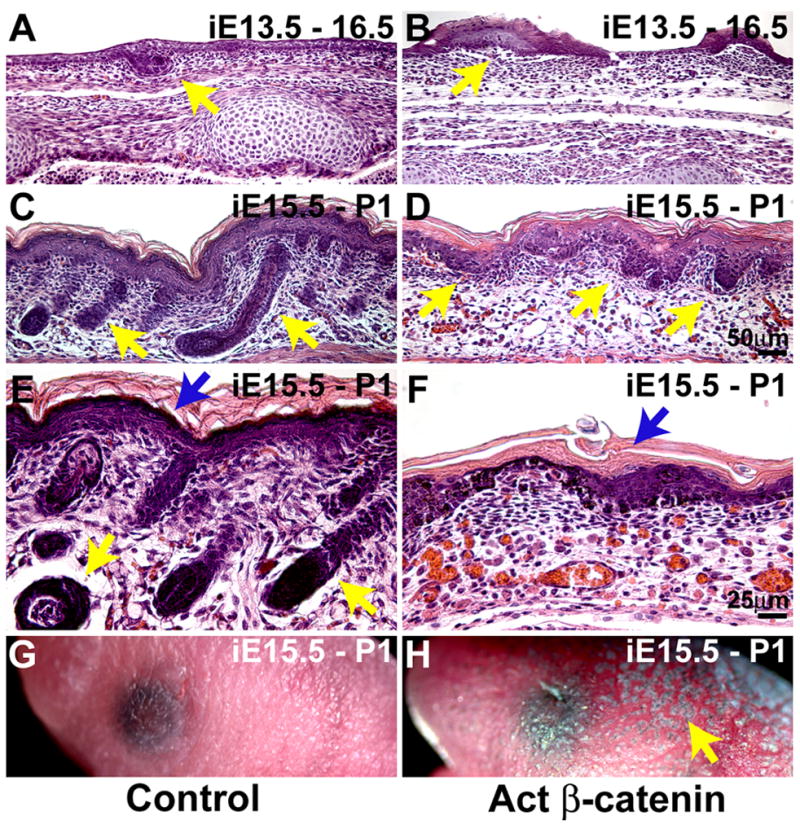
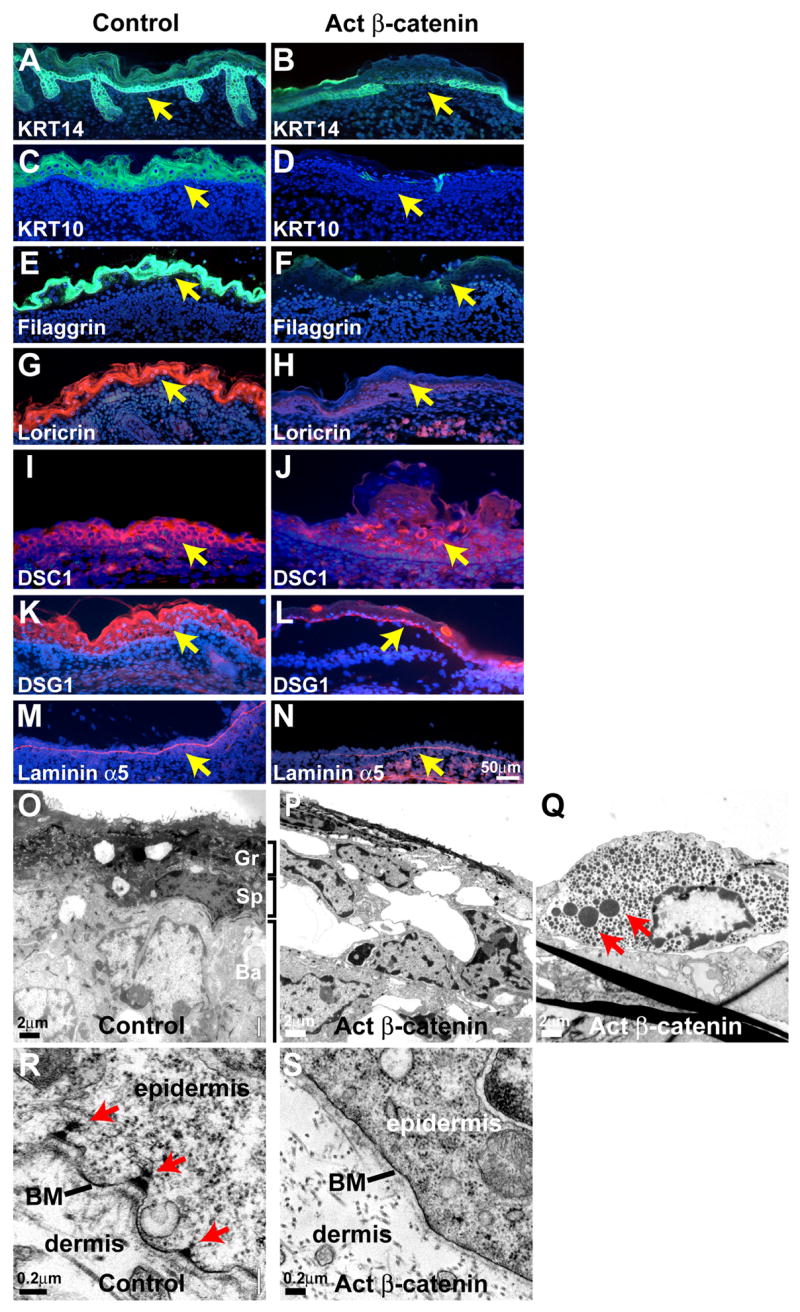
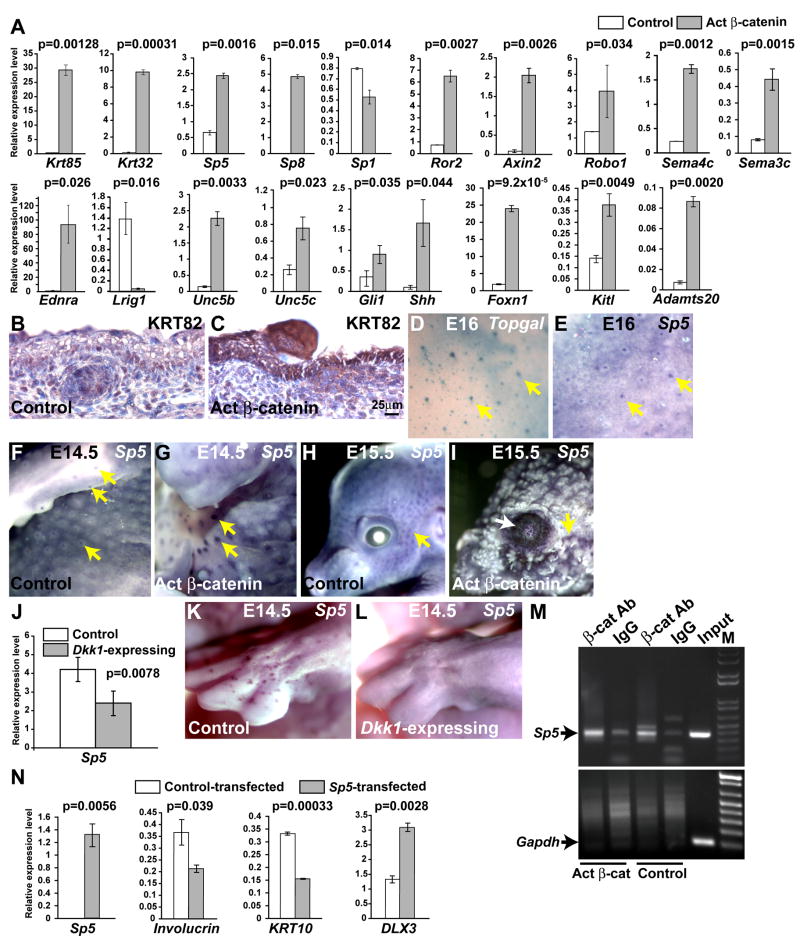
beta-Catenin signaling is required for hair follicle development, but it is unknown whether its activation is sufficient to globally program embryonic epidermis to hair follicle fate. To address this, we mutated endogenous epithelial beta-catenin to a dominant-active form in vivo. Hair follicle placodes were expanded and induced prematurely in activated beta-catenin mutant embryos, but failed to invaginate or form multilayered structures. Eventually, the entire epidermis adopted hair follicle fate, broadly expressing hair shaft keratins in place of epidermal stratification proteins. Mutant embryonic skin was precociously innervated, and displayed prenatal pigmentation, a phenomenon never observed in wild-type controls. Thus, beta-catenin signaling programs the epidermis towards placode and hair shaft fate at the expense of epidermal differentiation, and activates signals directing pigmentation and innervation. In transcript profiling experiments, we identified elevated expression of Sp5, a direct beta-catenin target and transcriptional repressor. We show that Sp5 normally localizes to hair follicle placodes and can suppress epidermal differentiation gene expression. We identified the pigmentation regulators Foxn1, Adamts20 and Kitl, and the neural guidance genes Sema4c, Sema3c, Unc5b and Unc5c, as potential mediators of the effects of beta-catenin signaling on pigmentation and innervation. Our data provide evidence for a new paradigm in which, in addition to promoting hair follicle placode and hair shaft fate, beta-catenin signaling actively suppresses epidermal differentiation and directs pigmentation and nerve fiber growth. Controlled downregulation of beta-catenin signaling is required for normal placode patterning within embryonic ectoderm, hair follicle downgrowth, and adoption of the full range of follicular fates.
β-连环蛋白信号通路对毛囊发育是必需的,但尚不清楚其激活是否足以使胚胎表皮整体编程为毛囊命运。为了解决这个问题,我们在体内将内源性上皮β-连环蛋白突变为显性激活形式。在激活的β-连环蛋白突变胚胎中,毛囊基板扩大并过早诱导形成,但未能内陷或形成多层结构。最终,整个表皮呈现毛囊命运,广泛表达毛干角蛋白以取代表皮分层蛋白。突变胚胎皮肤过早地被神经支配,并表现出产前色素沉着,这在野生型对照中从未观察到。因此,β-连环蛋白信号通路以牺牲表皮分化为代价,将表皮编程为基板和毛干命运,并激活指导色素沉着和神经支配的信号。在转录谱实验中,我们发现直接的β-连环蛋白靶标和转录抑制因子Sp5的表达升高。我们表明,Sp5通常定位于毛囊基板,并可抑制表皮分化基因的表达。我们确定色素沉着调节因子Foxn1、Adamts20和Kitl,以及神经导向基因Sema4c、Sema3c、Unc5b和Unc5c,作为β-连环蛋白信号通路对色素沉着和神经支配影响的潜在介质。我们的数据为一种新范式提供了证据,即除了促进毛囊基板和毛干命运外,β-连环蛋白信号通路还积极抑制表皮分化并指导色素沉着和神经纤维生长。胚胎外胚层内正常基板模式形成、毛囊向下生长以及采用全范围的毛囊命运需要β-连环蛋白信号通路的受控下调。