Linnaeus Laboratory, Gisborne, New Zealand.
Plant Methods. 2008 May 19;4:8. doi: 10.1186/1746-4811-4-8.
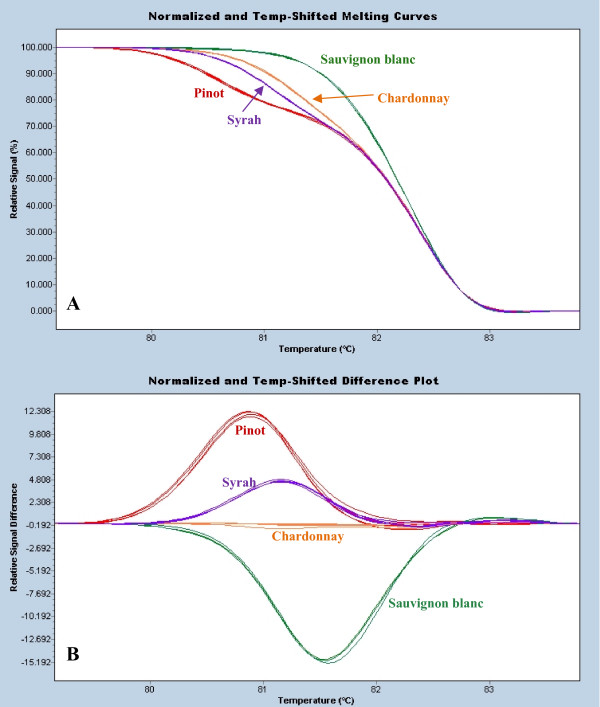
Microsatellites are popular molecular markers in many plant species due to their stable and highly polymorphic nature. A number of analysis methods have been described but analyses of these markers are typically performed on cumbersome polyacrylamide gels or more conveniently by capillary electrophoresis on automated sequencers. However post-PCR handling steps are still required. High resolution melting can now combine detailed sequence analysis with the closed-tube benefits of real-time PCR and is described here as a novel way to verify the identity of plant varieties such as grapevine and olive.
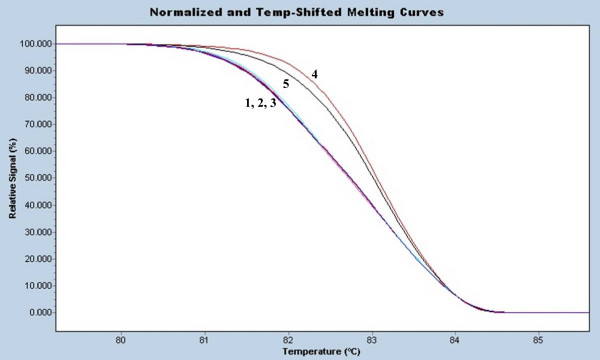
DNA melting profiles for various plant variety and rootstock samples were compared to profiles for certified reference samples. Two closely related grapevine rootstocks differing by as little as a single di-nucleotide repeat could be rapidly differentiated while there was high reproducibility of melting profiles for identical cultivars.
This novel microsatellite analysis method allows high sample throughput with greatly reduced time to results for varietal certification and is amenable to other microsatellite analyses.
微卫星作为一种分子标记,在许多植物物种中都很受欢迎,因为它们具有稳定和高度多态性的特点。已经描述了许多分析方法,但这些标记的分析通常在繁琐的聚丙烯酰胺凝胶上进行,或者更方便地在自动测序仪上通过毛细管电泳进行。然而,仍然需要进行 PCR 后处理步骤。高分辨率熔解曲线分析现在可以将详细的序列分析与实时 PCR 的闭管优势相结合,并被描述为一种验证葡萄和橄榄等植物品种身份的新方法。
比较了不同植物品种和砧木样本的 DNA 熔解曲线与经过认证的参考样本的曲线。两个仅相差一个二核苷酸重复的密切相关的葡萄砧木可以快速区分,而相同品种的熔解曲线具有高度的重现性。
这种新的微卫星分析方法允许高样品通量,大大缩短了品种认证的结果时间,并且适用于其他微卫星分析。