Kirkpatrick Barbara, Currier Robert, Nierenberg Kate, Reich Andrew, Backer Lorraine C, Stumpf Richard, Fleming Lora, Kirkpatrick Gary
Environmental Health Program, Mote Marine Laboratory, 1600 Ken Thompson Parkway, Sarasota, FL 32436, United States.
Sci Total Environ. 2008 Aug 25;402(1):1-8. doi: 10.1016/j.scitotenv.2008.03.032. Epub 2008 May 27.
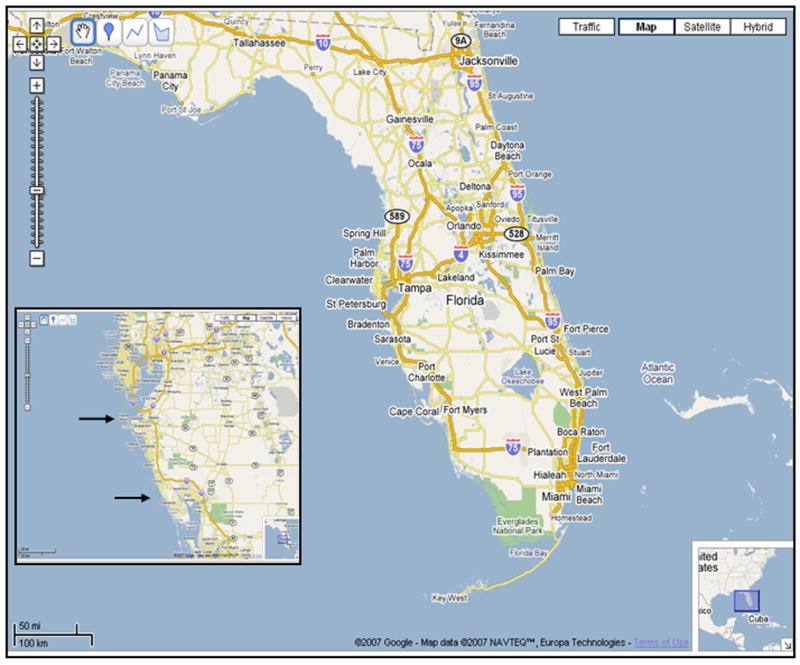
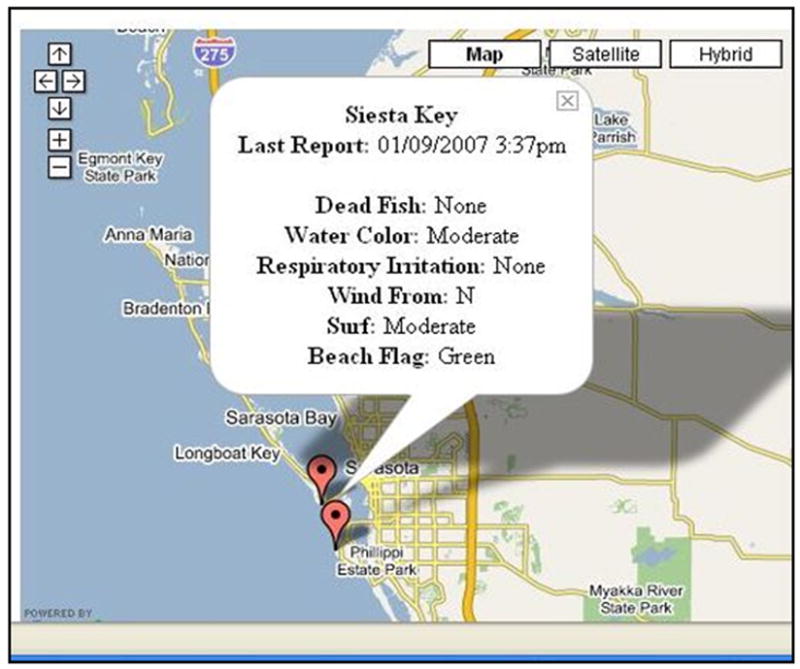
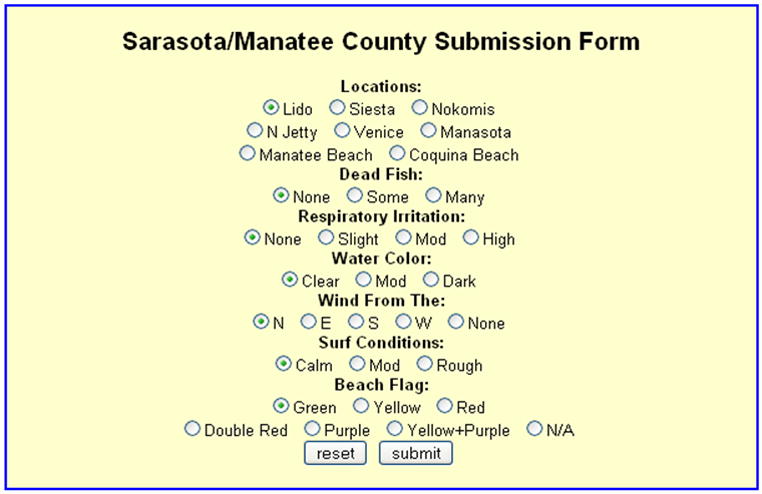
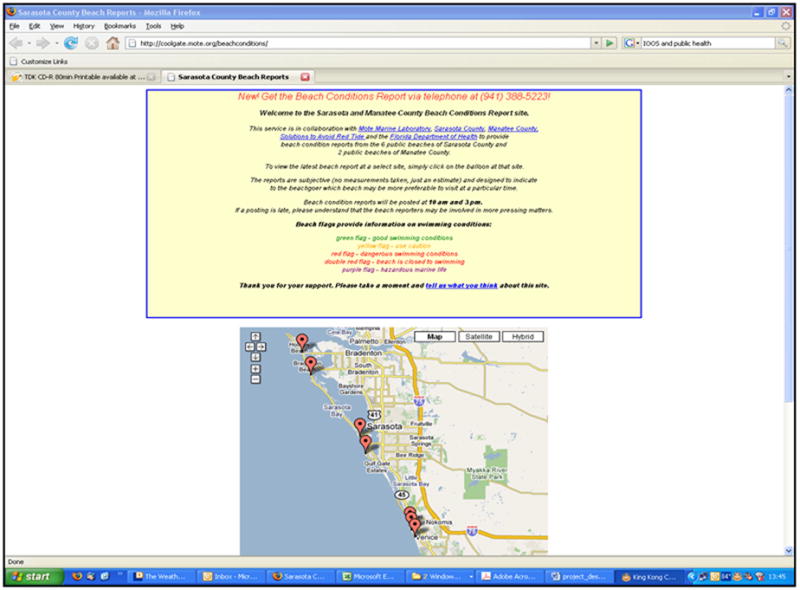
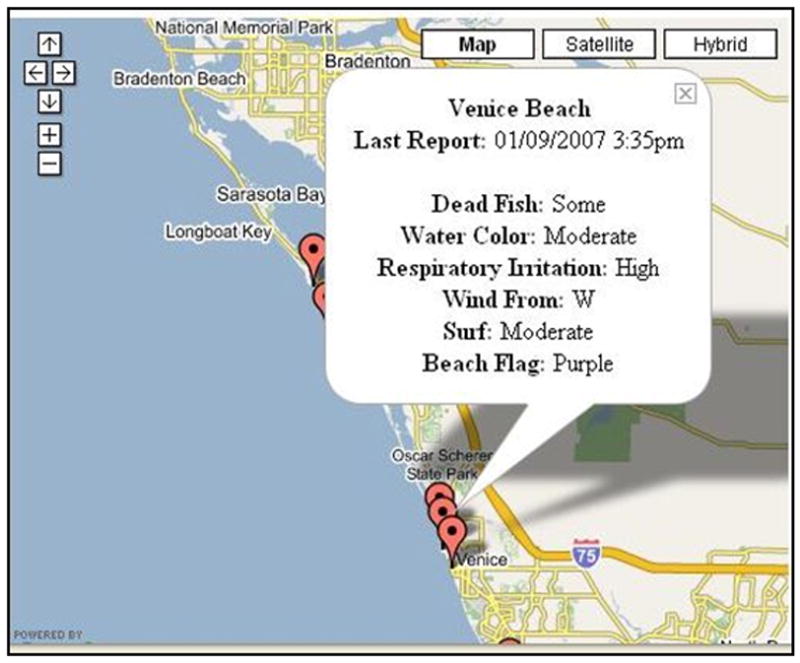
With over 50% of the US population living in coastal counties, the ocean and coastal environments have substantial impacts on coastal communities. While many of the impacts are positive, such as tourism and recreation opportunities, there are also negative impacts, such as exposure to harmful algal blooms (HABs) and water borne pathogens. Recent advances in environmental monitoring and weather prediction may allow us to forecast these potential adverse effects and thus mitigate the negative impact from coastal environmental threats. One example of the need to mitigate adverse environmental impacts occurs on Florida's west coast, which experiences annual blooms, or periods of exuberant growth, of the toxic dinoflagellate, Karenia brevis. K. brevis produces a suite of potent neurotoxins called brevetoxins. Wind and wave action can break up the cells, releasing toxin that can then become part of the marine aerosol or sea spray. Brevetoxins in the aerosol cause respiratory irritation in people who inhale it. In addition, asthmatics who inhale the toxins report increase upper and lower airway symptoms and experience measurable changes in pulmonary function. Real-time reporting of the presence or absence of these toxic aerosols will allow asthmatics and local coastal residents to make informed decisions about their personal exposures, thus adding to their quality of life. A system to protect public health that combines information collected by an Integrated Ocean Observing System (IOOS) has been designed and implemented in Sarasota and Manatee Counties, Florida. This system is based on real-time reports from lifeguards at the eight public beaches. The lifeguards provide periodic subjective reports of the amount of dead fish on the beach, apparent level of respiratory irritation among beach-goers, water color, wind direction, surf condition, and the beach warning flag they are flying. A key component in the design of the observing system was an easy reporting pathway for the lifeguards to minimize the amount of time away from their primary duties. Specifically, we provided a Personal Digital Assistant for each of the eight beaches. The portable unit allows the lifeguards to report from their guard tower. The data are transferred via wireless Internet to a website hosted on the Mote Marine Laboratory Sarasota Operations of the Coastal Ocean Observation Laboratories (SO COOL) server. The system has proven to be robust and well received by the public. The system has reported variability from beach to beach and has provided vital information to users to minimize their exposure to toxic marine aerosols.
美国超过50%的人口居住在沿海县,海洋和沿海环境对沿海社区有着重大影响。虽然许多影响是积极的,如旅游和娱乐机会,但也有负面影响,如接触有害藻华(HABs)和水传播病原体。环境监测和天气预报的最新进展可能使我们能够预测这些潜在的不利影响,从而减轻沿海环境威胁带来的负面影响。减轻不利环境影响的必要性的一个例子发生在佛罗里达州西海岸,那里每年都会出现有毒甲藻短裸甲藻的藻华,即大量繁殖的时期。短裸甲藻产生一系列名为短裸藻毒素的强效神经毒素。风浪作用会使细胞破裂,释放出毒素,这些毒素随后可能成为海洋气溶胶或海沫的一部分。气溶胶中的短裸藻毒素会使吸入它的人呼吸道受到刺激。此外,吸入毒素的哮喘患者报告说上、下呼吸道症状加重,肺功能出现可测量的变化。实时报告这些有毒气溶胶的存在与否将使哮喘患者和当地沿海居民能够就个人接触情况做出明智的决定,从而提高他们的生活质量。佛罗里达州萨拉索塔县和马纳蒂县设计并实施了一个结合综合海洋观测系统(IOOS)收集的信息来保护公众健康的系统。该系统基于八个公共海滩救生员的实时报告。救生员定期提供关于海滩上死鱼数量、海滩游客中明显的呼吸道刺激程度、水的颜色、风向、海浪状况以及他们所悬挂的海滩警示旗等主观报告。观测系统设计中的一个关键要素是为救生员提供一条简便的报告途径,以尽量减少他们离开主要职责的时间。具体来说,我们为八个海滩中的每一个都提供了一台个人数字助理。这个便携式设备使救生员能够在瞭望塔上进行报告。数据通过无线互联网传输到沿海海洋观测实验室(SO COOL)服务器的莫特海洋实验室萨拉索塔运营部托管的网站上。该系统已被证明是强大且受到公众欢迎的。该系统报告了不同海滩之间的差异,并为用户提供了重要信息,以尽量减少他们接触有毒海洋气溶胶的机会。