National Oceanic and Atmospheric Administration, National Ocean Service, Center for Coastal Fisheries and Habitat Research, Beaufort, North Carolina, United States of America.
Gulf of Mexico Coastal Ocean Observing System, Department of Oceanography, Texas A & M University, College Station, Texas, United States of America.
PLoS One. 2019 Jun 20;14(6):e0218489. doi: 10.1371/journal.pone.0218489. eCollection 2019.
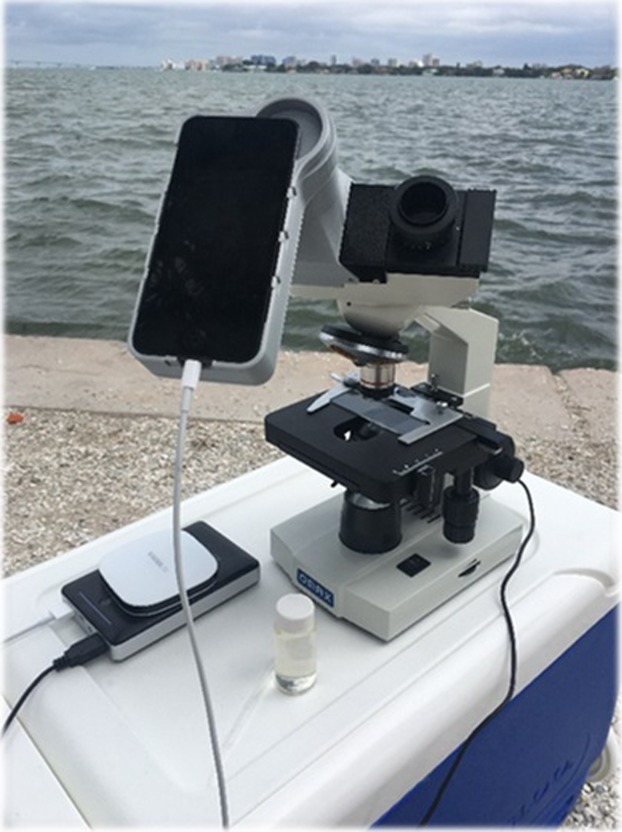
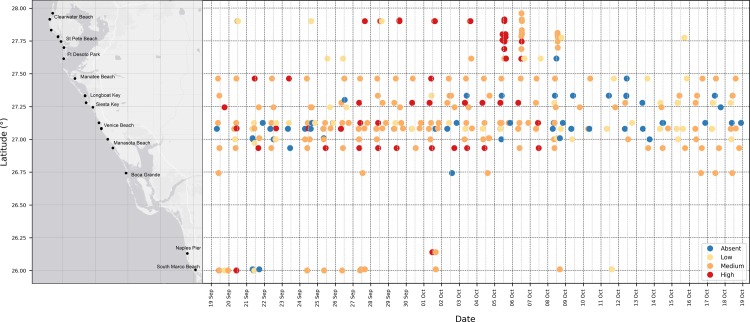
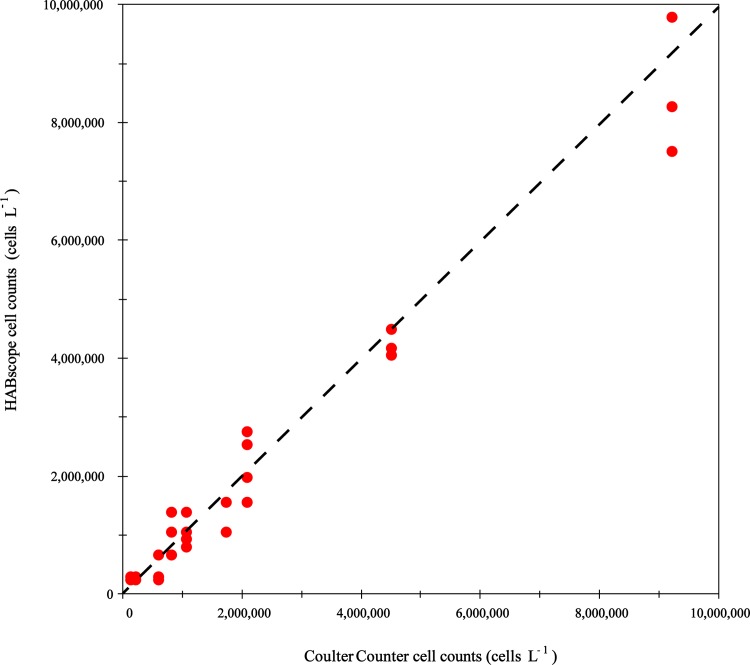
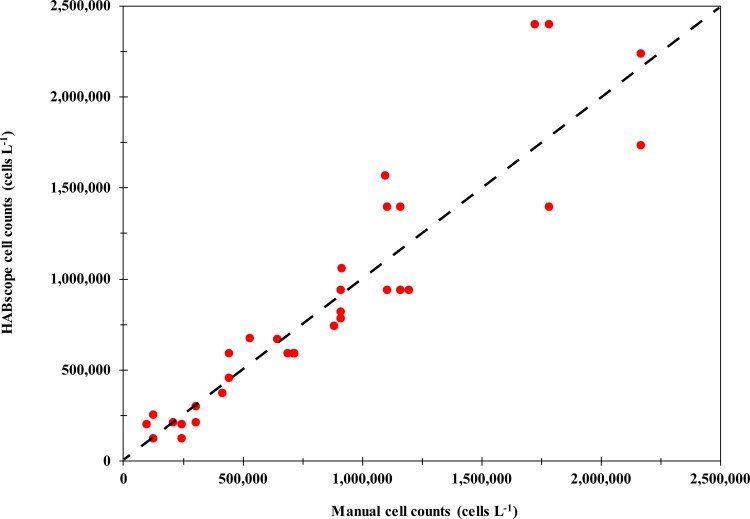
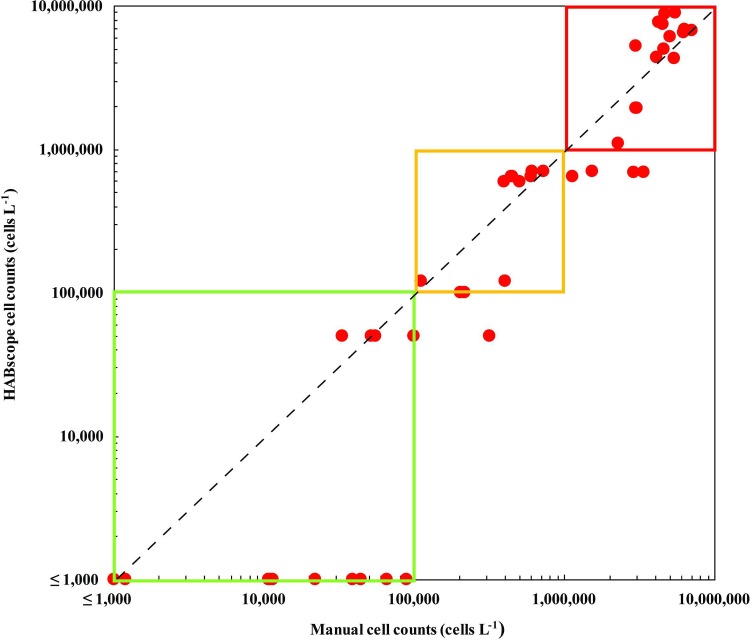
Blooms of the toxic microalga Karenia brevis occur seasonally in Florida, Texas and other portions of the Gulf of Mexico. Brevetoxins produced during Karenia blooms can cause neurotoxic shellfish poisoning in humans, massive fish kills, and the death of marine mammals and birds. Brevetoxin-containing aerosols are an additional problem, having a severe impact on beachgoers, triggering coughing, eye and throat irritation in healthy individuals, and more serious respiratory distress in those with asthma or other breathing disorders. The blooms and associated aerosol impacts are patchy in nature, often affecting one beach but having no impact on an adjacent beach. To provide timely information to visitors about which beaches are low-risk, we developed HABscope; a low cost (~$400) microscope system that can be used in the field by citizen scientists with cell phones to enumerate K. brevis cell concentrations in the water along each beach. The HABscope system operates by capturing short videos of collected water samples and uploading them to a central server for rapid enumeration of K. brevis cells using calibrated recognition software. The HABscope has a detection threshold of about 100,000 cells, which is the point when respiratory risk becomes evident. Higher concentrations are reliably estimated up to 10 million cells L-1. When deployed by volunteer citizen scientists, the HABscope consistently distinguished low, medium, and high concentrations of cells in the water. The volunteers were able to collect data on most days during a severe bloom. This indicates that the HABscope can provide an effective capability to significantly increase the sampling coverage during Karenia brevis blooms.
有毒微藻凯伦藻的水华季节性地出现在佛罗里达州、德克萨斯州和墨西哥湾的其他地区。凯伦藻水华期间产生的短裸甲藻毒素会导致人类神经贝类中毒、大量鱼类死亡,以及海洋哺乳动物和鸟类死亡。含有短裸甲藻毒素的气溶胶也是一个额外的问题,对海滩游客造成严重影响,健康人群会引发咳嗽、眼睛和喉咙刺激,哮喘或其他呼吸障碍人群会出现更严重的呼吸窘迫。水华和相关气溶胶的影响具有局部性,经常影响一个海滩,而对相邻的海滩没有影响。为了向游客提供有关哪些海滩风险较低的及时信息,我们开发了 HABscope;这是一种低成本(约 400 美元)显微镜系统,公民科学家可以使用手机在现场使用该系统对每个海滩的水中凯伦藻细胞浓度进行计数。HABscope 系统通过捕获采集水样的短视频并将其上传到中央服务器,使用校准识别软件快速对凯伦藻细胞进行计数。HABscope 的检测阈值约为 100,000 个细胞,这是呼吸风险明显的临界点。更高的浓度可可靠地估计高达 1000 万个细胞/L-1。当由志愿公民科学家部署时,HABscope 始终能够区分水中的低、中、高浓度细胞。志愿者在严重水华期间的大多数日子都能够收集数据。这表明 HABscope 可以提供一种有效的能力,在凯伦藻水华期间显著增加采样覆盖范围。