Queensland Health Forensic and Scientific Services, 39 Kessels Road, Coopers Plains, Queensland 4108, Australia.
Environ Health. 2009 Nov 19;8:52. doi: 10.1186/1476-069X-8-52.
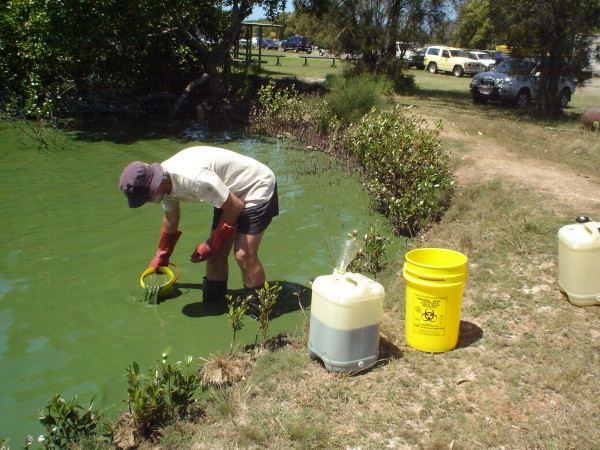
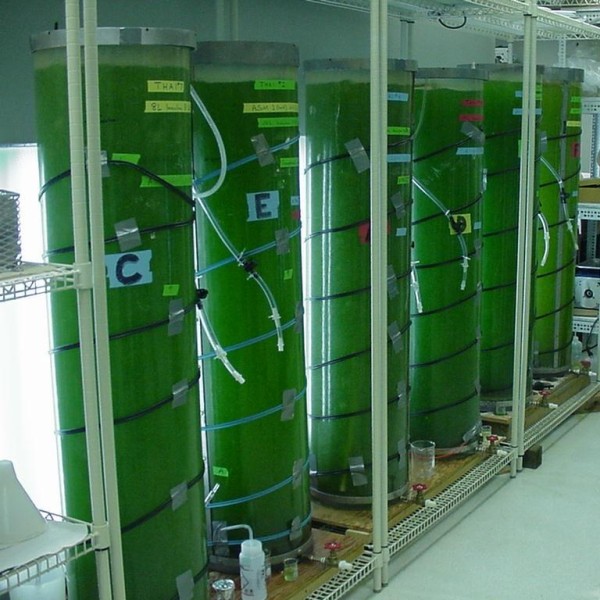
Cyanobacteria can produce groups of structurally and functionally unrelated but highly potent toxins. Cyanotoxins are used in multiple research endeavours, either for direct investigation of their toxicologic properties, or as functional analogues for various biochemical and physiological processes. This paper presents occupational safety guidelines and recommendations for personnel working in field, laboratory or industrial settings to produce and use purified cyanotoxins and toxic cyanobacteria, from bulk harvesting of bloom material, mass culture of laboratory isolates, through routine extraction, isolation and purification. Oral, inhalational, dermal and parenteral routes are all potential occupational exposure pathways during the various stages of cyanotoxin production and application. Investigation of toxicologic or pharmacologic properties using in vivo models may present specific risks if radiolabelled cyanotoxins are employed, and the potential for occupational exposure via the dermal route is heightened with the use of organic solvents as vehicles. Inter- and intra-national transport of living cyanobacteria for research purposes risks establishing feral microalgal populations, so disinfection of culture equipment and destruction of cells by autoclaving, incineration and/or chlorination is recommended in order to prevent viable cyanobacteria from escaping research or production facilities.
蓝藻可以产生结构和功能上互不相关但却具有很强毒性的一组毒素。在多项研究工作中使用了蓝藻毒素,或是直接对其毒性进行研究,或是作为各种生化和生理过程的功能类似物。本文提出了在野外、实验室或工业环境中从事生产和使用纯蓝藻毒素和有毒蓝藻的职业安全指南和建议,从大量收获水华材料、大规模培养实验室分离物,到常规提取、分离和纯化。在蓝藻毒素生产和应用的各个阶段,通过口服、吸入、皮肤和肠胃外途径都可能存在职业暴露。如果使用放射性标记的蓝藻毒素,使用体内模型研究其毒理学或药理学特性可能会带来特定的风险,并且在使用有机溶剂作为载体时,经皮途径的职业暴露风险会增加。为研究目的而运输活体蓝藻会有导致野生微藻种群形成的风险,因此建议对培养设备进行消毒,并通过高压灭菌、焚烧和/或氯化来破坏细胞,以防止有活力的蓝藻从研究或生产设施中逸出。