An Gary
Department of Surgery, Northwestern University Feinberg School of Medicine, Chicago, IL, USA.
Theor Biol Med Model. 2008 May 27;5:11. doi: 10.1186/1742-4682-5-11.
One of the greatest challenges facing biomedical research is the integration and sharing of vast amounts of information, not only for individual researchers, but also for the community at large. Agent Based Modeling (ABM) can provide a means of addressing this challenge via a unifying translational architecture for dynamic knowledge representation. This paper presents a series of linked ABMs representing multiple levels of biological organization. They are intended to translate the knowledge derived from in vitro models of acute inflammation to clinically relevant phenomenon such as multiple organ failure.
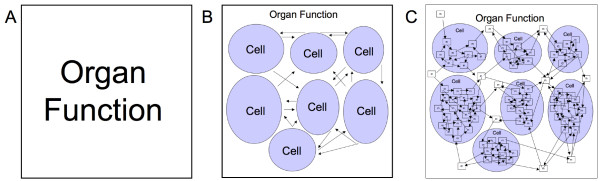
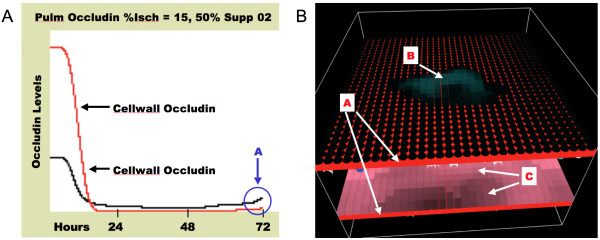
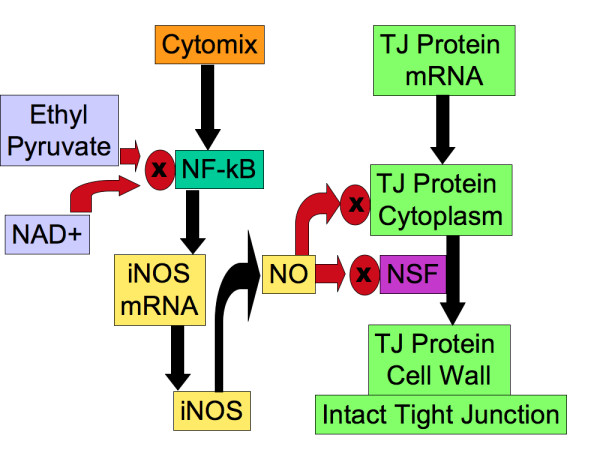
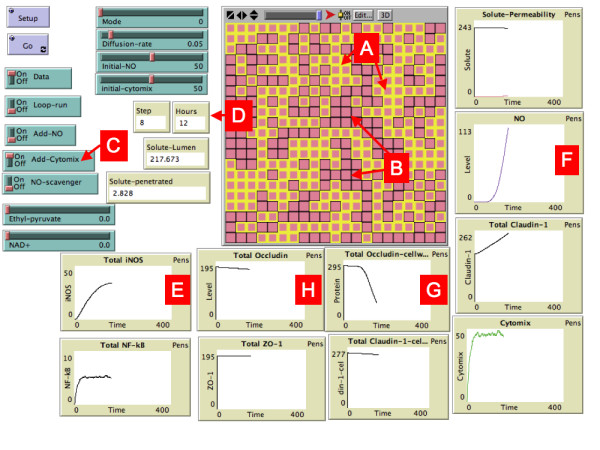
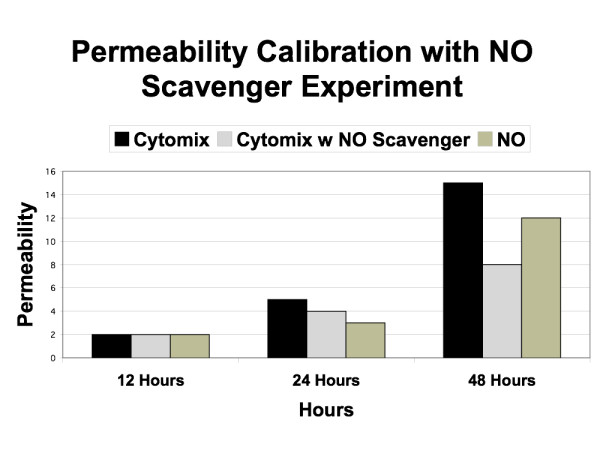
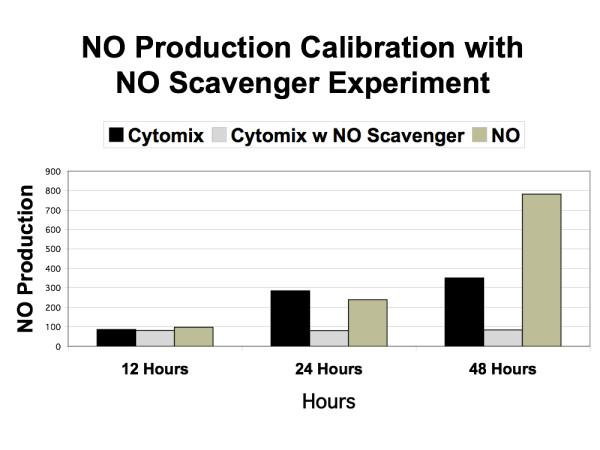
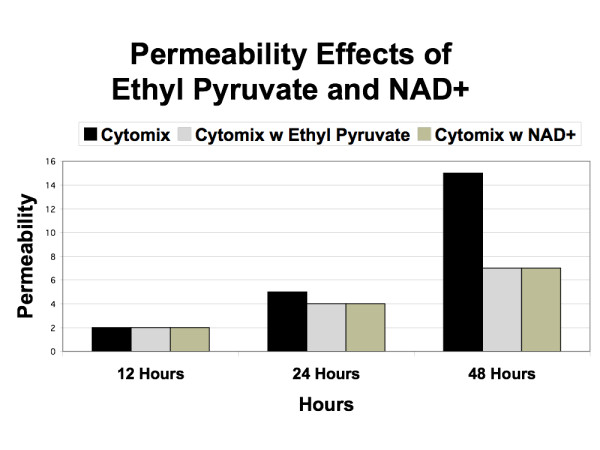
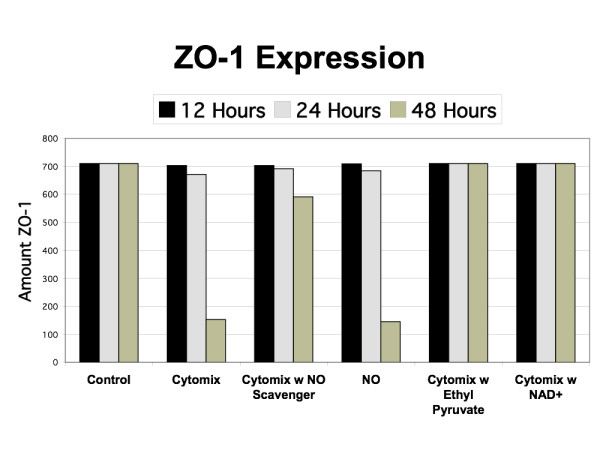
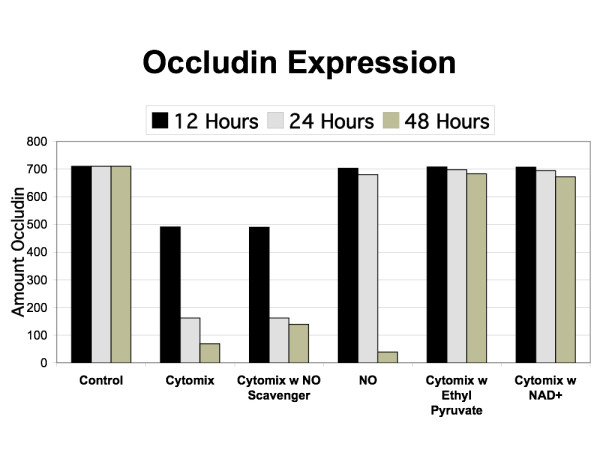
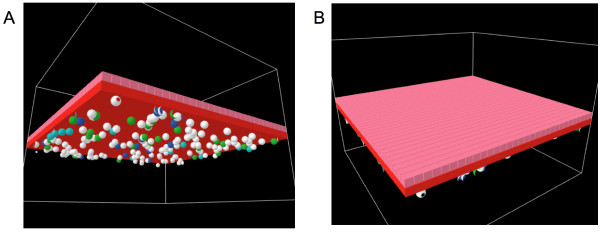
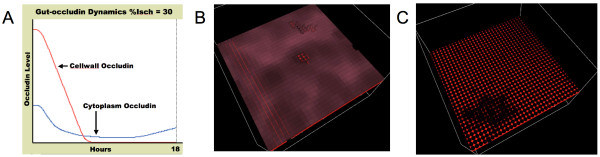
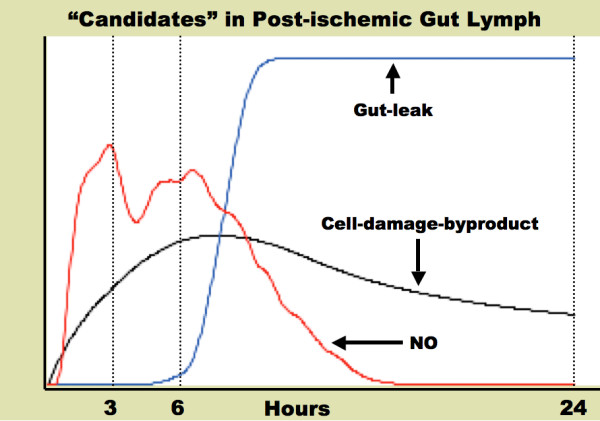
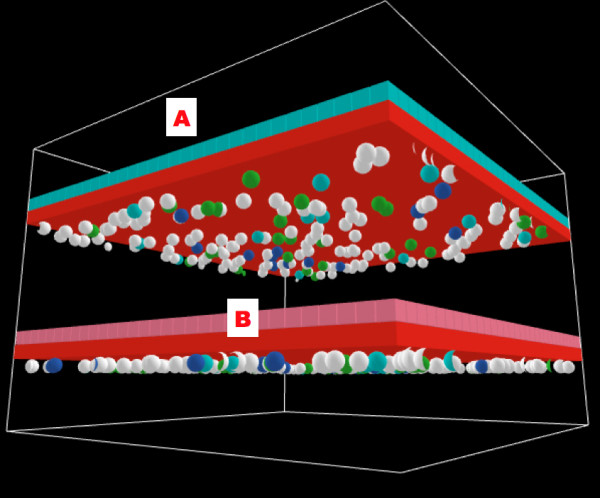
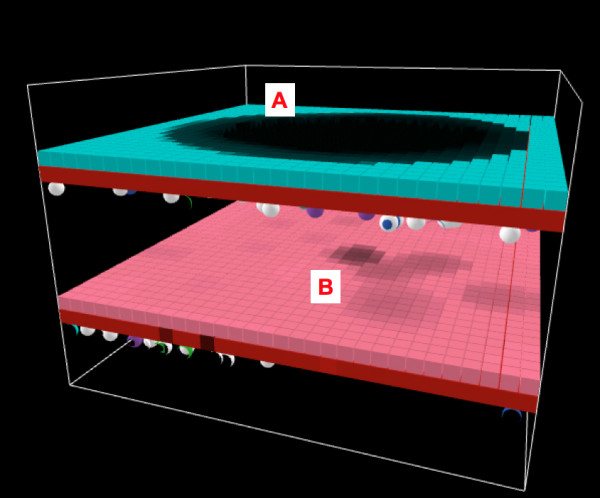
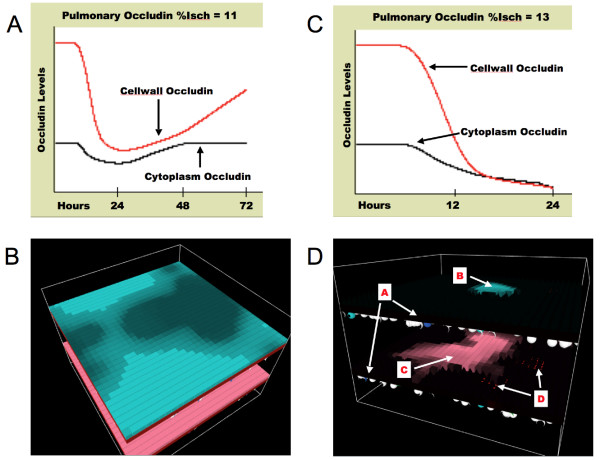
ABM development followed a sequence starting with relatively direct translation from in-vitro derived rules into a cell-as-agent level ABM, leading on to concatenated ABMs into multi-tissue models, eventually resulting in topologically linked aggregate multi-tissue ABMs modeling organ-organ crosstalk. As an underlying design principle organs were considered to be functionally composed of an epithelial surface, which determined organ integrity, and an endothelial/blood interface, representing the reaction surface for the initiation and propagation of inflammation. The development of the epithelial ABM derived from an in-vitro model of gut epithelial permeability is described. Next, the epithelial ABM was concatenated with the endothelial/inflammatory cell ABM to produce an organ model of the gut. This model was validated against in-vivo models of the inflammatory response of the gut to ischemia. Finally, the gut ABM was linked to a similarly constructed pulmonary ABM to simulate the gut-pulmonary axis in the pathogenesis of multiple organ failure. The behavior of this model was validated against in-vivo and clinical observations on the cross-talk between these two organ systems.
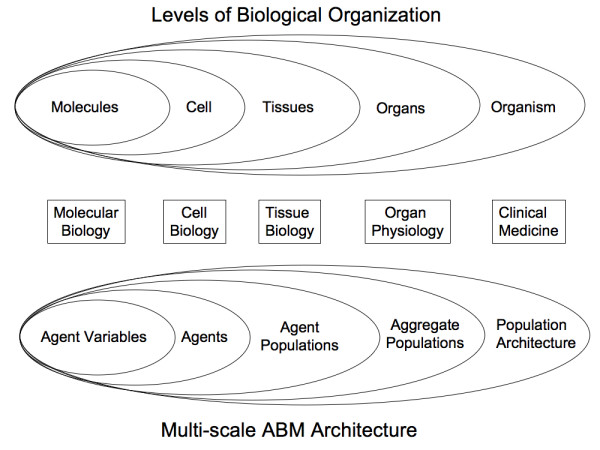
A series of ABMs are presented extending from the level of intracellular mechanism to clinically observed behavior in the intensive care setting. The ABMs all utilize cell-level agents that encapsulate specific mechanistic knowledge extracted from in vitro experiments. The execution of the ABMs results in a dynamic representation of the multi-scale conceptual models derived from those experiments. These models represent a qualitative means of integrating basic scientific information on acute inflammation in a multi-scale, modular architecture as a means of conceptual model verification that can potentially be used to concatenate, communicate and advance community-wide knowledge.
生物医学研究面临的最大挑战之一是大量信息的整合与共享,这不仅对个体研究人员,而且对整个科学界来说都是如此。基于主体的建模(ABM)可以通过一种统一的动态知识表示转换架构来提供应对这一挑战的方法。本文展示了一系列代表生物组织多个层次的相互关联的ABM。它们旨在将从急性炎症体外模型中获得的知识转化为诸如多器官功能衰竭等临床相关现象。
ABM的开发遵循一个顺序,从相对直接地将体外推导的规则转化为细胞主体水平的ABM开始,进而将多个ABM连接成多组织模型,最终形成模拟器官间相互作用的拓扑连接的聚合多组织ABM。作为一个基本设计原则,器官被认为在功能上由上皮表面(决定器官完整性)和内皮/血液界面(代表炎症起始和传播的反应表面)组成。描述了从肠道上皮通透性体外模型衍生的上皮ABM的开发。接下来,上皮ABM与内皮/炎症细胞ABM连接,以生成肠道器官模型。该模型针对肠道对缺血炎症反应的体内模型进行了验证。最后,肠道ABM与一个结构类似的肺ABM相连,以模拟多器官功能衰竭发病机制中的肠肺轴。该模型的行为针对这两个器官系统间相互作用的体内和临床观察结果进行了验证。
本文展示了一系列从细胞内机制水平延伸至重症监护环境中临床观察行为的ABM。这些ABM均利用细胞水平的主体,这些主体封装了从体外实验中提取的特定机制知识。ABM的执行产生了源自那些实验的多尺度概念模型的动态表示。这些模型代表了一种在多尺度、模块化架构中整合急性炎症基础科学信息的定性方法,作为一种概念模型验证手段,有可能用于连接、交流和推进整个科学界的知识。