Nagpal Jatin K, Nair Sujit, Chakravarty Dimple, Rajhans Rajib, Pothana Saikumar, Brann Darrell W, Tekmal Rajeshwar Rao, Vadlamudi Ratna K
Department of Obstetrics and Gynecology, University of Texas Health Science Center at San Antonio, 7703 Floyd Curl Drive, Mail Code 7836, San Antonio, TX 78229-3900, USA.
Mol Cancer Res. 2008 May;6(5):851-61. doi: 10.1158/1541-7786.MCR-07-2030.
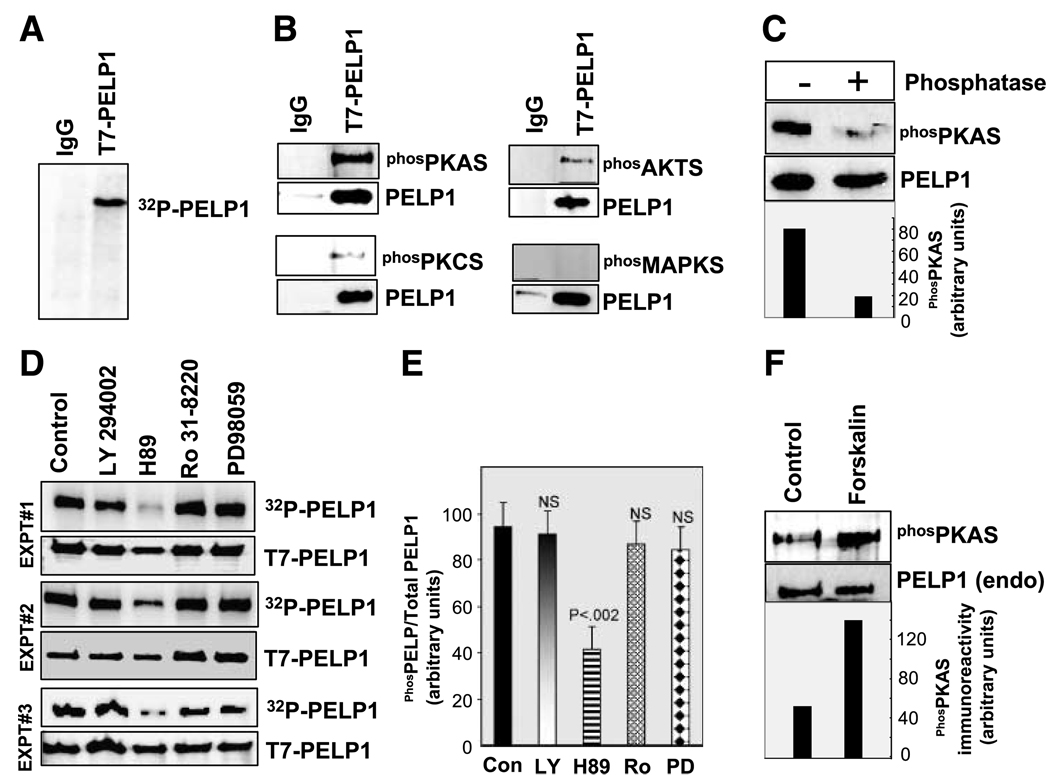
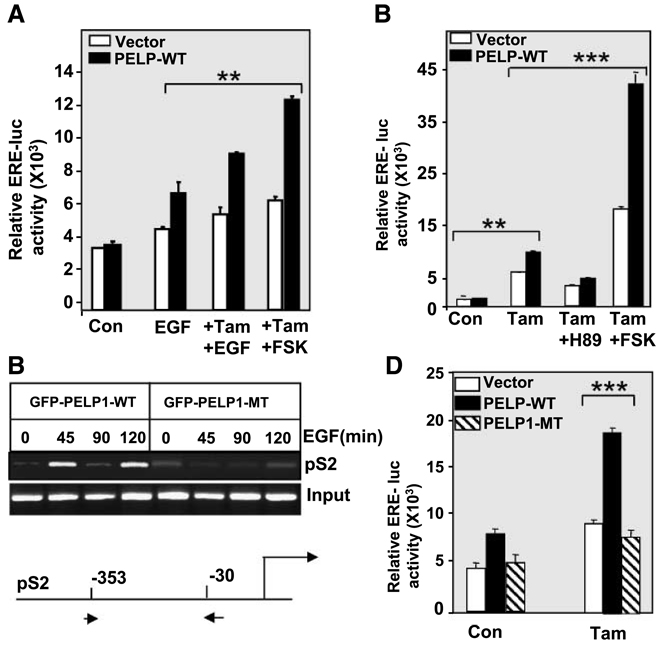
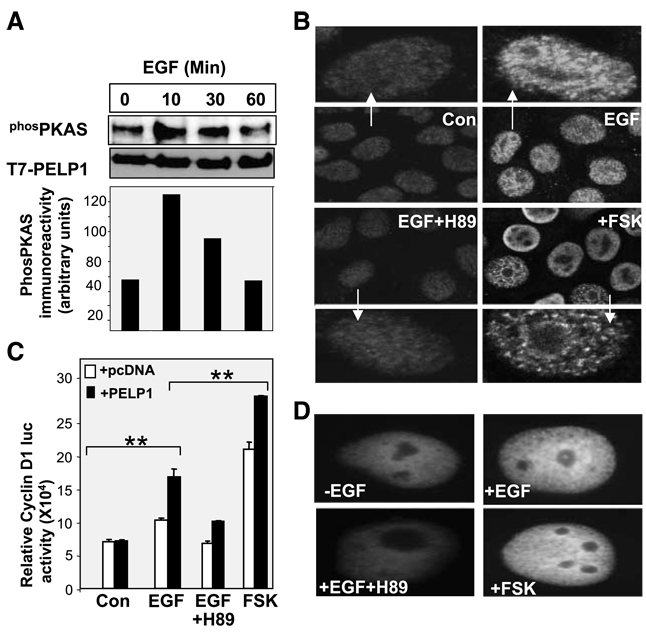
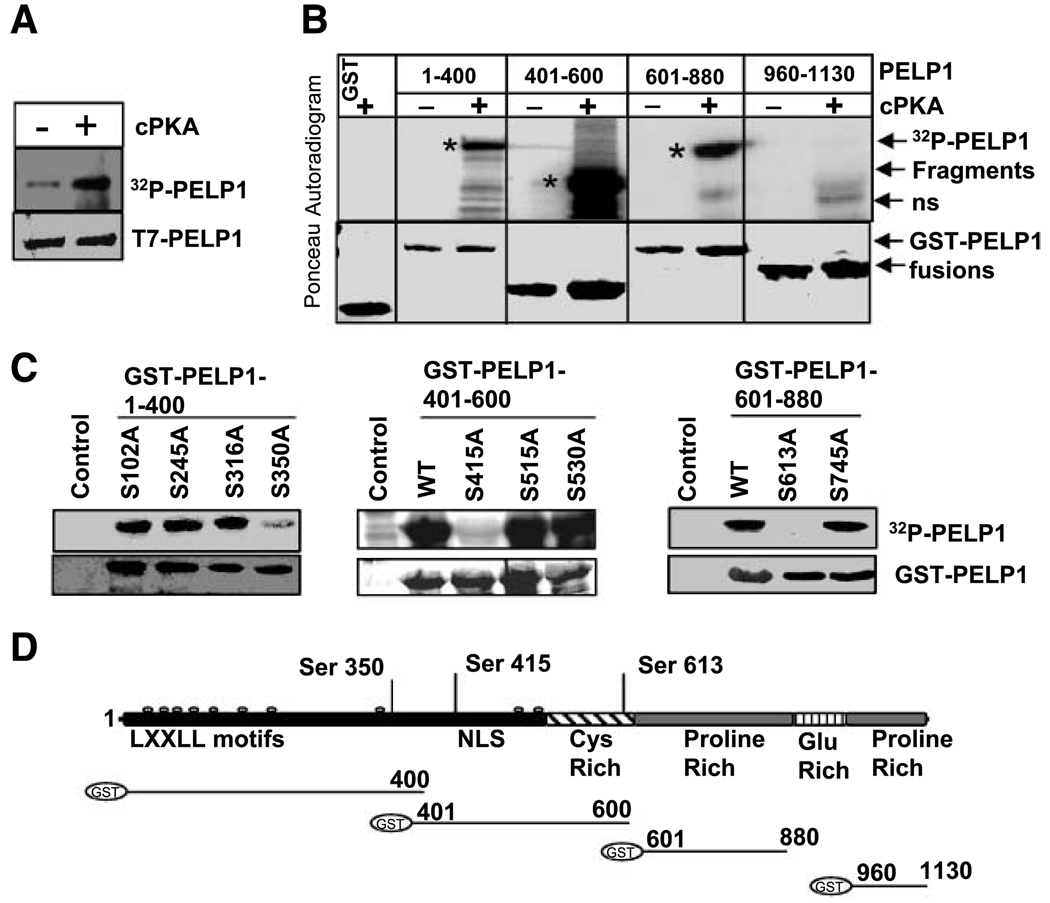
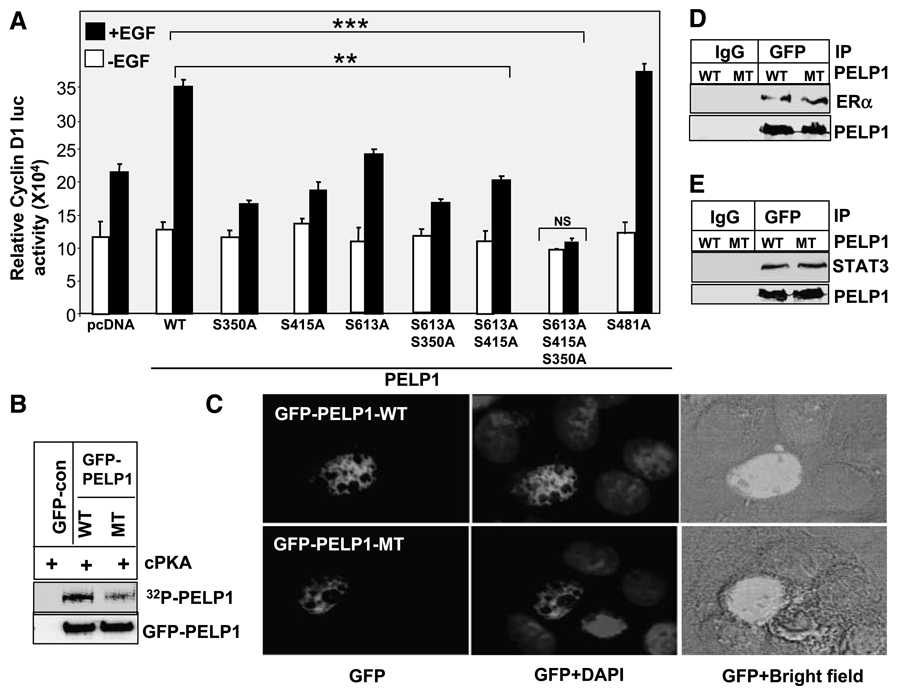
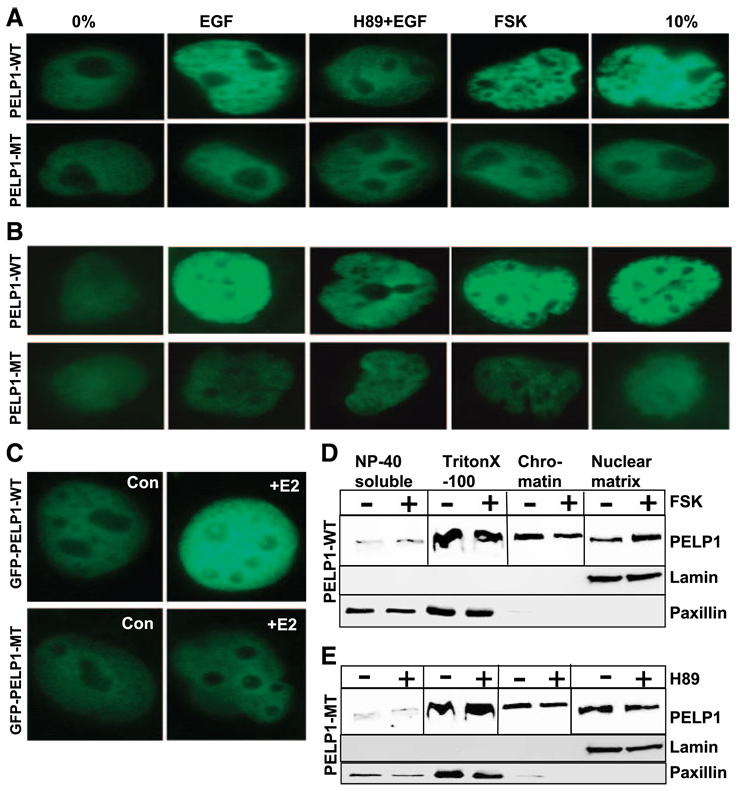
PELP1 (proline-rich, glutamic acid-rich, and leucine-rich protein-1) is a potential proto-oncogene that functions as a coregulator of estrogen receptor (ER), and its expression is deregulated during breast cancer progression. Emerging evidence suggests growth factor signaling crosstalk with ER as one possible mechanism by which breast tumors acquire resistance to therapy. In this study, we examined mechanisms by which growth factors modulate PELP1 functions, leading to activation of ER. Using in vivo labeling assays, we have found that growth factors promote phosphorylation of PELP1. Utilizing a panel of substrate-specific phosphorylated antibodies, we discovered that growth factor stimulation promotes phosphorylation of PELP1 that is recognized by a protein kinase A (PKA) substrate-specific antibody. Accordingly, growth factor-mediated PELP1 phosphorylation was effectively blocked by PKA-specific inhibitor H89. Utilizing purified PKA enzyme and in vitro kinase assays, we obtained evidence of direct PELP1 phosphorylation by PKA. Using deletion and mutational analysis, we identified PELP1 domains that are phosphorylated by PKA. Interestingly, site-directed mutagenesis of the putative PKA site in PELP1 compromised growth factor-induced activation and subnuclear localization of PELP1 and also affected PELP1-mediated transactivation function. Utilizing MCF-7 cells expressing a PELP1 mutant that cannot be phosphorylated by PKA, we provide mechanistic insights by which growth factor signaling regulates ER transactivation in a PELP1-dependent manner. Collectively, these findings suggest that growth factor signals promote phosphorylation of ER coactivator PELP1 via PKA pathway, and such modification may have functional implications in breast tumors with deregulated growth factor signaling.
富含脯氨酸、谷氨酸和亮氨酸的蛋白1(PELP1)是一种潜在的原癌基因,作为雌激素受体(ER)的共调节因子发挥作用,其表达在乳腺癌进展过程中失调。新出现的证据表明,生长因子信号与ER相互作用是乳腺肿瘤获得治疗抗性的一种可能机制。在本研究中,我们研究了生长因子调节PELP1功能从而导致ER激活的机制。通过体内标记试验,我们发现生长因子促进PELP1的磷酸化。利用一组底物特异性磷酸化抗体,我们发现生长因子刺激促进了PELP1的磷酸化,该磷酸化可被蛋白激酶A(PKA)底物特异性抗体识别。因此,PKA特异性抑制剂H89有效阻断了生长因子介导的PELP1磷酸化。利用纯化的PKA酶和体外激酶试验,我们获得了PKA直接磷酸化PELP1的证据。通过缺失和突变分析,我们确定了被PKA磷酸化的PELP1结构域。有趣的是,PELP1中假定的PKA位点的定点诱变损害了生长因子诱导的PELP1激活和亚核定位,也影响了PELP1介导的反式激活功能。利用表达不能被PKA磷酸化的PELP1突变体的MCF-7细胞,我们提供了生长因子信号以PELP1依赖的方式调节ER反式激活的机制见解。总的来说,这些发现表明生长因子信号通过PKA途径促进ER共激活因子PELP1的磷酸化,这种修饰可能对生长因子信号失调的乳腺肿瘤具有功能意义。