Verma Saguna, Molina Yanira, Lo Yeung Y, Cropp Bruce, Nakano Cheynie, Yanagihara Richard, Nerurkar Vivek R
Retrovirology Research Laboratory, Department of Tropical Medicine, Medical Microbiology and Pharmacology, John A, Burns School of Medicine, University of Hawaii at Manoa, Honolulu, HI 96813, USA.
Virol J. 2008 May 31;5:66. doi: 10.1186/1743-422X-5-66.
Selenium (Se) deficiency plays an important role in viral pathogenesis. To understand the effects of Se deficiency on West Nile virus (WNV) infection, we analyzed cytopathogenicity, apoptosis and viral replication kinetics, using a newly developed Se-deficient cell culture system.
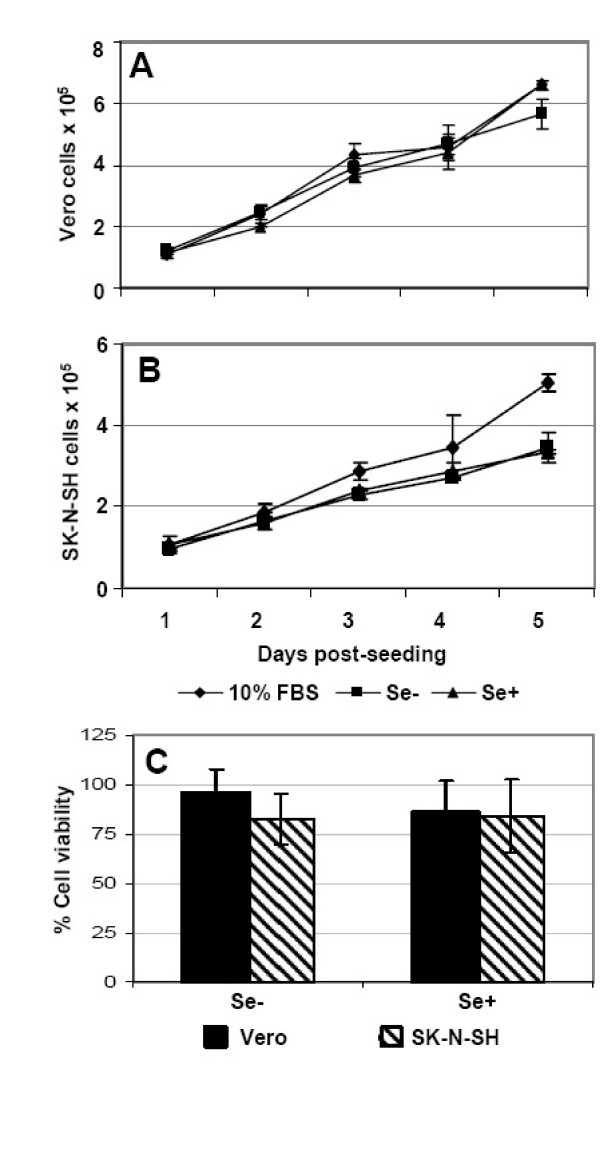
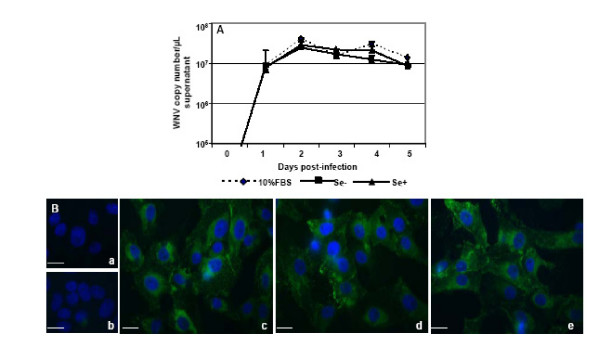
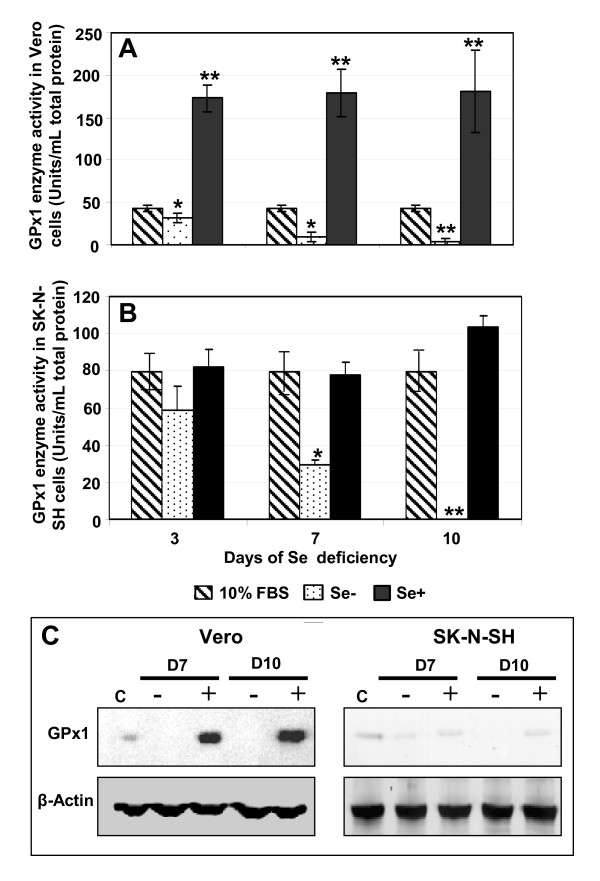
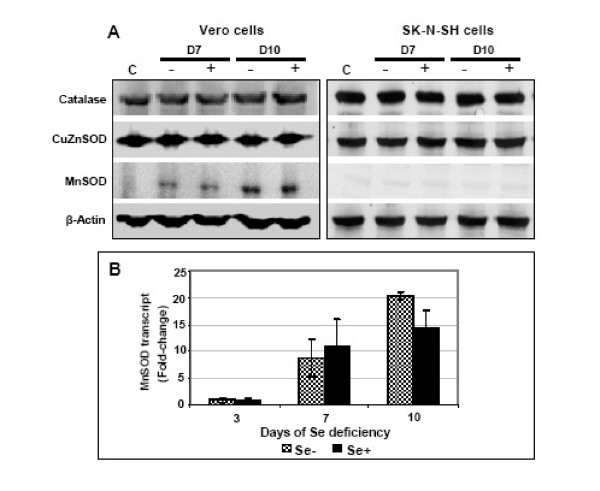
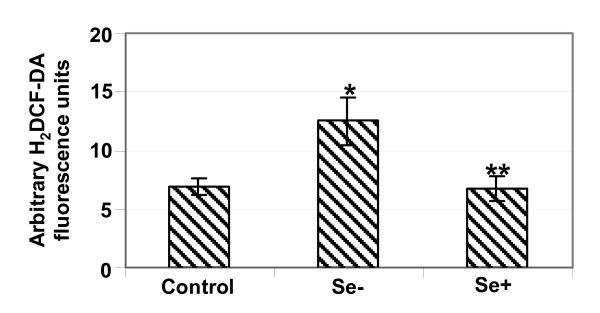
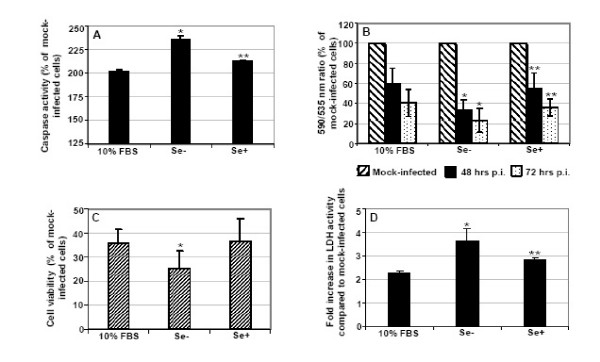
Both Vero and SK-N-SH cells grown in Se-deficient media exhibited a gradual loss of glutathione peroxidase (GPx1) activity without any significant effect on cell growth and viability. In SK-N-SH cells, Se deficiency had no effect on the expression of key antioxidant enzymes, including manganese- and copper-zinc superoxide dismutase (MnSOD and CuZnSOD), catalase and inducible nitric oxide synthase, whereas Vero cells demonstrated a significant increase in the expression of MnSOD and an overall increase in oxidative stress (OS) at day 7 post-induction of Se deficiency. At 2 days after infection with WNV, CPE and cell death were significantly higher in WNV-infected Se-deficient Vero cells, compared to WNV-infected control cells. Furthermore, WNV-induced apoptosis was significantly heightened in Se-deficient cells and was contributed by loss of mitochondrial membrane potential and increased caspase activity. However, no significant difference was found in WNV copy numbers between control, Se-adequate and Se-deficient cell cultures.
Overall results demonstrate that the in vitro Se-deficient model can be used to study responses of WNV to this essential nutrient. Although Se deficiency has no in vitro effect on WNV replication kinetics, adequate Se is presumably critical to protect WNV-infected cells against virus-induced cell death.
硒(Se)缺乏在病毒发病机制中起重要作用。为了解硒缺乏对西尼罗河病毒(WNV)感染的影响,我们使用新建立的缺硒细胞培养系统分析了细胞致病性、细胞凋亡及病毒复制动力学。
在缺硒培养基中生长的Vero细胞和SK-N-SH细胞,谷胱甘肽过氧化物酶(GPx1)活性均逐渐丧失,但对细胞生长和活力无显著影响。在SK-N-SH细胞中,硒缺乏对包括锰超氧化物歧化酶和铜锌超氧化物歧化酶(MnSOD和CuZnSOD)、过氧化氢酶和诱导型一氧化氮合酶在内的关键抗氧化酶的表达无影响,而在缺硒诱导7天后,Vero细胞中MnSOD的表达显著增加,氧化应激(OS)总体增加。WNV感染后2天,与WNV感染的对照细胞相比,WNV感染的缺硒Vero细胞中细胞病变效应(CPE)和细胞死亡显著更高。此外,缺硒细胞中WNV诱导的细胞凋亡显著加剧,这是由线粒体膜电位丧失和半胱天冬酶活性增加所致。然而,在对照、硒充足和缺硒的细胞培养物中,WNV拷贝数未发现显著差异。
总体结果表明,体外缺硒模型可用于研究WNV对这种必需营养素的反应。虽然硒缺乏在体外对WNV复制动力学无影响,但充足的硒可能对保护WNV感染的细胞免受病毒诱导的细胞死亡至关重要。