Saarela Jani, Jung Gerlinde, Hermann Marcela, Nimpf Johannes, Schneider Wolfgang J
The Max F. Perutz Laboratories, Department of Medical Biochemistry, Medical University of Vienna, Dr. Bohr Gasse 9/2, A-1030 Vienna, Austria.
BMC Genomics. 2008 Jun 12;9:281. doi: 10.1186/1471-2164-9-281.
In oviparous species, genes encoding proteins with functions in lipid remodeling, such as specialized lipases, may have evolved to facilitate the assembly and utilization of yolk lipids by the embryo. The mammalian gene family of patatin-like phospholipases (PNPLAs) has received significant attention, but studies in other vertebrates are lacking; thus, we have begun investigations of PNPLA genes in the chicken (Gallus gallus).
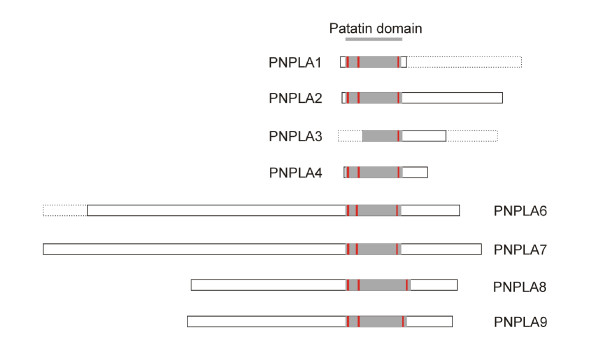
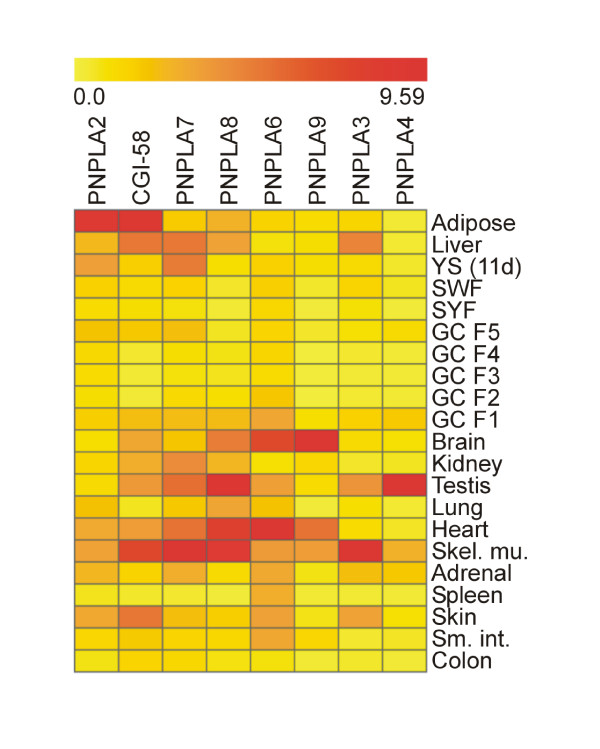
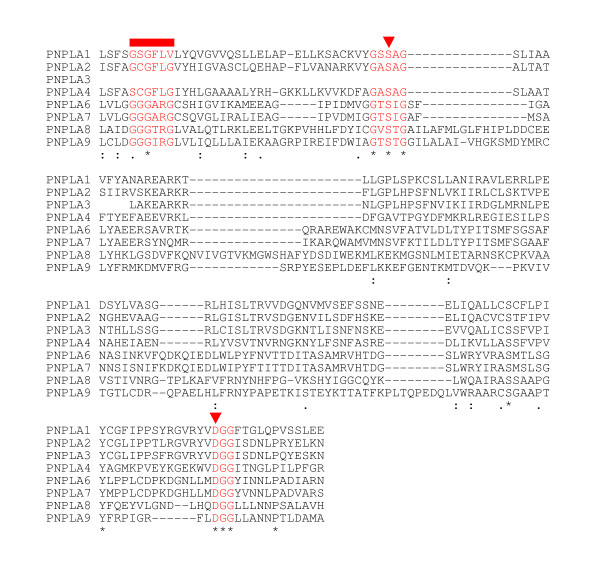
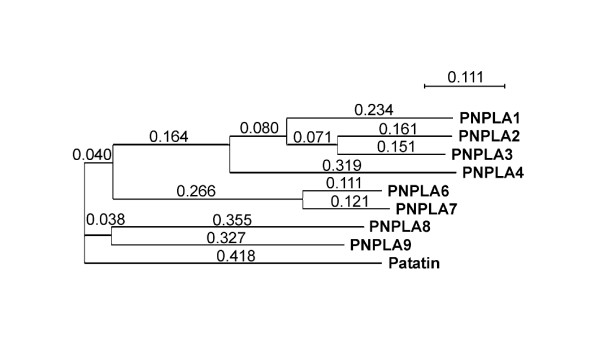
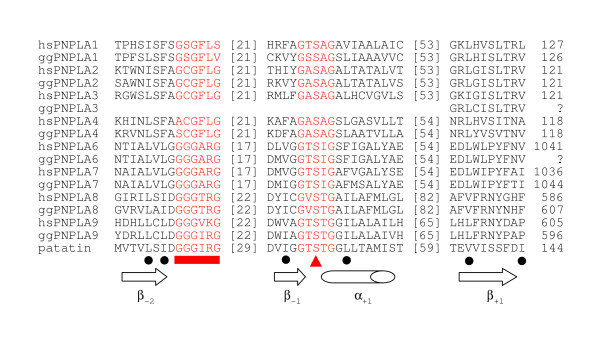
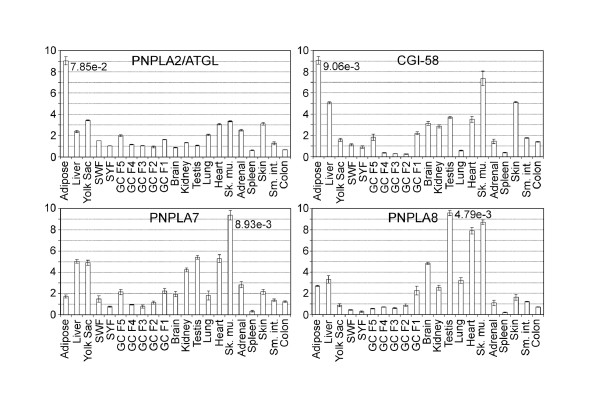
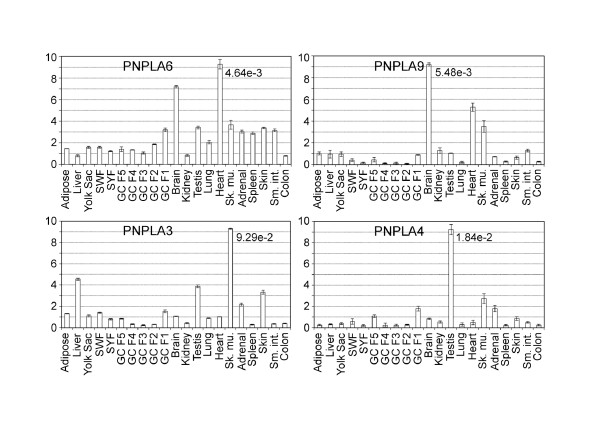
We scanned the draft chicken genome using human PNPLA sequences, and performed PCR to amplify and sequence orthologous cDNAs. Full-length cDNA sequences of galline PNPLA2/ATGL, PNPLA4, -7, -8, -9, and the activator protein CGI-58, as well as partial cDNA sequences of avian PNPLA1, -3, and -6 were obtained. The high degree of sequence identities (~50 to 80%) between the avian and human orthologs suggests conservation of important enzymatic functions. Quantitation by qPCR of the transcript levels of PNPLAs and CGI-58 in 21 tissues indicates that expression patterns and levels diverge greatly between species. A particularly interesting tissue in which certain PNPLAs may contribute to physiological specialization is the extraembryonic yolk sac.
Knowledge about the exact in-vivo functions of PNPLAs in any system is still sparse. Thus, studies about the temporal expression patterns and functions of the enzymes identified here, and of other already known extracellular lipases and co-factors, in the yolk sac and embryonic tissues during embryogenesis are called for. Based on the information obtained, further studies are anticipated to provide important insights of the roles of PNPLAs in the yolk sac and embryo development.
在卵生物种中,编码具有脂质重塑功能蛋白质的基因,如特定的脂肪酶,可能已经进化以促进胚胎对卵黄脂质的组装和利用。类马铃薯Patatin磷脂酶(PNPLA)的哺乳动物基因家族受到了广泛关注,但在其他脊椎动物中的研究较少;因此,我们开始对鸡(原鸡)的PNPLA基因进行研究。
我们使用人类PNPLA序列扫描鸡的基因组草图,并进行PCR扩增和测序直系同源cDNA。获得了鸡PNPLA2/脂肪甘油三酯脂肪酶(ATGL)、PNPLA4、-7、-8、-9以及激活蛋白CGI-58的全长cDNA序列,以及禽类PNPLA1、-3和-6的部分cDNA序列。禽类和人类直系同源物之间高度的序列同一性(约50%至80%)表明重要酶功能的保守性。通过qPCR对21种组织中PNPLA和CGI-58转录水平的定量分析表明,物种之间的表达模式和水平差异很大。胚外卵黄囊是一个特别有趣的组织,某些PNPLA可能在其中促进生理特化。
关于PNPLA在任何系统中的确切体内功能的知识仍然很少。因此,需要研究这里鉴定的酶以及其他已知的细胞外脂肪酶和辅助因子在胚胎发育过程中卵黄囊和胚胎组织中的时间表达模式和功能。基于获得的信息,预计进一步的研究将为PNPLA在卵黄囊和胚胎发育中的作用提供重要见解。