Cerutti Andrea, Rescigno Maria
Department of Pathology and Laboratory Medicine, Weill Medical College of Cornell University, and Weill Graduate School of Medical Sciences of Cornell University, 1300 York Avenue, New York, NY 10065, USA.
Immunity. 2008 Jun;28(6):740-50. doi: 10.1016/j.immuni.2008.05.001.
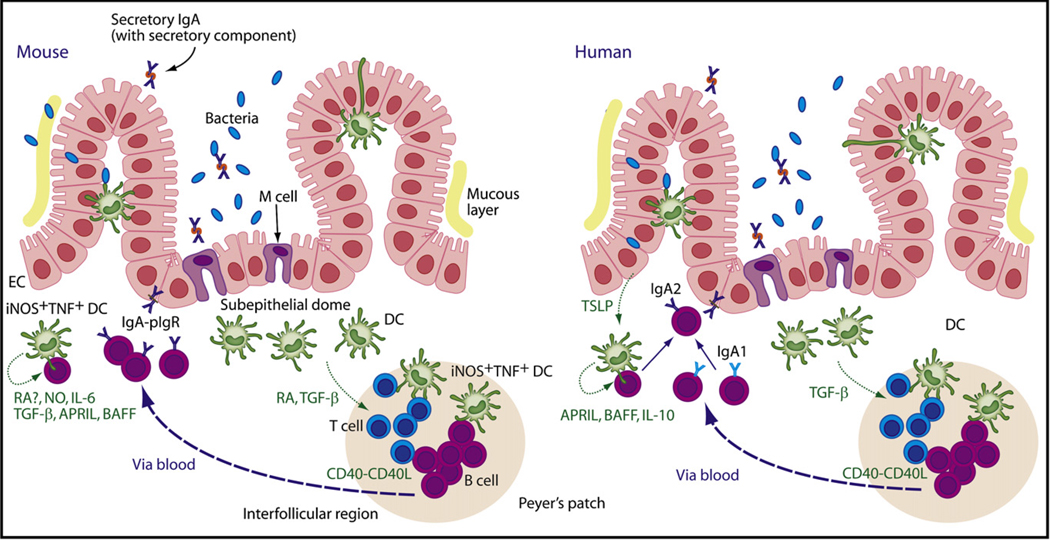
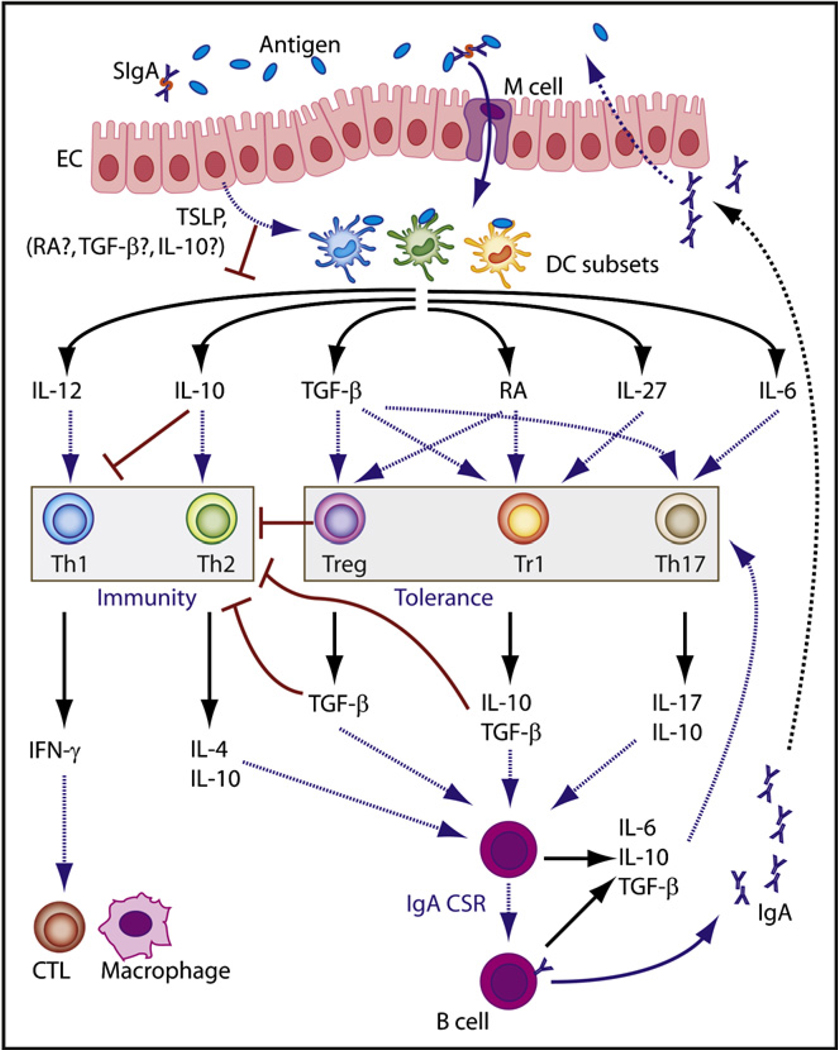
The gut mucosa is exposed to a large community of commensal bacteria that are required for the processing of nutrients and the education of the local immune system. Conversely, the gut immune system generates innate and adaptive responses that shape the composition of the local microbiota. One striking feature of intestinal adaptive immunity is its ability to generate massive amounts of noninflammatory immunoglobulin A (IgA) antibodies through multiple follicular and extrafollicular pathways that operate in the presence or absence of cognate T-B cell interactions. Here we discuss the role of intestinal IgA in host-commensal mutualism, immune protection, and tolerance and summarize recent advances on the role of innate immune cells in intestinal IgA production.
肠道黏膜暴露于大量共生细菌群落中,这些细菌对于营养物质的处理和局部免疫系统的发育是必需的。相反,肠道免疫系统产生先天性和适应性反应,这些反应塑造了局部微生物群的组成。肠道适应性免疫的一个显著特征是其能够通过多种滤泡和滤泡外途径产生大量非炎性免疫球蛋白A(IgA)抗体,这些途径在有或没有同源T-B细胞相互作用的情况下均可发挥作用。在这里,我们讨论肠道IgA在宿主-共生菌共生关系、免疫保护和耐受性中的作用,并总结先天免疫细胞在肠道IgA产生中的作用的最新进展。