Barrett Lisa, Gallant Maureen, Howley Constance, Bowmer M Ian, Hirsch Geri, Peltekian Kevork, Grant Michael
Immunology and Infectious Diseases Program, Division of BioMedical Sciences, Faculty of Medicine, Memorial University, St, John's, Canada.
BMC Immunol. 2008 Jun 13;9:28. doi: 10.1186/1471-2172-9-28.
Multiple immune evasion strategies by which HCV establishes chronic infection have been proposed, including manipulation of cytokine responses. Prior infection with HIV increases the likelihood of chronic HCV infection and accelerates development of HCV-related morbidity. Therefore, we investigated in vitro cytokine responses to HCV structural and non-structural proteins in peripheral blood mononuclear cells (PBMC) from uninfected, HIV-infected, HCV-infected and HIV/HCV-coinfected individuals.
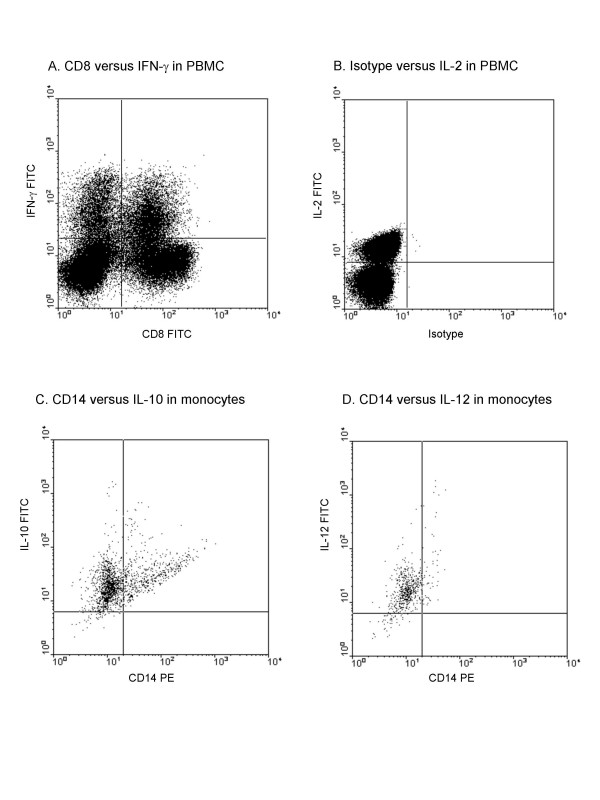
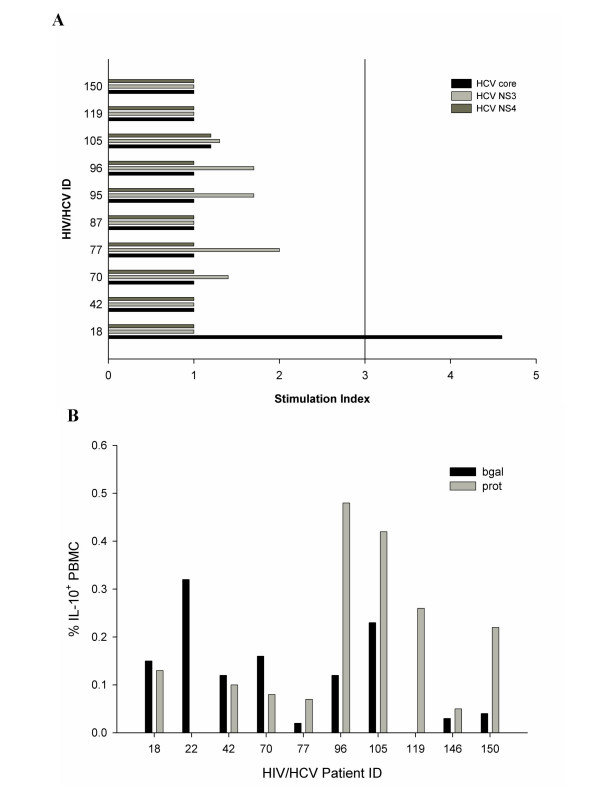
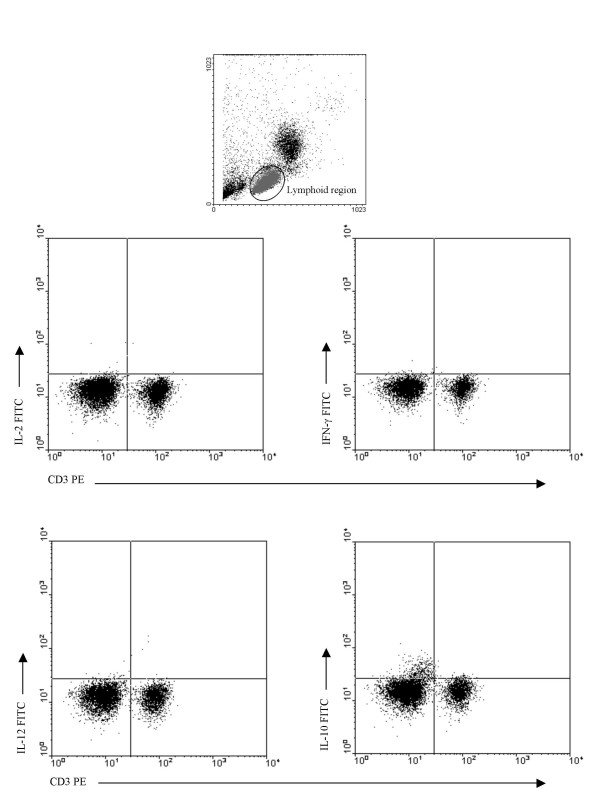
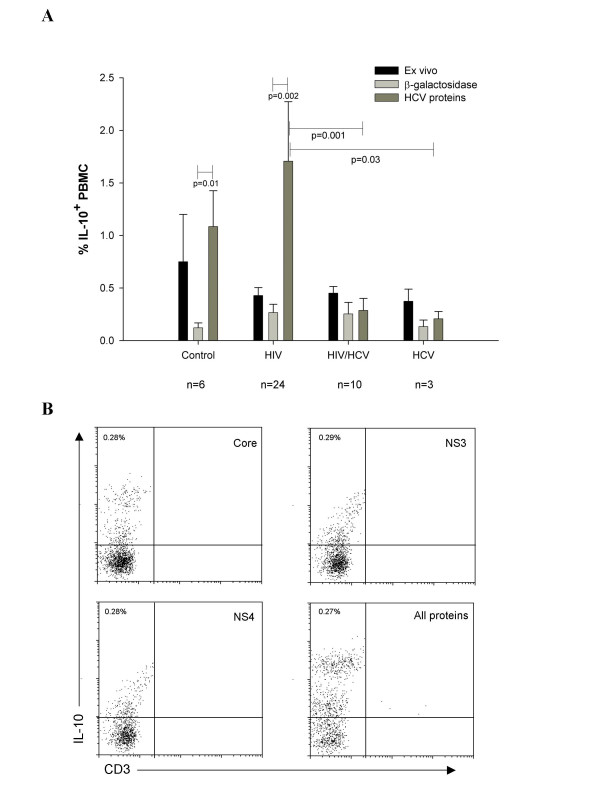
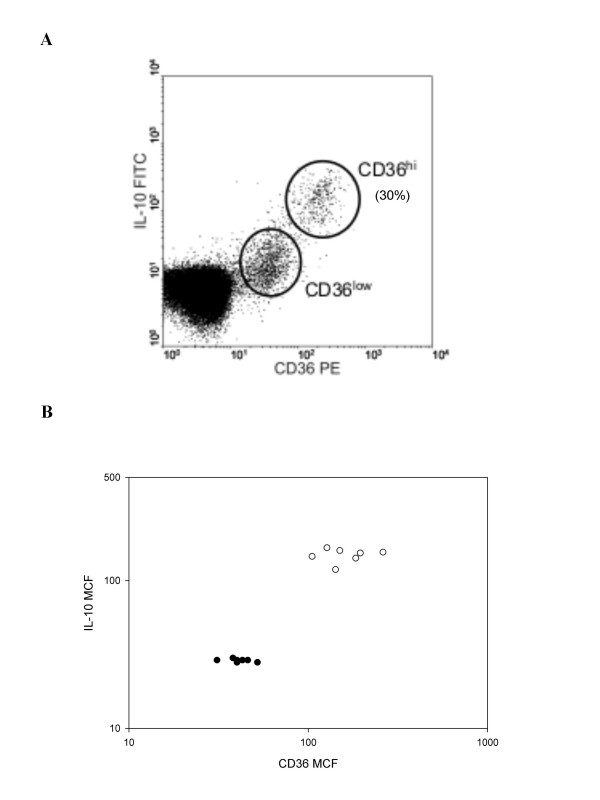
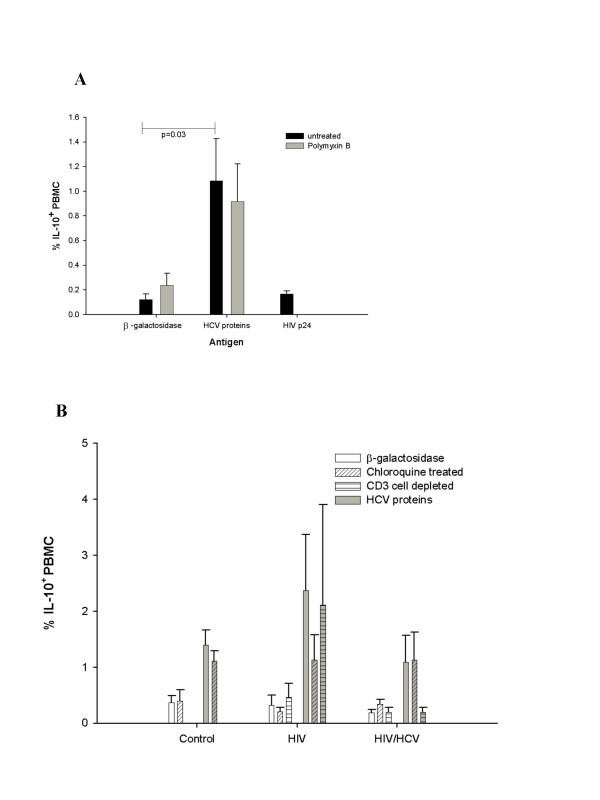
Intracellular flow cytometry was used to assess IL-2, IL-10, IL-12, and IFN-gamma production by freshly isolated PBMC incubated for 16 hours with recombinant HCV core, non-structural protein 3 (NS3), and NS4 proteins. Anti-HCV cellular responses were assessed in HIV/HCV-coinfected individuals by 3H-thymidine proliferation assay. Exposure to HCV antigens increased IL-10 production by PBMC, especially in uninfected and HIV-monoinfected individuals. This IL-10 response was attenuated in chronic HCV infection even with HCV/HIV-coinfection. The cells producing IL-10 in response to HCV proteins in vitro matched a PBMC subset recently shown to constitutively produce IL-10 in vivo. This subset was found at similar frequencies in uninfected, HIV-infected, HCV-infected and HIV/HCV-coinfected individuals before exposure to HCV proteins. HCV-specific T cell proliferation was detectable in only one HIV/HCV-coinfected individual who demonstrated no HCV-induced IL-10 response.
This pattern suggests that selective induction of IL-10 in uninfected individuals and especially in HIV-monoinfected individuals plays a role in establishing chronic HCV infection and conversely, that attenuation of this response, once chronic infection is established, favours development of hepatic immunopathology.
已经提出了丙型肝炎病毒(HCV)建立慢性感染的多种免疫逃逸策略,包括对细胞因子反应的操纵。先前感染人类免疫缺陷病毒(HIV)会增加慢性HCV感染的可能性,并加速HCV相关疾病的发展。因此,我们研究了来自未感染、HIV感染、HCV感染和HIV/HCV合并感染个体的外周血单个核细胞(PBMC)对HCV结构和非结构蛋白的体外细胞因子反应。
采用细胞内流式细胞术评估新鲜分离的PBMC与重组HCV核心蛋白、非结构蛋白3(NS3)和NS4蛋白孵育16小时后产生的白细胞介素-2(IL-2)、IL-10、IL-12和干扰素-γ(IFN-γ)。通过3H-胸腺嘧啶核苷增殖试验评估HIV/HCV合并感染个体中的抗HCV细胞反应。暴露于HCV抗原会增加PBMC产生的IL-10,尤其是在未感染和HIV单感染个体中。即使在HCV/HIV合并感染的情况下,这种IL-10反应在慢性HCV感染中也会减弱。体外对HCV蛋白产生IL-10的细胞与最近显示在体内组成性产生IL-10的PBMC亚群相匹配。在暴露于HCV蛋白之前,未感染、HIV感染、HCV感染和HIV/HCV合并感染个体中该亚群的频率相似。仅在一名未表现出HCV诱导的IL-10反应的HIV/HCV合并感染个体中检测到HCV特异性T细胞增殖。
这种模式表明,在未感染个体尤其是HIV单感染个体中选择性诱导IL-10在建立慢性HCV感染中起作用,相反,一旦建立慢性感染,这种反应的减弱有利于肝脏免疫病理学的发展。