Saeed Uzma, Durgadoss Lalitha, Valli R Khader, Joshi Dinesh C, Joshi Preeti G, Ravindranath Vijayalakshmi
Division of Molecular and Cellular Neuroscience, National Brain Research Centre, Nainwal Mode, Manesar, India.
PLoS One. 2008 Jun 18;3(6):e2459. doi: 10.1371/journal.pone.0002459.
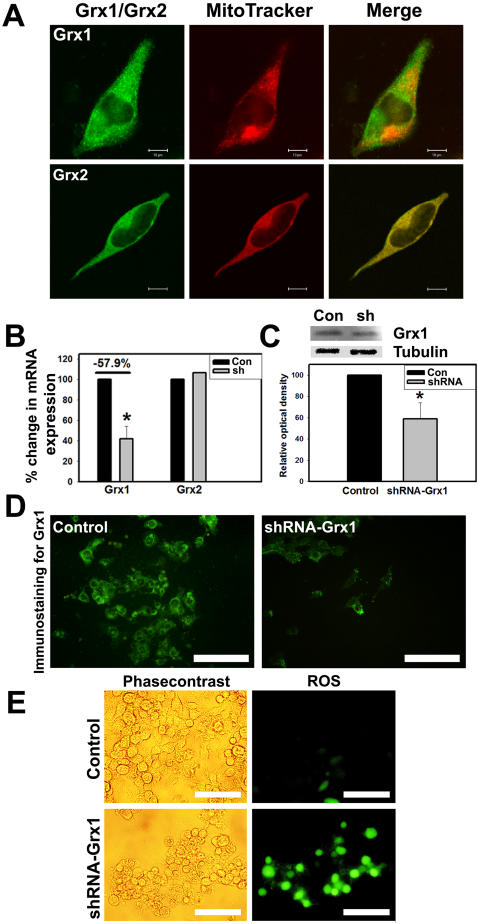
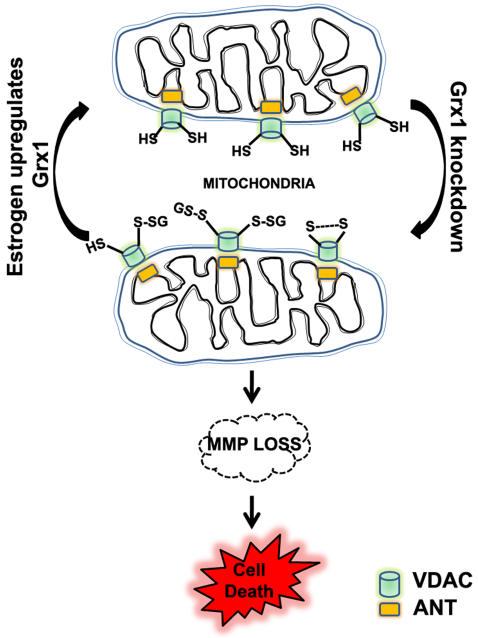
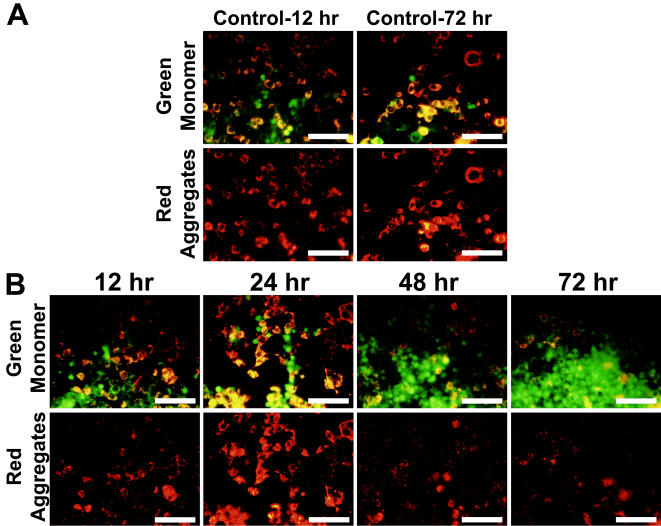
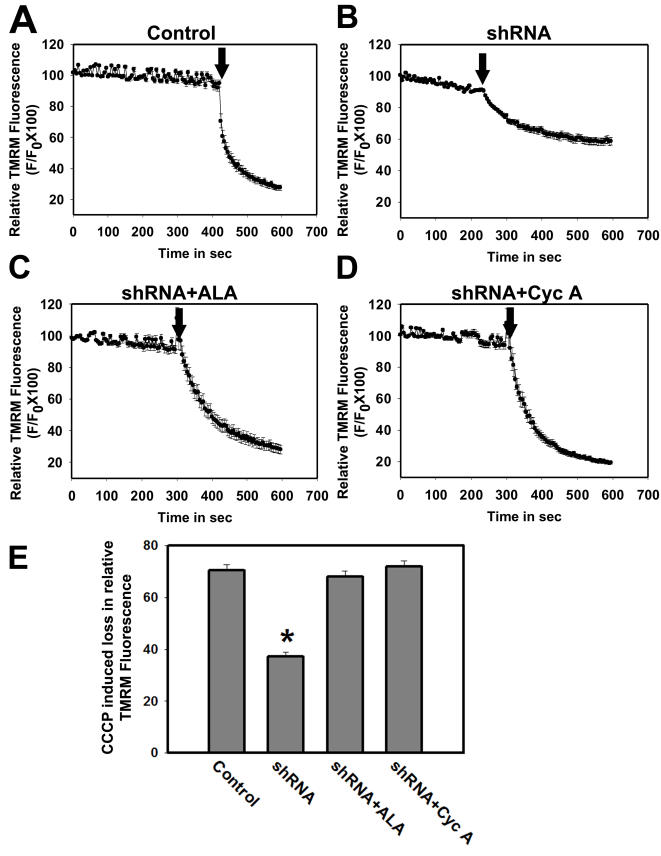
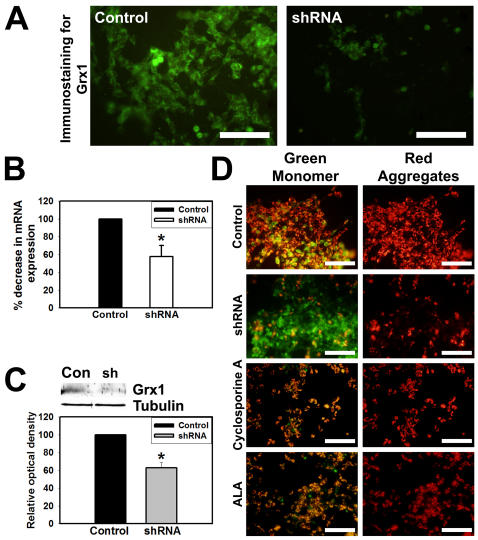
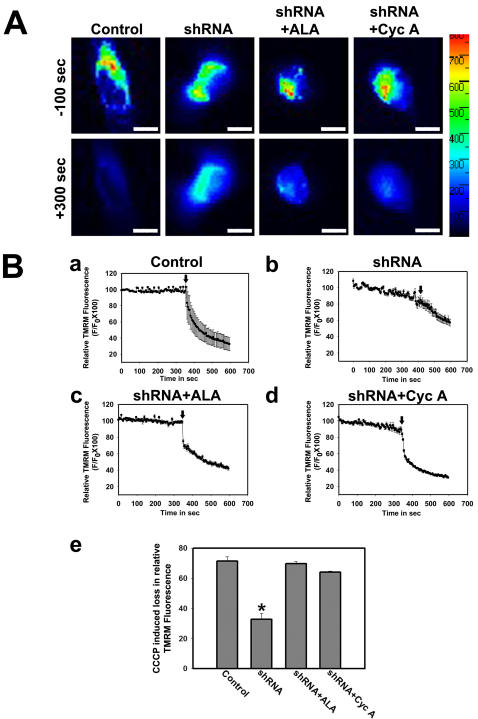
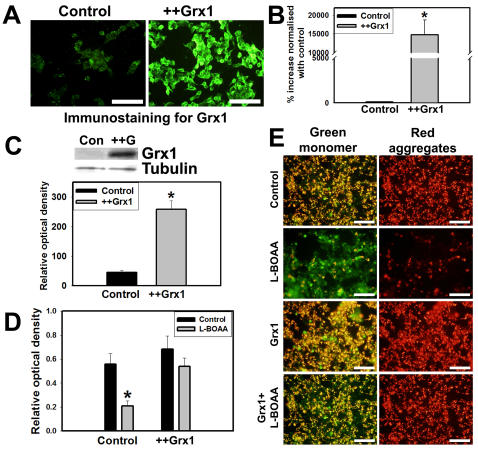
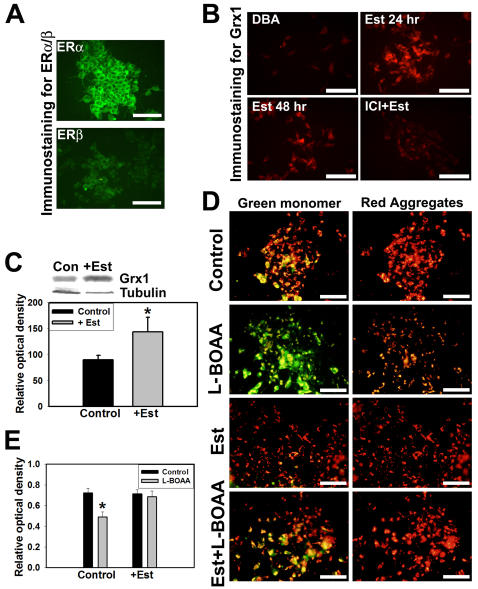
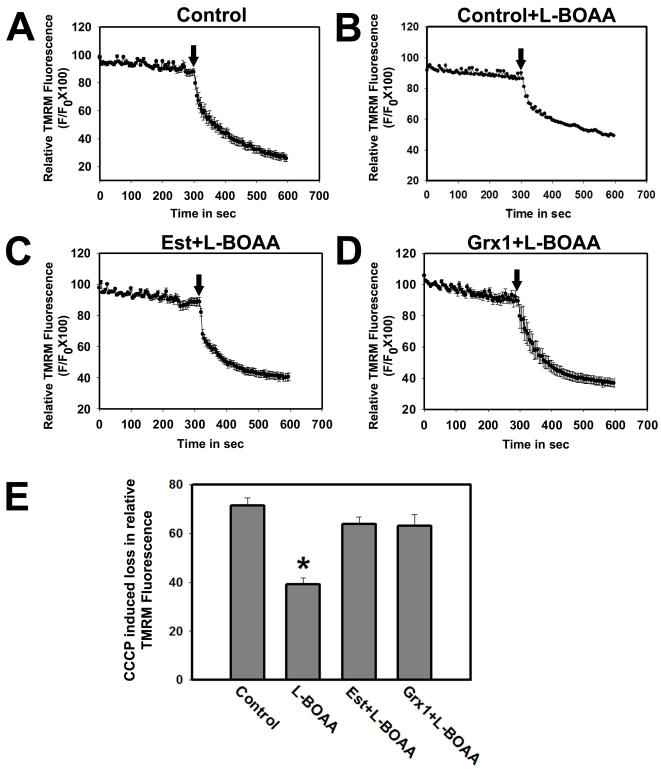
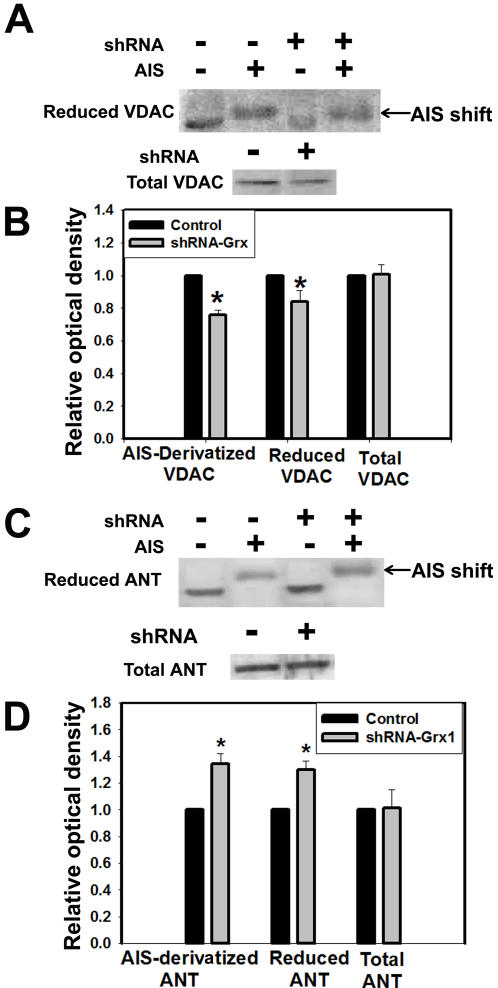
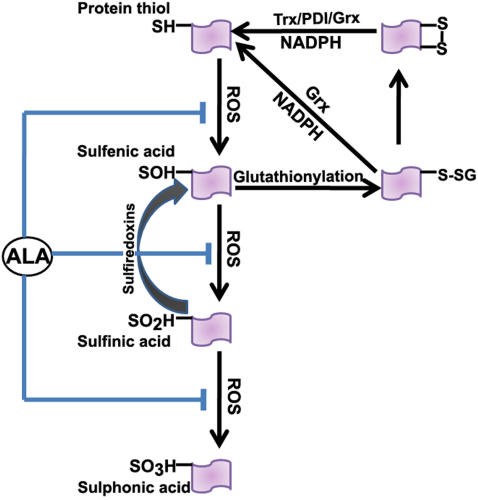
Mitochondrial dysfunction including that caused by oxidative stress has been implicated in the pathogenesis of neurodegenerative diseases. Glutaredoxin 1 (Grx1), a cytosolic thiol disulfide oxido-reductase, reduces glutathionylated proteins to protein thiols and helps maintain redox status of proteins during oxidative stress. Grx1 downregulation aggravates mitochondrial dysfunction in animal models of neurodegenerative diseases, such as Parkinson's and motor neuron disease. We examined the mechanism underlying the regulation of mitochondrial function by Grx1. Downregulation of Grx1 by shRNA results in loss of mitochondrial membrane potential (MMP), which is prevented by the thiol antioxidant, alpha-lipoic acid, or by cyclosporine A, an inhibitor of mitochondrial permeability transition. The thiol groups of voltage dependent anion channel (VDAC), an outer membrane protein in mitochondria but not adenosine nucleotide translocase (ANT), an inner membrane protein, are oxidized when Grx1 is downregulated. We then examined the effect of beta-N-oxalyl amino-L-alanine (L-BOAA), an excitatory amino acid implicated in neurolathyrism (a type of motor neuron disease), that causes mitochondrial dysfunction. Exposure of cells to L-BOAA resulted in loss of MMP, which was prevented by overexpression of Grx1. Grx1 expression is regulated by estrogen in the CNS and treatment of SH-SY5Y cells with estrogen upregulated Grx1 and protected from L-BOAA mediated MMP loss. Our studies demonstrate that Grx1, a cytosolic oxido-reductase, helps maintain mitochondrial integrity and prevents MMP loss caused by oxidative insult. Further, downregulation of Grx1 leads to mitochondrial dysfunction through oxidative modification of the outer membrane protein, VDAC, providing support for the critical role of Grx1 in maintenance of MMP.
包括由氧化应激引起的线粒体功能障碍与神经退行性疾病的发病机制有关。谷氧还蛋白1(Grx1)是一种胞质硫醇二硫化物氧化还原酶,可将谷胱甘肽化蛋白还原为蛋白硫醇,并在氧化应激期间帮助维持蛋白质的氧化还原状态。在帕金森病和运动神经元病等神经退行性疾病的动物模型中,Grx1的下调会加剧线粒体功能障碍。我们研究了Grx1调节线粒体功能的潜在机制。通过短发夹RNA(shRNA)下调Grx1会导致线粒体膜电位(MMP)丧失,而硫醇抗氧化剂α-硫辛酸或线粒体通透性转换抑制剂环孢素A可防止这种情况发生。当Grx1下调时,线粒体外膜蛋白电压依赖性阴离子通道(VDAC)的硫醇基团会被氧化,但内膜蛋白腺苷酸转位酶(ANT)不会。然后,我们研究了β-N-草酰氨基-L-丙氨酸(L-BOAA)的作用,L-BOAA是一种与神经性豆状核变性(一种运动神经元病)有关的兴奋性氨基酸,可导致线粒体功能障碍。细胞暴露于L-BOAA会导致MMP丧失,而Grx1的过表达可防止这种情况发生。Grx1的表达在中枢神经系统中受雌激素调节,用雌激素处理SH-SY5Y细胞会上调Grx1,并使其免受L-BOAA介导的MMP丧失的影响。我们的研究表明,胞质氧化还原酶Grx1有助于维持线粒体完整性,并防止由氧化损伤引起的MMP丧失。此外,Grx1的下调通过外膜蛋白VDAC的氧化修饰导致线粒体功能障碍,这为Grx1在维持MMP中的关键作用提供了支持。