Center for Leadership and Management, Management Sciences for Health, Cambridge, MA, USA.
Hum Resour Health. 2008 Jun 20;6:10. doi: 10.1186/1478-4491-6-10.
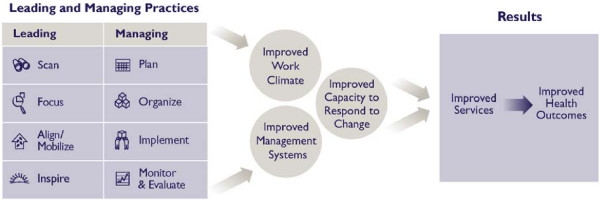
This article is the lead article in the Human Resources for Health journal's first quarterly feature. The series of seven articles has been contributed by Management Sciences for Health (MSH) under the theme of leadership and management in public health and will be published article by article over the next few weeks. The journal has invited Dr Manuel M. Dayrit, Director of the WHO Department of Human Resources for Health and former Minister of Health for the Philippines to launch the feature with an opening editorial to be found in the journal's blog. This opening article describes the human resource challenges that managers around the world report and analyses why solutions often fail to be implemented. Despite rising attention to the acute shortage of health care workers, solutions to the human resource (HR) crisis are difficult to achieve, especially in the poorest countries. Although we are aware of the issues and have developed HR strategies, the problem is that some old systems of leading and managing human resources for health do not work in today's context. The Leadership Development Program (LDP) is grounded on the belief that good leadership and management can be learned and practiced at all levels. The case studies in this issue were chosen to illustrate results from using the LDP at different levels of the health sector. The LDP makes a profound difference in health managers' attitudes towards their work. Rather than feeling defeated by a workplace climate that lacks motivation, hope, and commitment to change, people report that they are mobilized to take action to change the status quo. The lesson is that without this capacity at all levels, global policy and national HR strategies will fail to make a difference.
这篇文章是《人力资源健康杂志》首季特色系列文章中的开篇文章。该系列共七篇文章,由卫生管理科学组织(MSH)以公共卫生领导力和管理为主题撰写,并将在接下来的几周内逐篇发表。该杂志邀请世卫组织人力资源健康司司长、菲律宾前卫生部长曼努埃尔·M·戴里特博士(Dr Manuel M. Dayrit)为该特色系列撰文开篇,这篇开篇文章描述了世界各地管理者报告的人力资源挑战,并分析了为何解决方案往往无法实施。尽管人们对医疗保健工作者严重短缺的问题日益关注,但人力资源(HR)危机的解决方案难以实现,尤其是在最贫穷的国家。尽管我们已经意识到这些问题,并制定了人力资源战略,但问题在于,一些旧的人力资源管理系统在当今的背景下无法发挥作用。领导力发展计划(LDP)基于这样一种信念,即良好的领导力和管理能力可以在各个层面上学习和实践。本期的案例研究旨在说明在卫生部门不同层面使用 LDP 的结果。LDP 对卫生管理人员对工作的态度产生了深远的影响。他们不再感到自己在一个缺乏动力、希望和承诺改变的工作环境中被打败,而是被动员起来采取行动改变现状。这一教训是,如果没有各级的这种能力,全球政策和国家人力资源战略将无法产生影响。