Powolny Anna A, Singh Shivendra V
Department of Pharmacology and Urology, University of Pittsburgh Cancer Institute, University of Pittsburgh School of Medicine, Pittsburgh, PA 15213, USA.
Cancer Lett. 2008 Oct 8;269(2):305-14. doi: 10.1016/j.canlet.2008.05.027. Epub 2008 Jun 24.
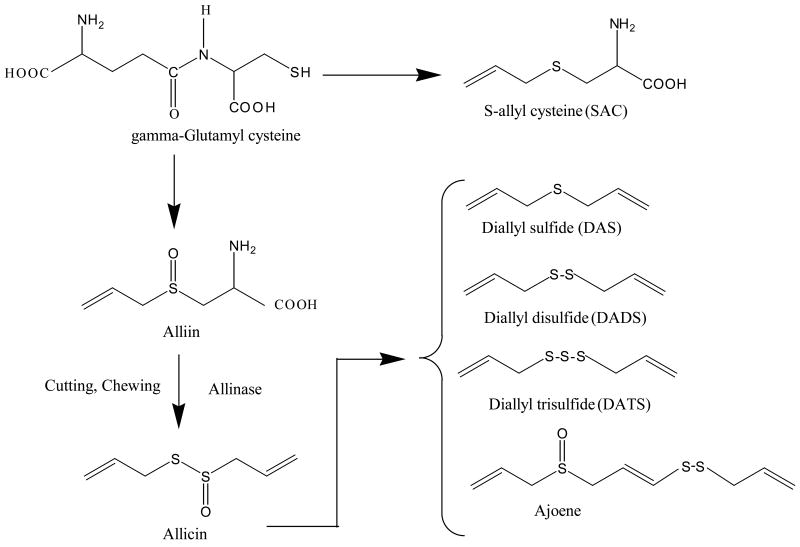
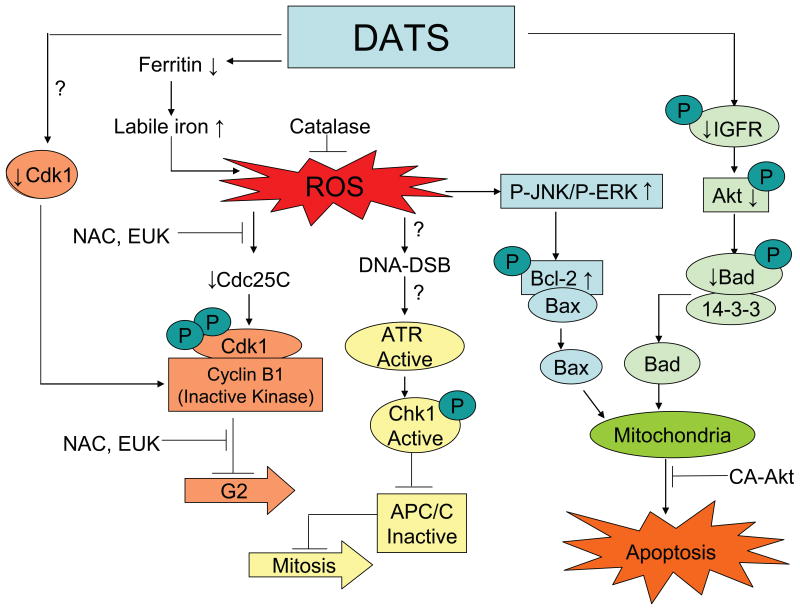
Allium vegetables, such as garlic, have been used for medicinal purposes throughout the recorded history. The known health benefits of Allium vegetables constituents include cardiovascular effects, improvement of the immune function, lowering of blood glucose level, radioprotection, protection against microbial infections, and anti-cancer effects. Initial evidence for the anti-cancer effect of Allium vegetables was provided by population-based case-control studies. Subsequent laboratory studies showed that the Allium vegetable constituents, such as diallyl disulfide, S-allylcysteine, and ajoene can not only offer protection against chemically induced cancer in animal models by altering carcinogen metabolism, but also suppress growth of cancer cells in culture and in vivo by causing cell cycle arrest and apoptosis induction. Suppression of angiogenesis and experimental metastasis by Allium constituents has also been reported. Defining the mechanism by which sulfur compounds derived from Allium vegetables inhibit cancer cell growth has been the topic of intense research in the last two decades. Some Allium vegetable constituents have also entered clinical trials to assess their safety and anti-cancer efficacy. This article summarizes preclinical and limited clinical data to warrant further clinical evaluation of Allium vegetable constituents for prevention and therapy of human cancers.
葱属蔬菜,如大蒜,在有记录的历史中一直被用于药用。葱属蔬菜成分已知的健康益处包括心血管效应、免疫功能改善、血糖水平降低、辐射防护、预防微生物感染以及抗癌作用。基于人群的病例对照研究提供了葱属蔬菜抗癌作用的初步证据。随后的实验室研究表明,葱属蔬菜成分,如二烯丙基二硫化物、S -烯丙基半胱氨酸和阿霍烯,不仅可以通过改变致癌物代谢在动物模型中预防化学诱导的癌症,还能通过导致细胞周期停滞和诱导凋亡在体外培养和体内抑制癌细胞生长。葱属成分对血管生成和实验性转移的抑制作用也有报道。在过去二十年中,确定葱属蔬菜衍生的硫化合物抑制癌细胞生长的机制一直是深入研究的课题。一些葱属蔬菜成分也已进入临床试验以评估其安全性和抗癌疗效。本文总结了临床前和有限的临床数据,以证明对葱属蔬菜成分进行进一步临床评估以预防和治疗人类癌症的必要性。