Binion D G, Otterson M F, Rafiee P
Department of Surgery, Medical College of Wisconsin, 8701 Watertown Plank Road, Milwaukee, WI 53226, USA.
Gut. 2008 Nov;57(11):1509-17. doi: 10.1136/gut.2008.152496. Epub 2008 Jul 2.
Angiogenesis, the growth of new blood vessels, is a critical homeostatic mechanism which regulates vascular populations in response to physiological requirements and pathophysiological demand, including chronic inflammation and cancer. The importance of angiogenesis in gastrointestinal chronic inflammation and cancer has been defined, as antiangiogenic therapy has demonstrated benefit in models of inflammatory bowel disease and colon cancer treatment. Curcumin is a natural product undergoing evaluation for the treatment of chronic inflammation, including inflammatory bowel disease (IBD). The effect of curcumin on human intestinal angiogenesis is not defined.
The antiangiogenic effect of curcumin on in vitro angiogenesis was examined using primary cultures of human intestinal microvascular endothelial cells (HIMECs), stimulated with vascular endothelial growth factor (VEGF).
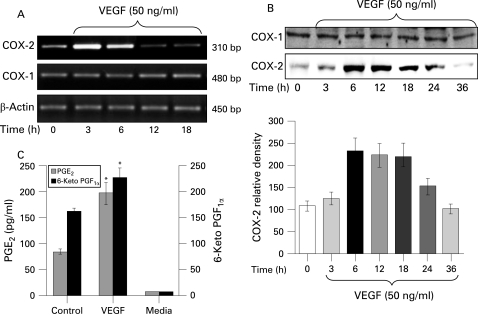
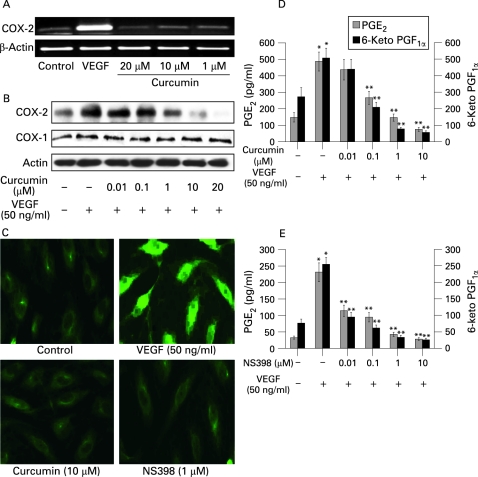
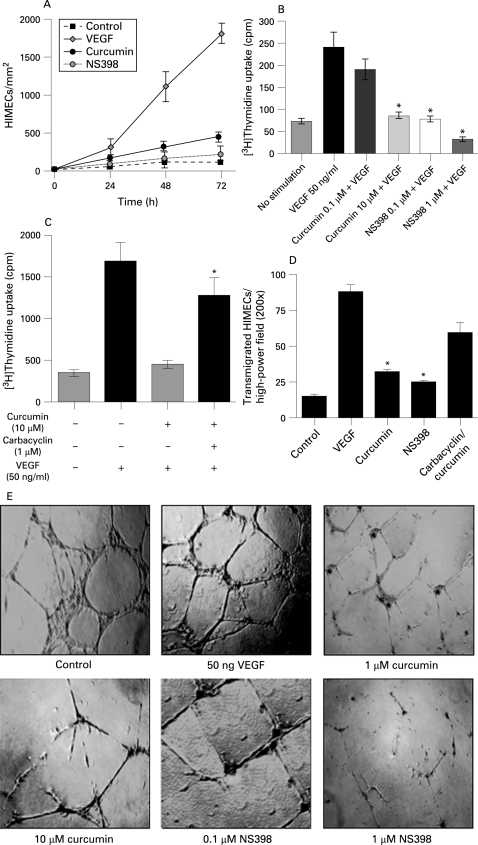
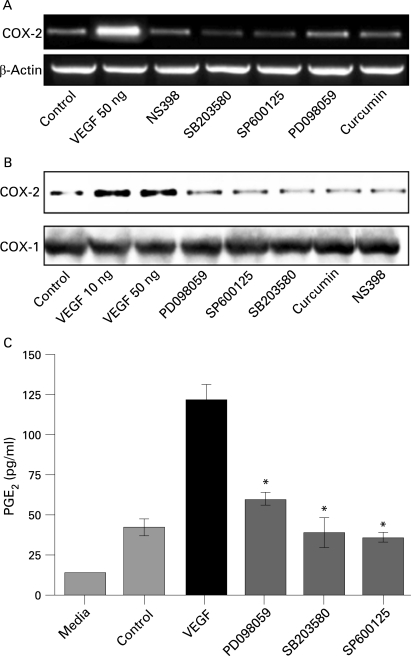
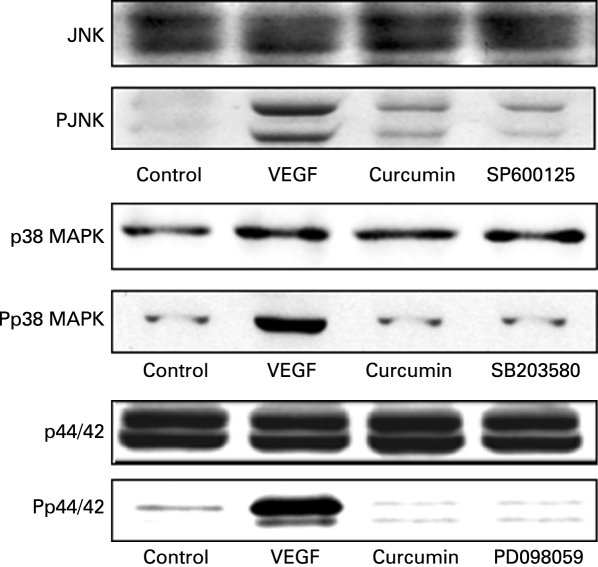
Curcumin inhibited proliferation, cell migration and tube formation in HIMECs induced by VEGF. Activation of HIMECs by VEGF resulted in enhanced expression of cyclo-oxygenase-2 (COX-2) mRNA, protein and prostaglandin E(2) (PGE(2)) production. Pretreatment of HIMECs with 10 microM curcumin as well as 1 microM NS398, a selective inhibitor of COX-2, resulted in inhibition of COX-2 at the mRNA and protein level and PGE(2) production. Similarly COX-2 expression in HIMECs was significantly inhibited by Jun N-terminal kinase (JNK; SP600125) and p38 mitogen-activated protein kinase (MAPK; SB203580) inhibitors and was reduced by p44/42 MAPK inhibitor (PD098059).
Taken together, these data demonstrate an important role for COX-2 in the regulation of angiogenesis in HIMECs via MAPKs. Moreover, curcumin inhibits microvascular endothelial cell angiogenesis through inhibition of COX-2 expression and PGE(2) production, suggesting that this natural product possesses antiangiogenic properties, which warrants further investigation as adjuvant treatment of IBD and cancer.
血管生成,即新血管的生长,是一种关键的稳态机制,可根据生理需求和病理生理需求(包括慢性炎症和癌症)调节血管数量。血管生成在胃肠道慢性炎症和癌症中的重要性已得到明确,因为抗血管生成疗法已在炎症性肠病和结肠癌治疗模型中显示出益处。姜黄素是一种正在接受治疗慢性炎症(包括炎症性肠病(IBD))评估的天然产物。姜黄素对人肠道血管生成的影响尚不明确。
使用经血管内皮生长因子(VEGF)刺激的人肠道微血管内皮细胞(HIMECs)原代培养物,检测姜黄素对体外血管生成的抗血管生成作用。
姜黄素抑制VEGF诱导的HIMECs增殖、细胞迁移和管形成。VEGF激活HIMECs导致环氧化酶-2(COX-2)mRNA、蛋白表达增强以及前列腺素E2(PGE2)产生增加。用10微摩尔姜黄素以及1微摩尔NS398(一种COX-2选择性抑制剂)预处理HIMECs,导致COX-2在mRNA和蛋白水平以及PGE2产生受到抑制。同样,Jun N端激酶(JNK;SP600125)和p38丝裂原活化蛋白激酶(MAPK;SB203580)抑制剂显著抑制HIMECs中COX-2表达,p44/42 MAPK抑制剂(PD098059)使其表达降低。
综上所述,这些数据表明COX-2通过MAPKs在调节HIMECs血管生成中起重要作用。此外,姜黄素通过抑制COX-2表达和PGE2产生抑制微血管内皮细胞血管生成,表明这种天然产物具有抗血管生成特性,这值得作为IBD和癌症的辅助治疗进行进一步研究。