Xi Zhiyong, Ramirez Jose L, Dimopoulos George
W. Harry Feinstone Department of Molecular Microbiology and Immunology, Bloomberg School of Public Health, Johns Hopkins University, Baltimore, Maryland, United States of America.
PLoS Pathog. 2008 Jul 4;4(7):e1000098. doi: 10.1371/journal.ppat.1000098.
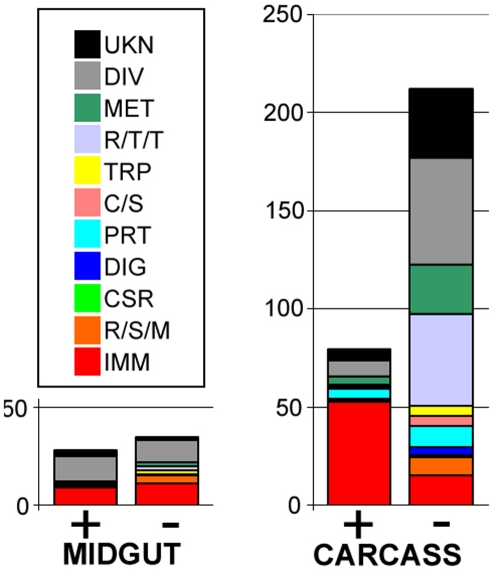
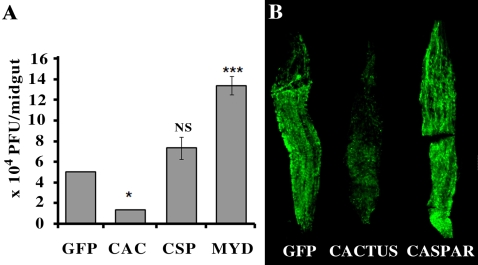
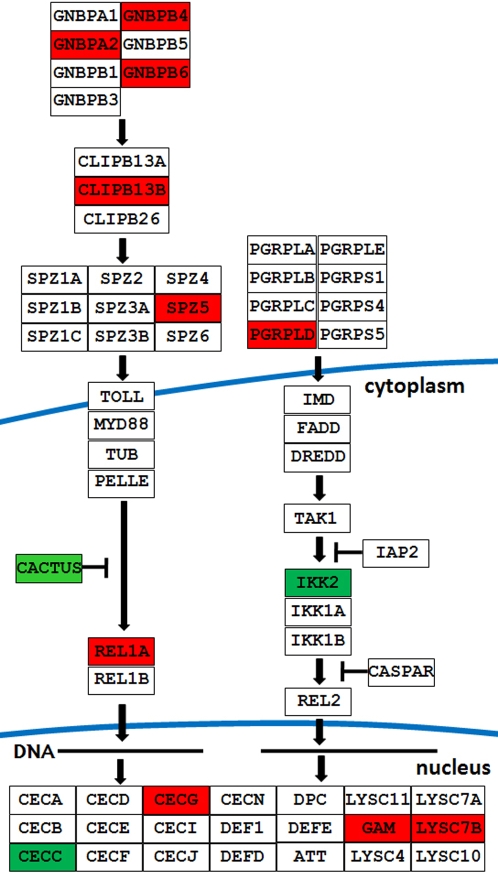
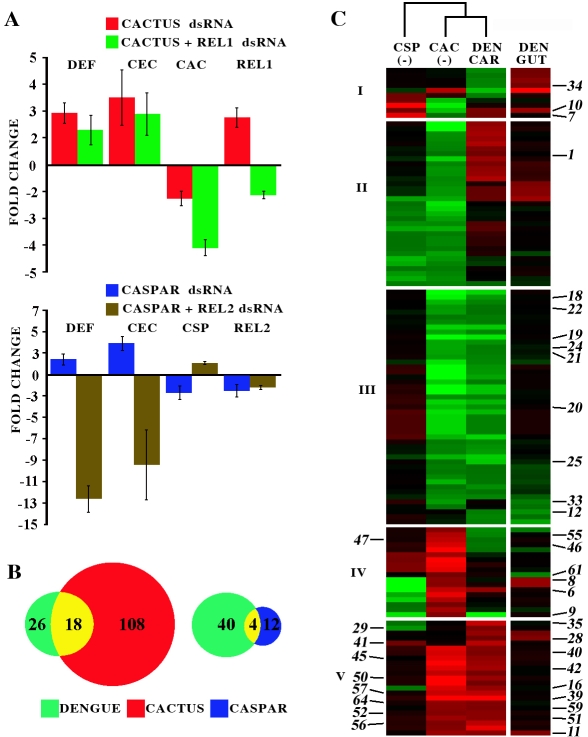
Aedes aegypti, the mosquito vector of dengue viruses, utilizes its innate immune system to ward off a variety of pathogens, some of which can cause disease in humans. To date, the features of insects' innate immune defenses against viruses have mainly been studied in the fruit fly Drosophila melanogaster, which appears to utilize different immune pathways against different types of viruses, in addition to an RNA interference-based defense system. We have used the recently released whole-genome sequence of the Ae. aegypti mosquito, in combination with high-throughput gene expression and RNA interference (RNAi)-based reverse genetic analyses, to characterize its response to dengue virus infection in different body compartments. We have further addressed the impact of the mosquito's endogenous microbial flora on virus infection. Our findings indicate a significant role for the Toll pathway in regulating resistance to dengue virus, as indicated by an infection-responsive regulation and functional assessment of several Toll pathway-associated genes. We have also shown that the mosquito's natural microbiota play a role in modulating the dengue virus infection, possibly through basal-level stimulation of the Toll immune pathway.
埃及伊蚊是登革病毒的蚊媒,它利用自身的先天免疫系统抵御多种病原体,其中一些病原体可导致人类患病。迄今为止,昆虫针对病毒的先天免疫防御特性主要是在果蝇中进行研究的,果蝇除了具有基于RNA干扰的防御系统外,似乎还利用不同的免疫途径抵御不同类型的病毒。我们利用最近发布的埃及伊蚊全基因组序列,结合高通量基因表达和基于RNA干扰(RNAi)的反向遗传分析,来表征其在不同身体部位对登革病毒感染的反应。我们还进一步探讨了蚊子体内微生物菌群对病毒感染的影响。我们的研究结果表明,Toll途径在调节对登革病毒的抗性方面发挥着重要作用,这一点通过对几个与Toll途径相关基因的感染反应调节和功能评估得以体现。我们还表明,蚊子的天然微生物群可能通过对Toll免疫途径的基础水平刺激,在调节登革病毒感染中发挥作用。