Tamura T, Sumita K, Fujino I, Aoyama A, Horikoshi M, Hoffmann A, Roeder R G, Muramatsu M, Mikoshiba K
Division of Behavior and Neurobiology, National Institute for Basic Biology, Okazaki, Japan.
Nucleic Acids Res. 1991 Jul 25;19(14):3861-5. doi: 10.1093/nar/19.14.3861.
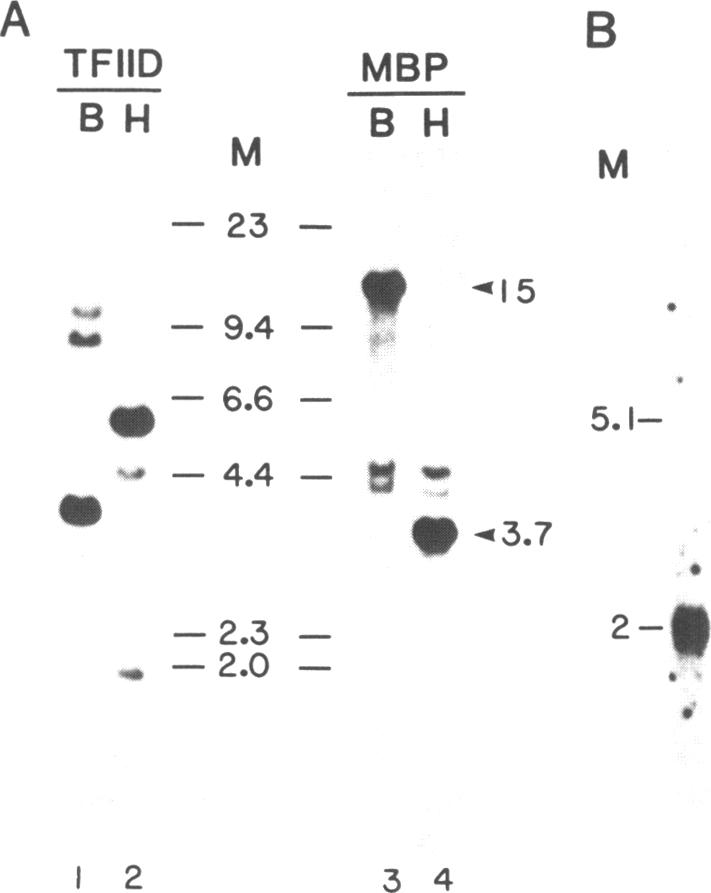
A complementary DNA (cDNA) encoding a mouse TFIID (mIID) was isolated from mouse brain cDNA libraries. The 316 amino acid sequence deduced from cDNA sequences revealed the presence of an amino-terminal region enriched in serine, threonine, and proline (STP-cluster), an uninterrupted stretch of 13 glutamine residues (Q-run), a second STP-cluster, and a conserved carboxy-terminal region. Amino acid sequences of the first STP-cluster and the conserved carboxy-terminal region were identical to those of the human TFIID (hIID). However, the Q-run was considerably shorter than that in hIID and sequences in the second STP-cluster diverged from those of the hIID. The murine TFIID transcript is expressed as a 2 kilobase poly(A)+ RNA in the mouse brain. Southern blot analysis identified a single gene copy per haploid mouse genome.
从小鼠脑cDNA文库中分离出编码小鼠TFIID(mIID)的互补DNA(cDNA)。从cDNA序列推导的316个氨基酸序列显示,存在富含丝氨酸、苏氨酸和脯氨酸的氨基末端区域(STP簇)、13个谷氨酰胺残基的不间断延伸(Q序列)、第二个STP簇以及保守的羧基末端区域。第一个STP簇和保守的羧基末端区域的氨基酸序列与人TFIID(hIID)的相同。然而,Q序列比hIID中的短得多,并且第二个STP簇中的序列与hIID的不同。小鼠TFIID转录本在小鼠脑中表达为2千碱基的多聚腺苷酸加(poly(A)+)RNA。Southern印迹分析确定单倍体小鼠基因组中每个基因有一个拷贝。