Lovis Pascal, Roggli Elodie, Laybutt D Ross, Gattesco Sonia, Yang Jiang-Yan, Widmann Christian, Abderrahmani Amar, Regazzi Romano
Department of Cell Biology and Morphology, Faculty of Biology and Medicine, University of Lausanne, Lausanne, Switzerland.
Diabetes. 2008 Oct;57(10):2728-36. doi: 10.2337/db07-1252. Epub 2008 Jul 15.
Visceral obesity and elevated plasma free fatty acids are predisposing factors for type 2 diabetes. Chronic exposure to these lipids is detrimental for pancreatic beta-cells, resulting in reduced insulin content, defective insulin secretion, and apoptosis. We investigated the involvement in this phenomenon of microRNAs (miRNAs), a class of noncoding RNAs regulating gene expression by sequence-specific inhibition of mRNA translation.
We analyzed miRNA expression in insulin-secreting cell lines or pancreatic islets exposed to palmitate for 3 days and in islets from diabetic db/db mice. We studied the signaling pathways triggering the changes in miRNA expression and determined the impact of the miRNAs affected by palmitate on insulin secretion and apoptosis.
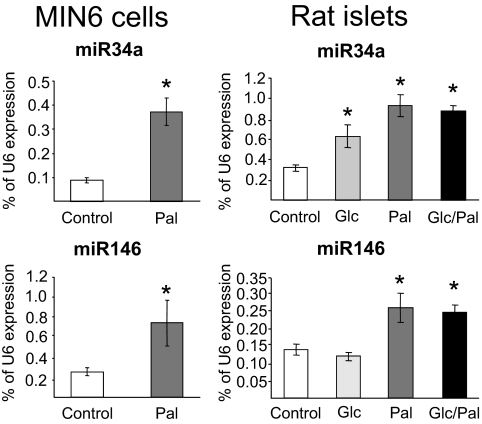
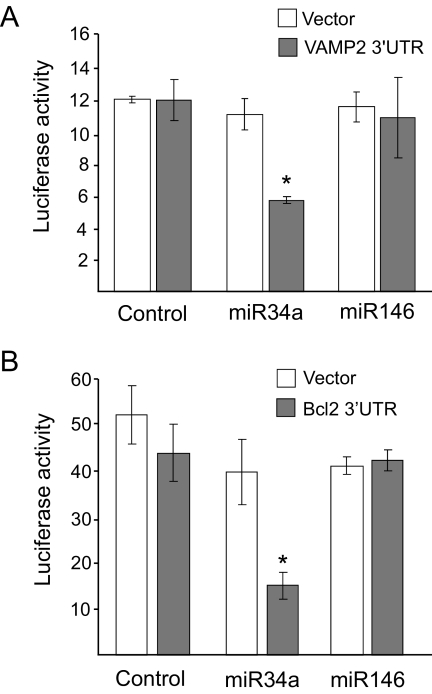
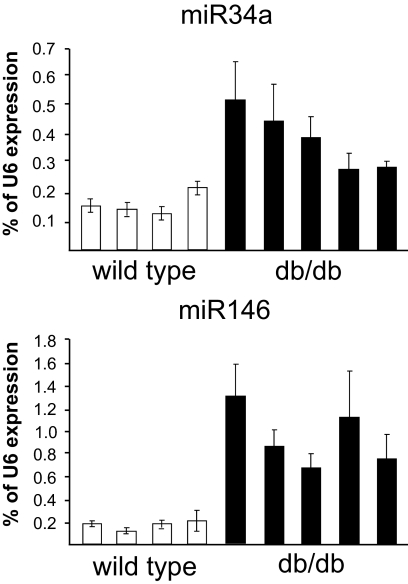
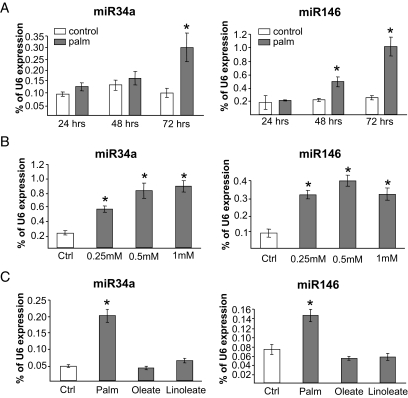
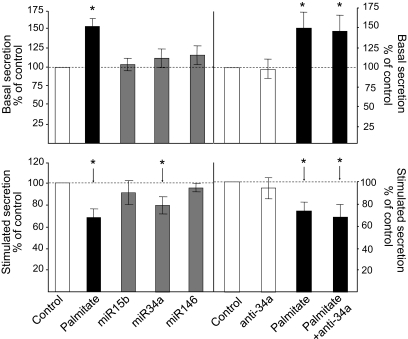
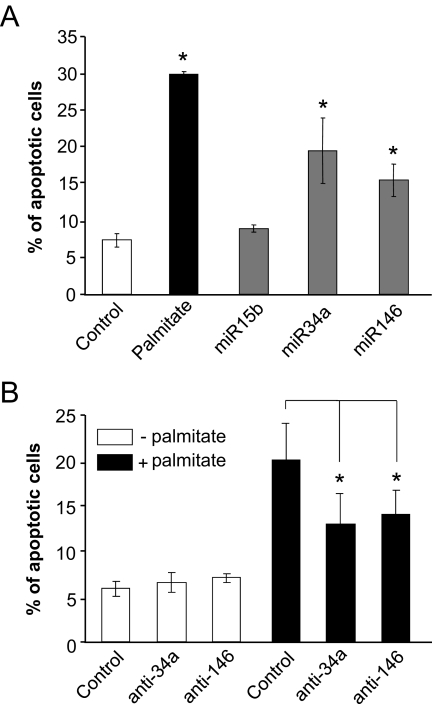
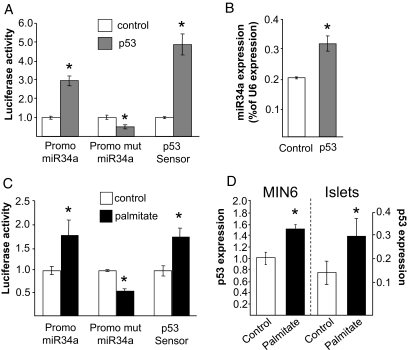
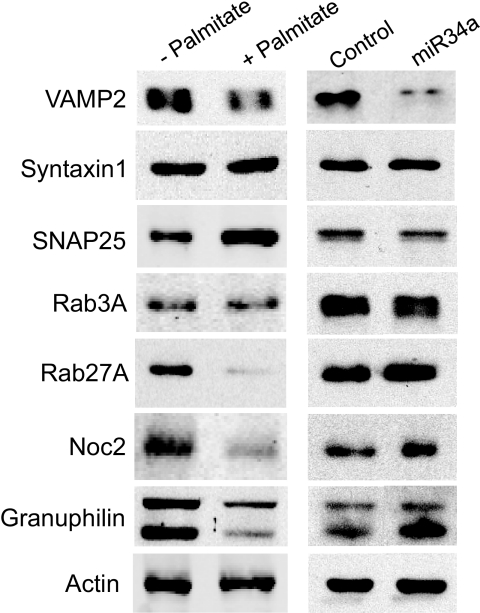
Prolonged exposure of the beta-cell line MIN6B1 and pancreatic islets to palmitate causes a time- and dose-dependent increase of miR34a and miR146. Elevated levels of these miRNAs are also observed in islets of diabetic db/db mice. miR34a rise is linked to activation of p53 and results in sensitization to apoptosis and impaired nutrient-induced secretion. The latter effect is associated with inhibition of the expression of vesicle-associated membrane protein 2, a key player in beta-cell exocytosis. Higher miR146 levels do not affect the capacity to release insulin but contribute to increased apoptosis. Treatment with oligonucleotides that block miR34a or miR146 activity partially protects palmitate-treated cells from apoptosis but is insufficient to restore normal secretion.
Our findings suggest that at least part of the detrimental effects of palmitate on beta-cells is caused by alterations in the level of specific miRNAs.
内脏肥胖和血浆游离脂肪酸升高是2型糖尿病的诱发因素。长期暴露于这些脂质对胰腺β细胞有害,会导致胰岛素含量降低、胰岛素分泌缺陷和细胞凋亡。我们研究了微小RNA(miRNA)在这一现象中的作用,miRNA是一类通过对mRNA翻译进行序列特异性抑制来调节基因表达的非编码RNA。
我们分析了暴露于棕榈酸3天的胰岛素分泌细胞系或胰岛以及糖尿病db/db小鼠胰岛中的miRNA表达。我们研究了触发miRNA表达变化的信号通路,并确定了受棕榈酸影响的miRNA对胰岛素分泌和细胞凋亡的影响。
β细胞系MIN6B1和胰岛长期暴露于棕榈酸会导致miR34a和miR146呈时间和剂量依赖性增加。在糖尿病db/db小鼠的胰岛中也观察到这些miRNA水平升高。miR34a的升高与p53的激活有关,导致细胞对凋亡敏感以及营养物质诱导的分泌受损。后一种效应与囊泡相关膜蛋白2表达的抑制有关,囊泡相关膜蛋白2是β细胞胞吐作用中的关键因子。较高的miR146水平不影响胰岛素释放能力,但会导致细胞凋亡增加。用阻断miR34a或miR146活性的寡核苷酸处理可部分保护棕榈酸处理的细胞免于凋亡,但不足以恢复正常分泌。
我们的研究结果表明,棕榈酸对β细胞的有害作用至少部分是由特定miRNA水平的改变引起的。