Skrabalak Sara E, Chen Jingyi, Au Leslie, Lu Xianmao, Li Xingde, Xia Younan
Department of Chemistry University of Washington, Seattle, WA 98195 (USA).
Adv Mater. 2007 Oct 17;19(20):3177-3184. doi: 10.1002/adma.200701972.
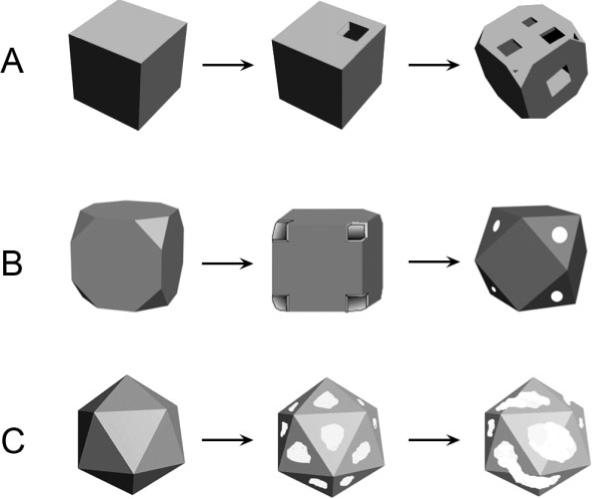
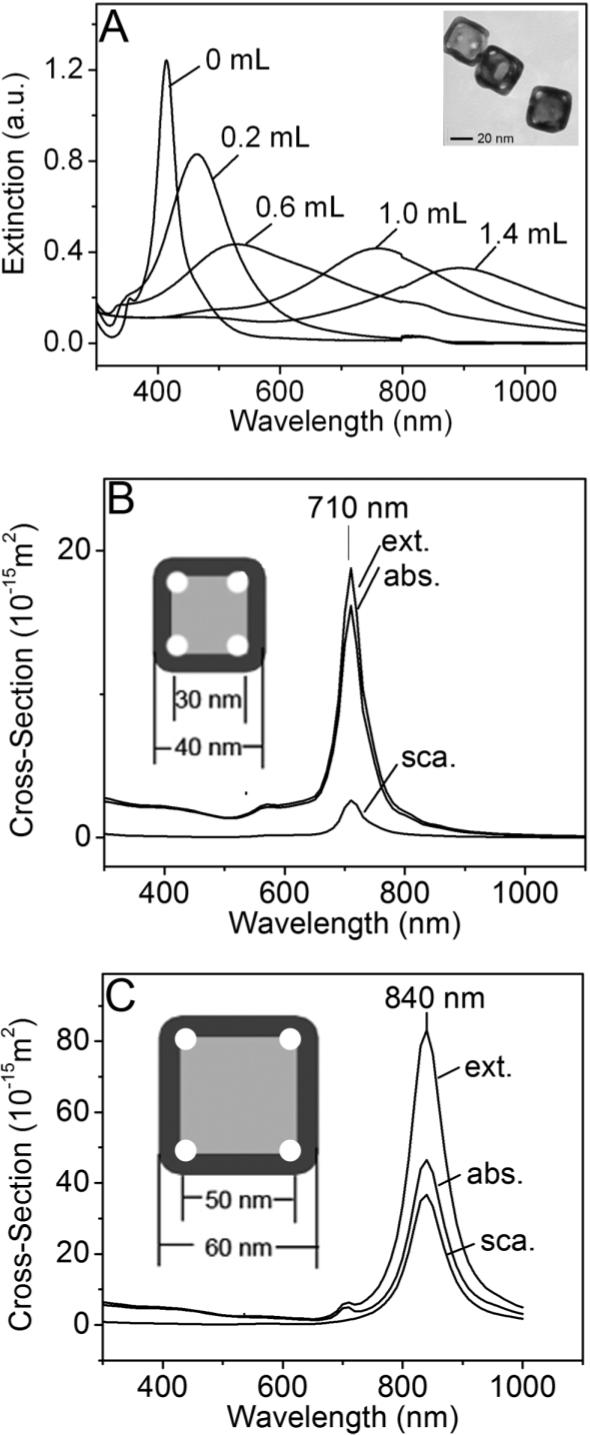
Nanostructured materials provide a promising platform for early cancer detection and treatment. Here we highlight recent advances in the synthesis and use of Au nanocages for such biomedical applications. Gold nanocages represent a novel class of nanostructures, which can be prepared via a remarkably simple route based on the galvanic replacement reaction between Ag nanocubes and HAuCl(4). The Au nanocages have a tunable surface plasmon resonance peak that extends into the near-infrared, where the optical attenuation caused by blood and soft tissue is essentially negligible. They are also biocompatible and present a well-established surface for easy functionalization. We have tailored the scattering and absorption cross-sections of Au nanocages for use in optical coherence tomography and photothermal treatment, respectively. Our preliminary studies show greatly improved spectroscopic image contrast for tissue phantoms containing Au nanocages. Our most recent results also demonstrate the photothermal destruction of breast cancer cells in vitro by using immuno-targeted Au nanocages as an effective photo-thermal transducer. These experiments suggest that Au nanocages may be a new class of nanometer-sized agents for cancer diagnosis and therapy.
纳米结构材料为早期癌症检测与治疗提供了一个很有前景的平台。在此,我们重点介绍金纳米笼在这类生物医学应用中的合成及应用方面的最新进展。金纳米笼代表了一类新型纳米结构,可通过基于银纳米立方体与氯金酸(HAuCl₄)之间的电化学生长置换反应的极为简单的路线来制备。金纳米笼具有一个可调谐的表面等离子体共振峰,该峰延伸至近红外区域,在该区域血液和软组织引起的光学衰减基本可以忽略不计。它们还具有生物相容性,并且提供了一个便于功能化的成熟表面。我们分别针对光学相干断层扫描和光热治疗对金纳米笼的散射和吸收截面进行了调整。我们的初步研究表明,对于含有金纳米笼的组织模型,光谱图像对比度有了显著提高。我们的最新结果还证明,通过使用免疫靶向金纳米笼作为有效的光热换能器,可在体外对乳腺癌细胞进行光热破坏。这些实验表明,金纳米笼可能是一类用于癌症诊断和治疗的新型纳米级制剂。