Guo Ying, Pagnoni Giuseppe
Department of Biostatistics and Bioinformatics, The Rollins School of Public Health, Emory University, 1518 Clifton RD NE, Atlanta, GA 30322, USA.
Neuroimage. 2008 Sep 1;42(3):1078-93. doi: 10.1016/j.neuroimage.2008.05.008. Epub 2008 May 16.
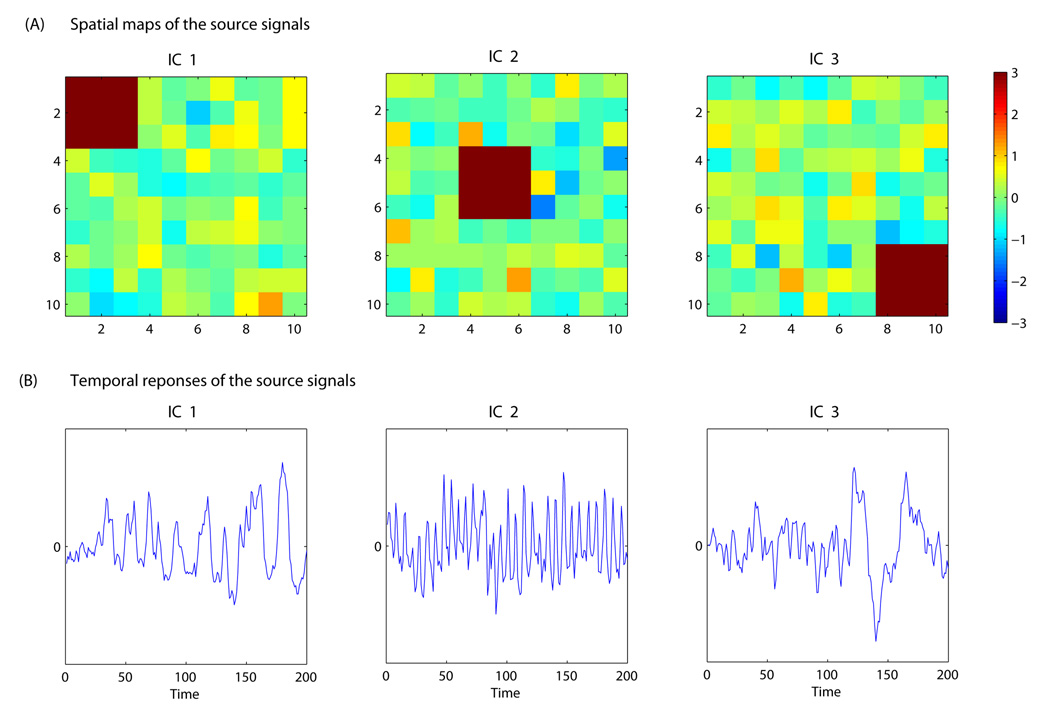
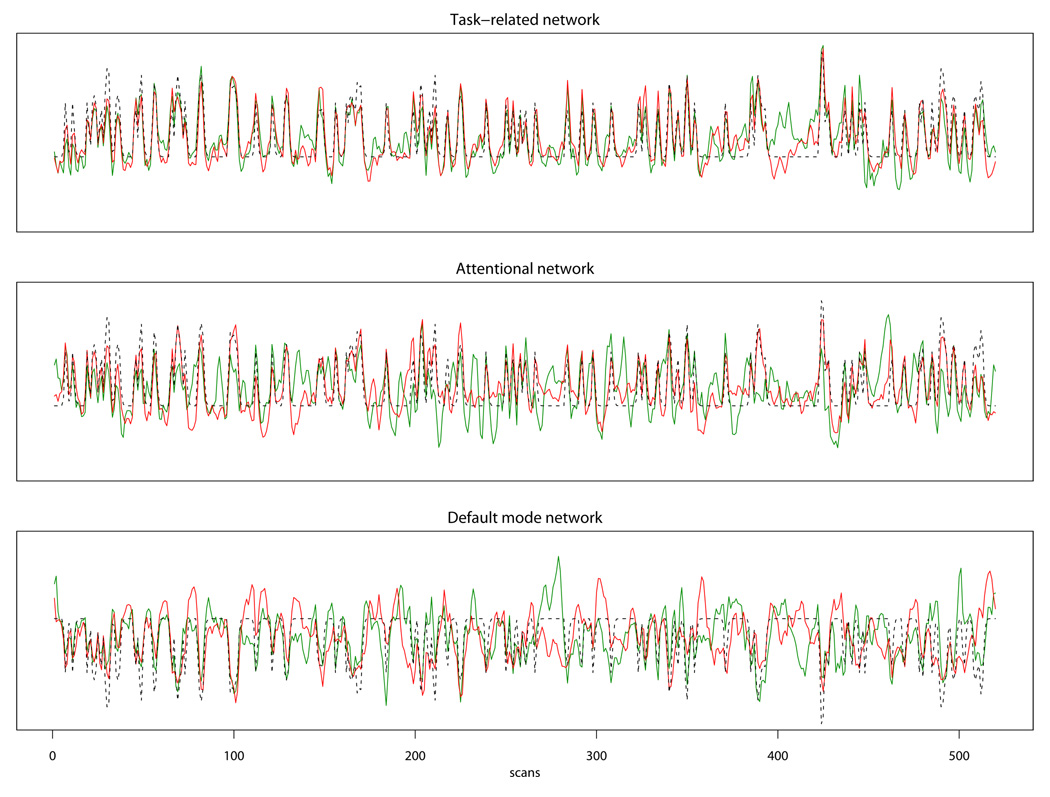
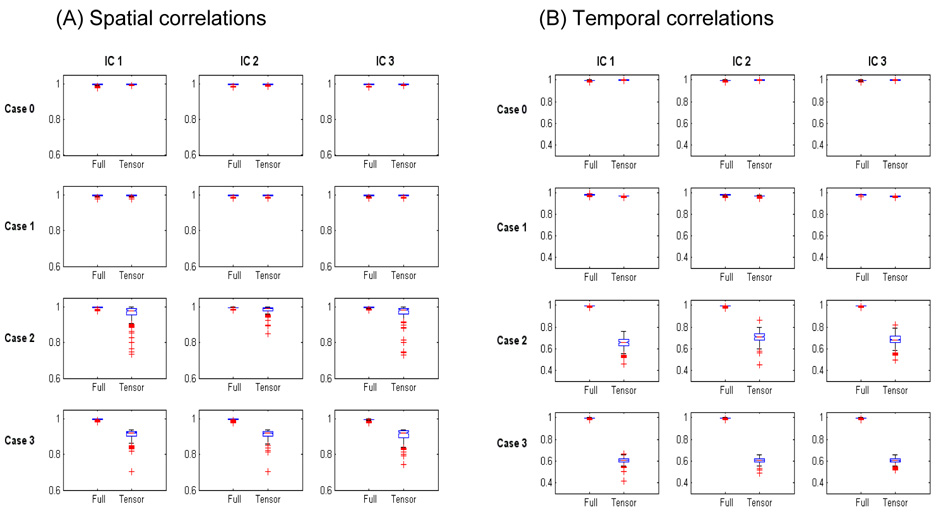
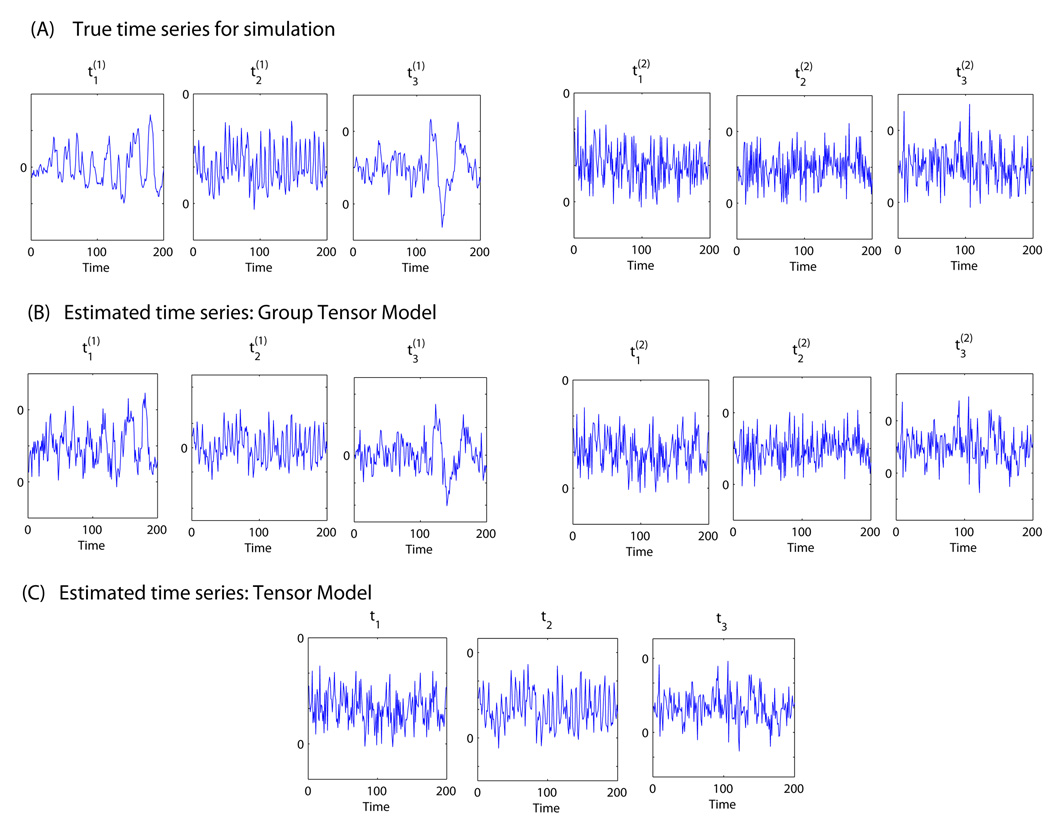
Independent component analysis (ICA) is becoming increasingly popular for analyzing functional magnetic resonance imaging (fMRI) data. While ICA has been successfully applied to single-subject analysis, the extension of ICA to group inferences is not straightforward and remains an active topic of research. Current group ICA models, such as the GIFT [Calhoun, V.D., Adali, T., Pearlson, G.D., Pekar, J.J., 2001. A method for making group inferences from functional MRI data using independent component analysis. Hum. Brain Mapp. 14, 140-151.] and tensor PICA [Beckmann, C.F., Smith, S.M., 2005. Tensorial extensions of independent component analysis for multisubject FMRI analysis. Neuroimage 25, 294-311.], make different assumptions about the underlying structure of the group spatio-temporal processes and are thus estimated using algorithms tailored for the assumed structure, potentially leading to diverging results. To our knowledge, there are currently no methods for assessing the validity of different model structures in real fMRI data and selecting the most appropriate one among various choices. In this paper, we propose a unified framework for estimating and comparing group ICA models with varying spatio-temporal structures. We consider a class of group ICA models that can accommodate different group structures and include existing models, such as the GIFT and tensor PICA, as special cases. We propose a maximum likelihood (ML) approach with a modified Expectation-Maximization (EM) algorithm for the estimation of the proposed class of models. Likelihood ratio tests (LRT) are presented to compare between different group ICA models. The LRT can be used to perform model comparison and selection, to assess the goodness-of-fit of a model in a particular data set, and to test group differences in the fMRI signal time courses between subject subgroups. Simulation studies are conducted to evaluate the performance of the proposed method under varying structures of group spatio-temporal processes. We illustrate our group ICA method using data from an fMRI study that investigates changes in neural processing associated with the regular practice of Zen meditation.
独立成分分析(ICA)在分析功能磁共振成像(fMRI)数据方面越来越受欢迎。虽然ICA已成功应用于单受试者分析,但将ICA扩展到组内推断并非易事,仍然是一个活跃的研究课题。当前的组ICA模型,如GIFT[卡尔霍恩,V.D.,阿达利,T.,皮尔森,G.D.,佩卡尔,J.J.,2001。一种使用独立成分分析从功能磁共振成像数据进行组内推断的方法。人类脑图谱。14,140 - 151。]和张量PICA[贝克曼,C.F.,史密斯,S.M.,2005。用于多受试者fMRI分析的独立成分分析的张量扩展。神经图像。25,294 - 311。],对组时空过程的潜在结构做出了不同假设,因此使用针对假定结构量身定制的算法进行估计,这可能导致结果不一致。据我们所知,目前尚无方法可在实际fMRI数据中评估不同模型结构的有效性,并在各种选择中选择最合适的结构。在本文中,我们提出了一个统一框架,用于估计和比较具有不同时空结构的组ICA模型。我们考虑一类能够适应不同组结构的组ICA模型,并将现有模型,如GIFT和张量PICA,作为特殊情况包含在内。我们提出了一种采用改进期望最大化(EM)算法的最大似然(ML)方法来估计所提出的这类模型。提出了似然比检验(LRT)以比较不同的组ICA模型。LRT可用于进行模型比较和选择、评估特定数据集中模型的拟合优度,以及测试受试者亚组之间fMRI信号时间历程的组间差异。进行了模拟研究以评估所提出方法在组时空过程不同结构下的性能。我们使用一项fMRI研究的数据来说明我们的组ICA方法,该研究调查了与禅宗冥想的定期练习相关的神经处理变化。