Sarkar Kamalesh, Bal Baishali, Mukherjee Rita, Chakraborty Sekhar, Saha Suman, Ghosh Arundhuti, Parsons Scott
National Institute of Cholera & Enteric Diseases, Beliaghata, Kolkata 700 010, India.
J Health Popul Nutr. 2008 Jun;26(2):223-31.
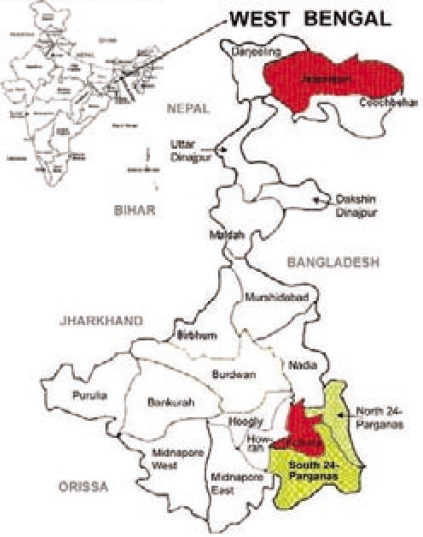
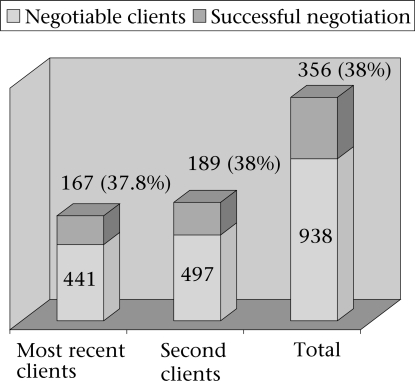
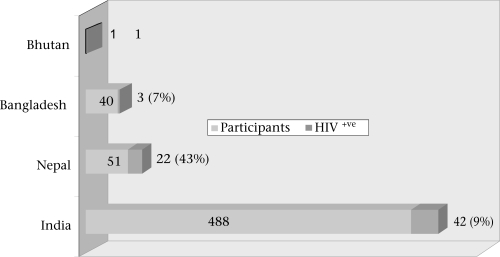
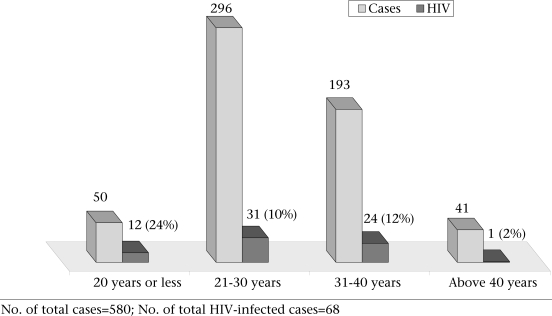
A community-based cross-sectional study was conducted among brothel-based sex workers of West Bengal, eastern India, to understand sex-trafficking, violence, negotiating skills, and HIV infection in them. In total, 580 sex workers from brothels of four districts participated in the study. A pretested questionnaire was introduced to study their sociodemography, sex-trafficking, violence, and negotiating skills. Blood sample of 4-5 mL was collected from each sex worker using an unlinked anonymous method to study their HIV status. Data were edited and entered into a computer using the Epi Info software (6.04d version). Both univariate and multivariate analyses were done to find out any association between HIV and relevant risk factors. Results of the study revealed that a sizeable number of the participants were from Nepal (9%) and Bangladesh (7%). The seroprevalence of HIV was strikingly higher among Nepalese (43%) than among Bangladeshis (7%) and Indians (9%). Almost one in every four sex workers (24%) had joined the profession by being trafficked. Violence at the beginning of this profession was more among the trafficked victims, including those sold by their family members (57%) compared to those who joined the profession voluntarily (15%). The overall condom negotiation rate with most recent two clients was 38%. By multivariate analysis, HIV was significantly associated with sexual violence (odds ratio=2.3; 95% confidence interval 1.2-4.5). The study has documented that the trafficked victims faced violence, including sexual violence, to a greater magnitude, and sexual violence was associated with acquiring HIV in them. There is a need for an in-depth study to understand the problem of trafficking and its consequences.
在印度东部西孟加拉邦以妓院为基础的性工作者中开展了一项基于社区的横断面研究,以了解她们中的性交易、暴力、谈判技巧和艾滋病毒感染情况。来自四个地区妓院的总共580名性工作者参与了该研究。采用一份经过预测试的问卷来研究她们的社会人口统计学、性交易、暴力和谈判技巧。使用非关联匿名方法从每名性工作者采集4 - 5毫升血液样本,以研究她们的艾滋病毒感染状况。数据经过编辑后使用Epi Info软件(6.04d版本)录入计算机。进行了单变量和多变量分析,以找出艾滋病毒与相关风险因素之间的任何关联。研究结果显示,相当一部分参与者来自尼泊尔(9%)和孟加拉国(7%)。尼泊尔人的艾滋病毒血清阳性率(43%)显著高于孟加拉国人(7%)和印度人(9%)。几乎每四名性工作者中就有一名(24%)是通过被贩卖而进入这一行业的。在这个行业开始时,被贩卖受害者遭受的暴力更多,包括那些被家庭成员卖掉的受害者(57%),相比之下,自愿进入这一行业的受害者为15%。与最近两名客户的总体避孕套谈判率为38%。通过多变量分析,艾滋病毒与性暴力显著相关(优势比 = 2.3;95%置信区间1.2 - 4.5)。该研究记录了被贩卖受害者面临更大程度的暴力,包括性暴力,并且性暴力与她们感染艾滋病毒有关。有必要进行深入研究以了解贩卖问题及其后果。