Eaninwene George, Yao Chang, Webster Thomas J
Department of Biochemical Engineering, University of Maryland, Baltimore, MD, USA.
Int J Nanomedicine. 2008;3(2):257-64. doi: 10.2147/ijn.s2552.
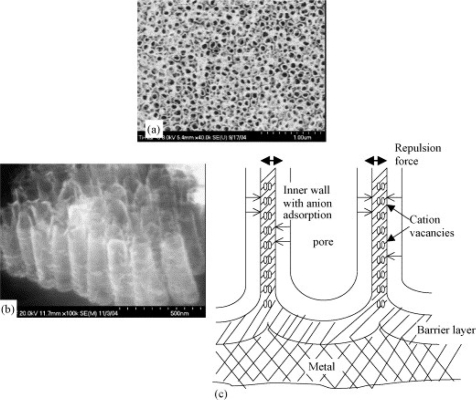
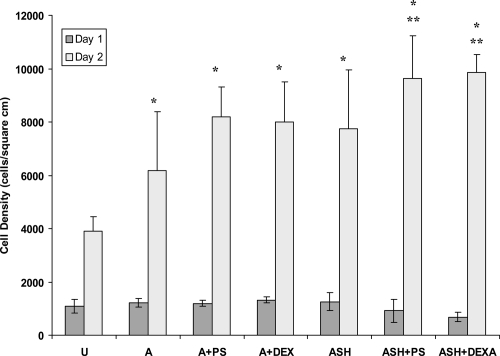
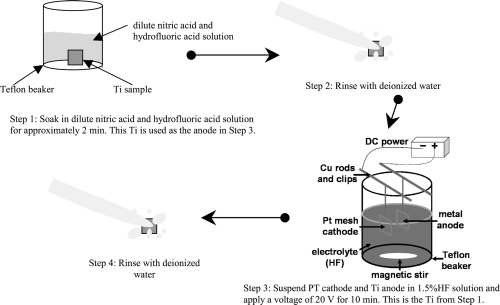
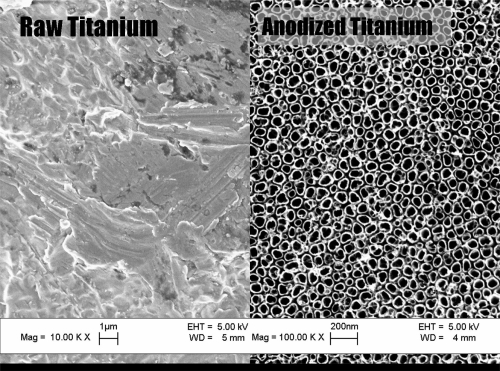
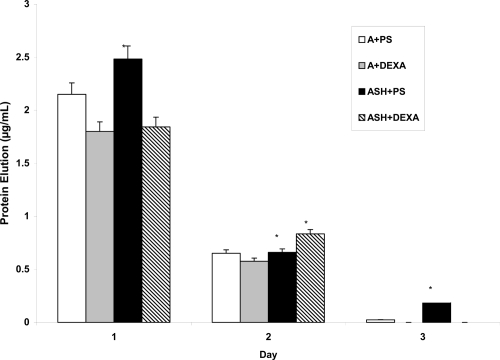
Current orthopedic implants have functional lifetimes of only 10-15 years due to a variety of reasons including infection, extensive inflammation, and overall poor osseointegration (or a lack of prolonged bonding of the implant to juxtaposed bone). To improve properties of titanium for orthopedic applications, this study anodized and subsequently coated titanium with drugs known to reduce infection (penicillin/streptomycin) and inflammation (dexamethasone) using simple physical adsorption and the deposition of such drugs from simulated body fluid (SBF). Results showed improved drug elution from anodized nanotubular titanium when drugs were coated in the presence of SBF for up to 3 days. For the first time, results also showed that the simple physical adsorption of both penicillin/streptomycin and dexamethasone on anodized nanotubular titanium improved osteoblast numbers after 2 days of culture compared to uncoated unanodized titanium. In addition, results showed that depositing such drugs in SBF on anodized titanium was a more efficient method to promote osteoblast numbers compared to physical adsorption for up to 2 days of culture. In addition, osteoblast numbers increased on anodized titanium coated with drugs in SBF for up to 2 days of culture compared to unanodized titanium. In summary, compared to unanodized titanium, this preliminary study provided unexpected evidence of greater osteoblast numbers on anodized titanium coated with either penicillin/streptomycin or dexamethasone using simple physical adsorption or when coated with SBF; results which suggest the need for further research on anodized titanium orthopedic implants possessing drug-eluting nanotubes.
由于包括感染、广泛炎症以及整体骨整合不良(或植入物与相邻骨骼缺乏长期结合)等多种原因,目前的骨科植入物功能寿命仅为10 - 15年。为改善钛在骨科应用中的性能,本研究采用简单物理吸附以及从模拟体液(SBF)中沉积药物的方法,对钛进行阳极氧化处理,随后用已知可减少感染(青霉素/链霉素)和炎症(地塞米松)的药物进行涂层处理。结果表明,当在SBF存在的情况下将药物涂层长达3天时,阳极氧化纳米管钛的药物洗脱性能得到改善。首次研究结果还表明,与未涂层未阳极氧化的钛相比,青霉素/链霉素和地塞米松在阳极氧化纳米管钛上的简单物理吸附在培养2天后可提高成骨细胞数量。此外,结果表明,在培养长达2天的时间内,与物理吸附相比,将此类药物沉积在阳极氧化钛的SBF中是促进成骨细胞数量增加的更有效方法。另外,在培养长达2天的时间内,与未阳极氧化的钛相比,在SBF中涂有药物的阳极氧化钛上的成骨细胞数量增加。总之,与未阳极氧化的钛相比,这项初步研究提供了意外证据,即使用简单物理吸附或涂覆SBF时,在涂有青霉素/链霉素或地塞米松的阳极氧化钛上成骨细胞数量更多;这些结果表明需要对具有药物洗脱纳米管的阳极氧化钛骨科植入物进行进一步研究。