Dwan Kerry, Altman Douglas G, Arnaiz Juan A, Bloom Jill, Chan An-Wen, Cronin Eugenia, Decullier Evelyne, Easterbrook Philippa J, Von Elm Erik, Gamble Carrol, Ghersi Davina, Ioannidis John P A, Simes John, Williamson Paula R
Centre for Medical Statistics and Health Evaluation, University of Liverpool, Liverpool, United Kingdom.
PLoS One. 2008 Aug 28;3(8):e3081. doi: 10.1371/journal.pone.0003081.
The increased use of meta-analysis in systematic reviews of healthcare interventions has highlighted several types of bias that can arise during the completion of a randomised controlled trial. Study publication bias has been recognised as a potential threat to the validity of meta-analysis and can make the readily available evidence unreliable for decision making. Until recently, outcome reporting bias has received less attention.
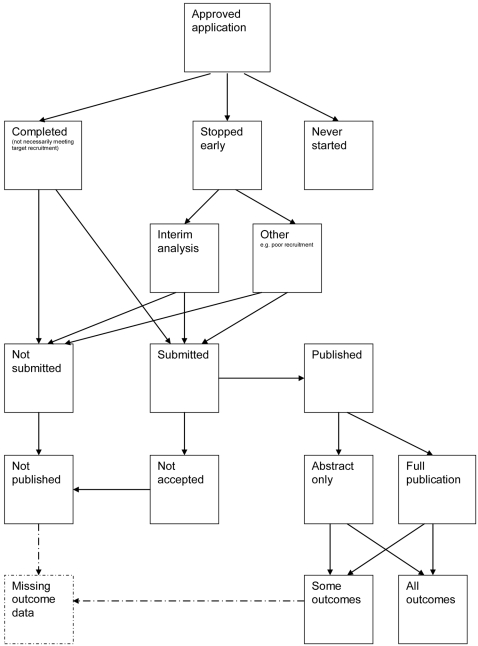
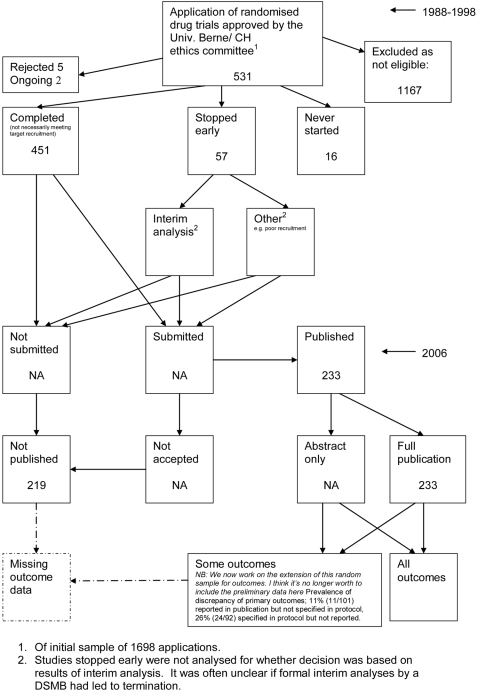
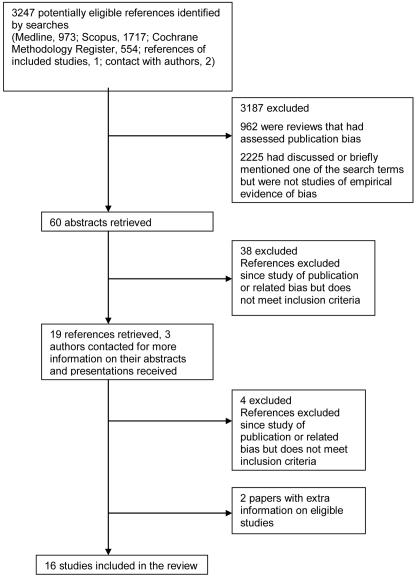
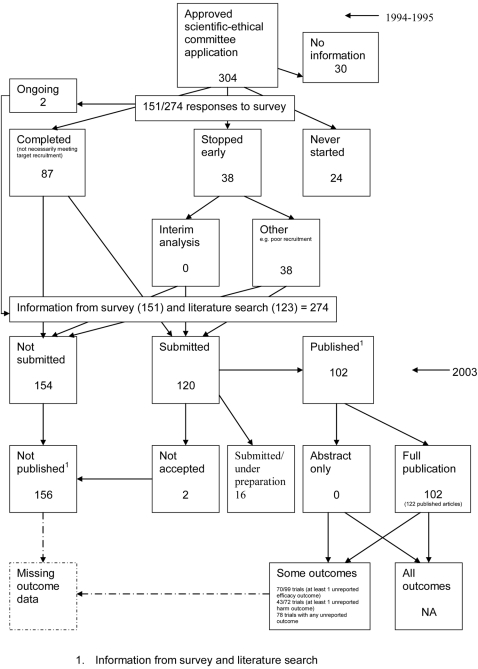
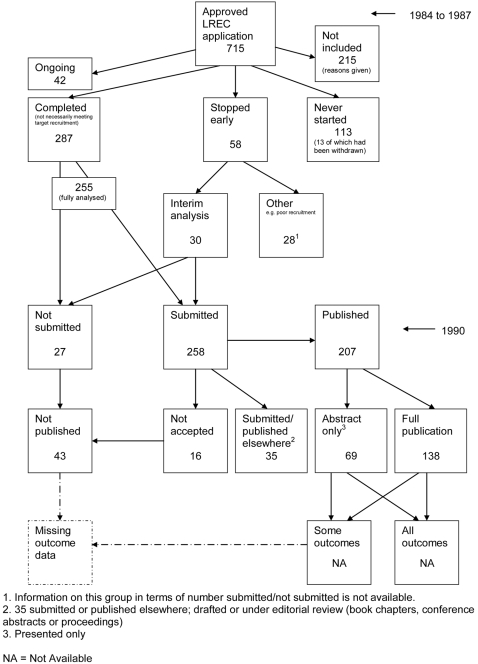
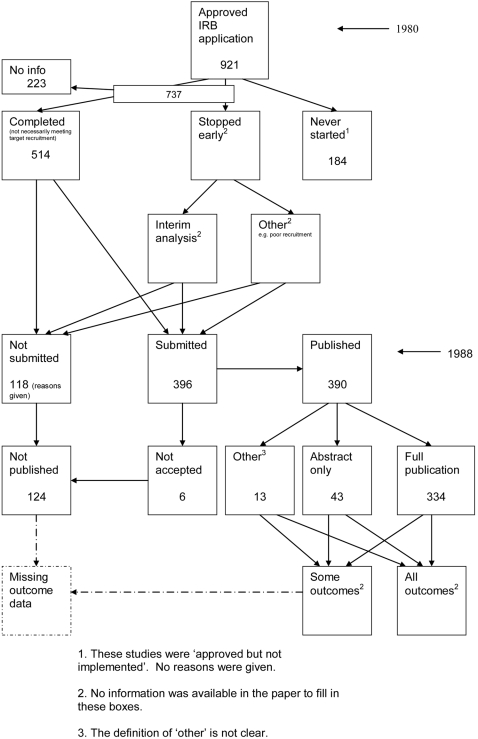
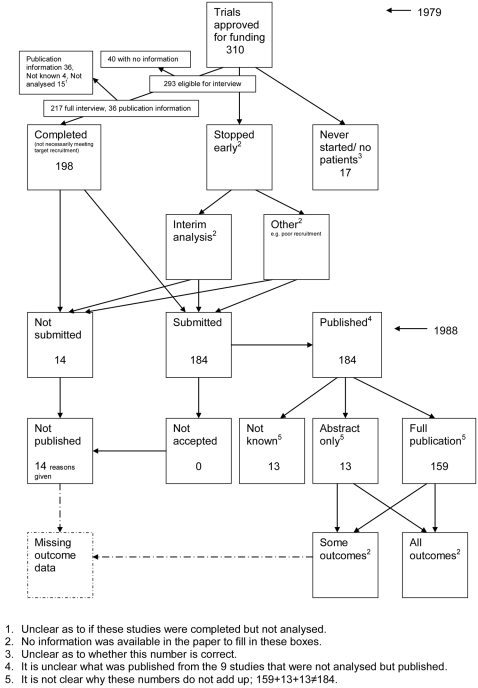
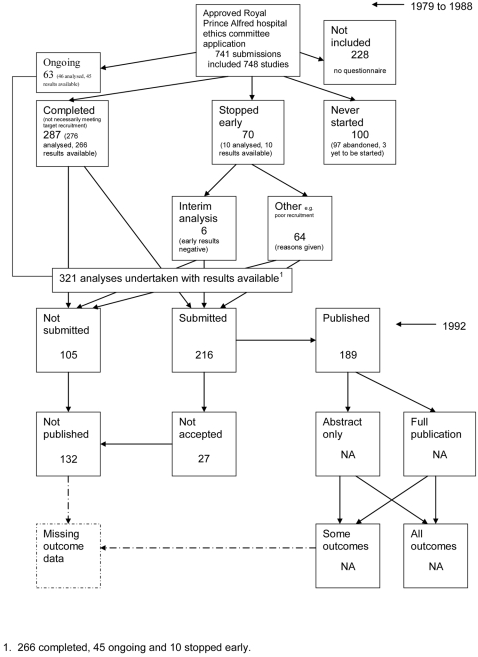
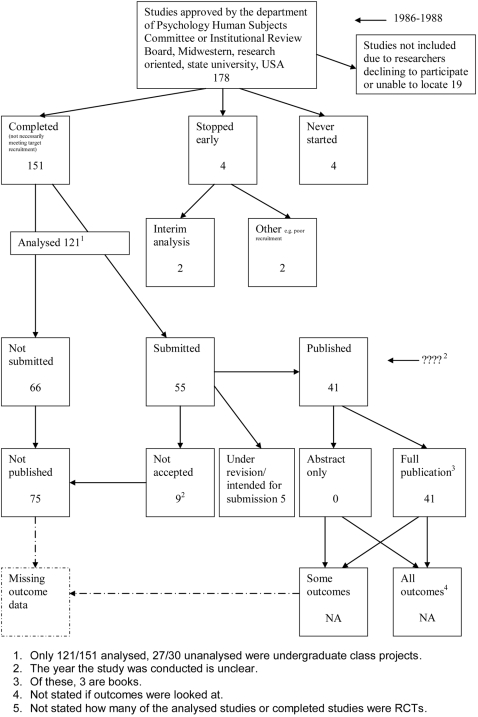
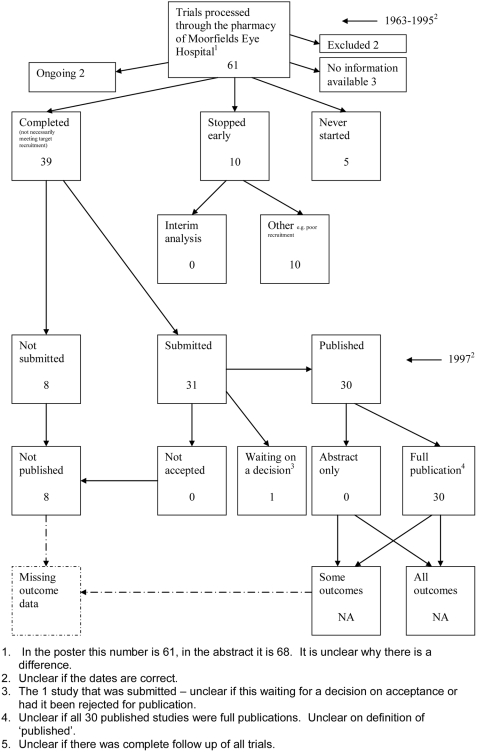
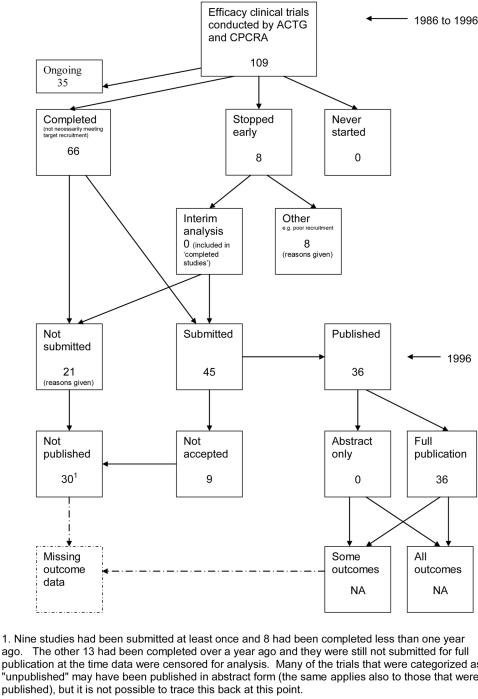
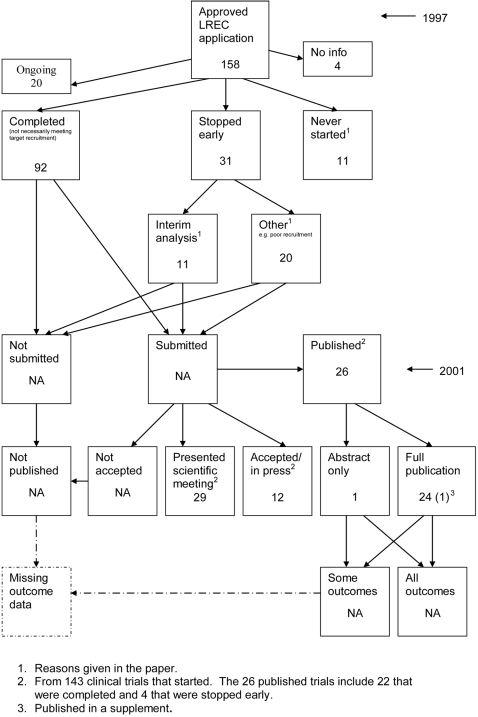
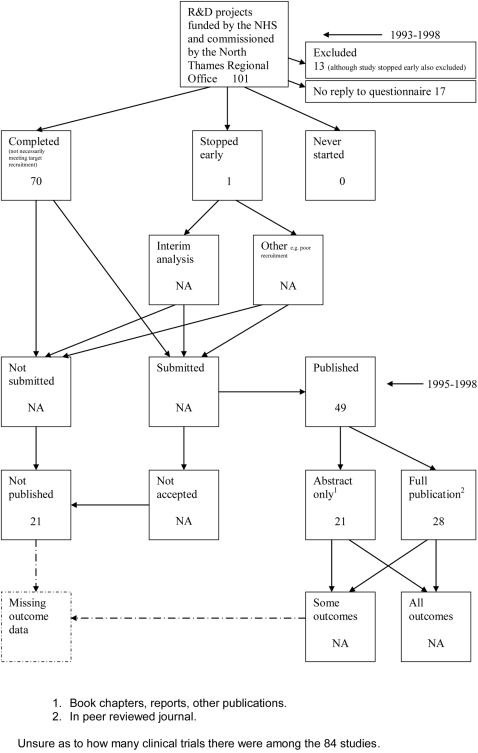
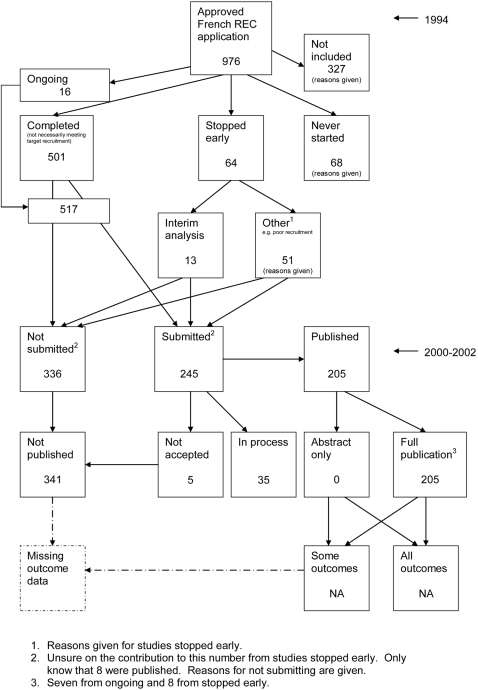
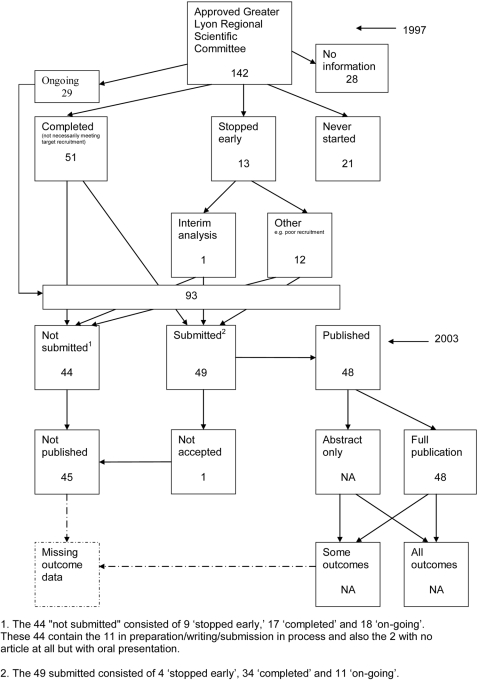
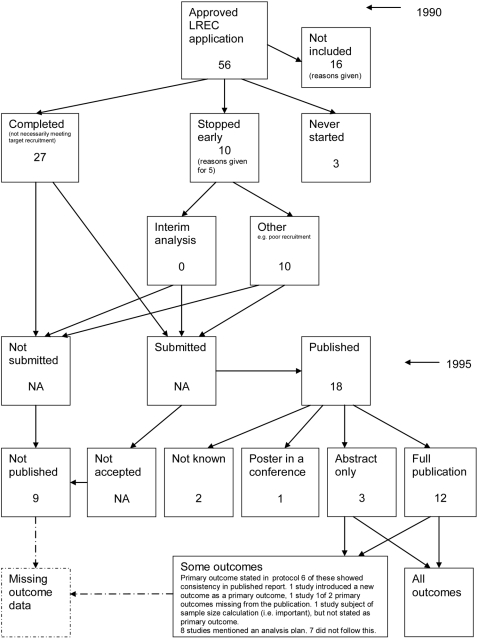
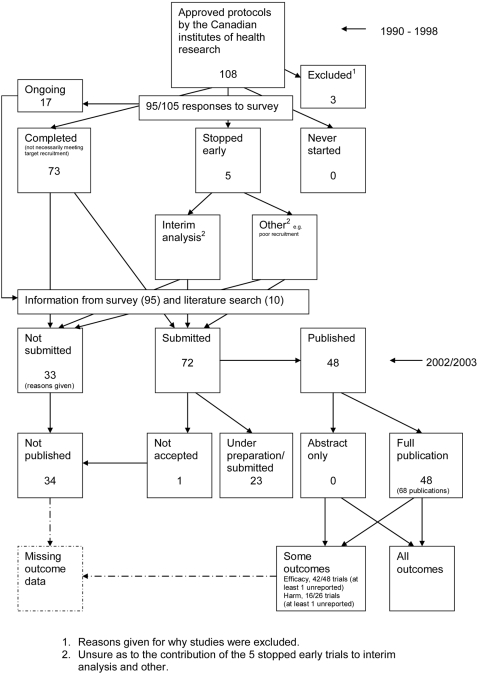
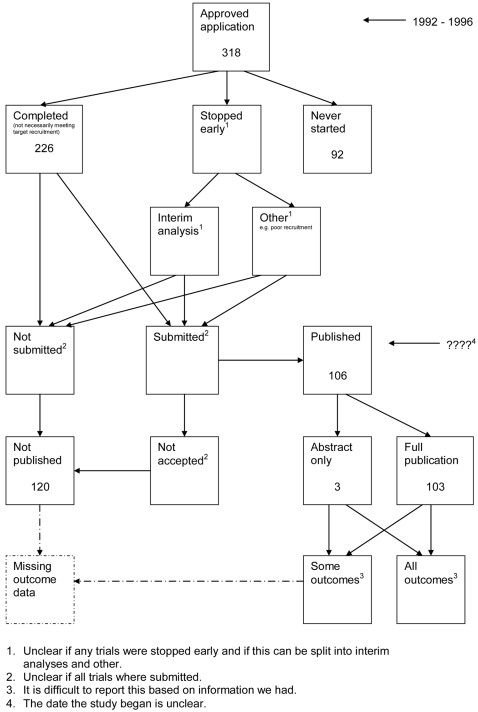
METHODOLOGY/PRINCIPAL FINDINGS: We review and summarise the evidence from a series of cohort studies that have assessed study publication bias and outcome reporting bias in randomised controlled trials. Sixteen studies were eligible of which only two followed the cohort all the way through from protocol approval to information regarding publication of outcomes. Eleven of the studies investigated study publication bias and five investigated outcome reporting bias. Three studies have found that statistically significant outcomes had a higher odds of being fully reported compared to non-significant outcomes (range of odds ratios: 2.2 to 4.7). In comparing trial publications to protocols, we found that 40-62% of studies had at least one primary outcome that was changed, introduced, or omitted. We decided not to undertake meta-analysis due to the differences between studies.
Recent work provides direct empirical evidence for the existence of study publication bias and outcome reporting bias. There is strong evidence of an association between significant results and publication; studies that report positive or significant results are more likely to be published and outcomes that are statistically significant have higher odds of being fully reported. Publications have been found to be inconsistent with their protocols. Researchers need to be aware of the problems of both types of bias and efforts should be concentrated on improving the reporting of trials.
在医疗保健干预措施的系统评价中,荟萃分析的使用日益增加,这凸显了在随机对照试验完成过程中可能出现的几种偏倚类型。研究发表偏倚已被认为是对荟萃分析有效性的潜在威胁,可能使现有的证据在决策时不可靠。直到最近,结果报告偏倚受到的关注较少。
方法/主要发现:我们回顾并总结了一系列队列研究的证据,这些研究评估了随机对照试验中的研究发表偏倚和结果报告偏倚。16项研究符合条件,其中只有两项从方案批准到结果发表的信息全程跟踪了队列。11项研究调查了研究发表偏倚,5项研究调查了结果报告偏倚。三项研究发现,与无统计学意义的结果相比,具有统计学意义的结果被完整报告的几率更高(优势比范围:2.2至4.7)。在比较试验出版物和方案时,我们发现40%-62%的研究至少有一个主要结果被更改、引入或遗漏。由于研究之间存在差异,我们决定不进行荟萃分析。
近期的研究工作为研究发表偏倚和结果报告偏倚的存在提供了直接的实证证据。有强有力的证据表明显著结果与发表之间存在关联;报告阳性或显著结果的研究更有可能发表,具有统计学意义的结果被完整报告的几率更高。已发现出版物与其方案不一致。研究人员需要意识到这两种偏倚问题,应集中精力改进试验报告。