Cosker Katharina E, Courchesne Stephanie L, Segal Rosalind A
Department of Pediatric Oncology, Dana-Farber Cancer Institute, 44 Binney Street, Boston, MA 02115, USA.
Curr Opin Neurobiol. 2008 Jun;18(3):270-5. doi: 10.1016/j.conb.2008.08.005.
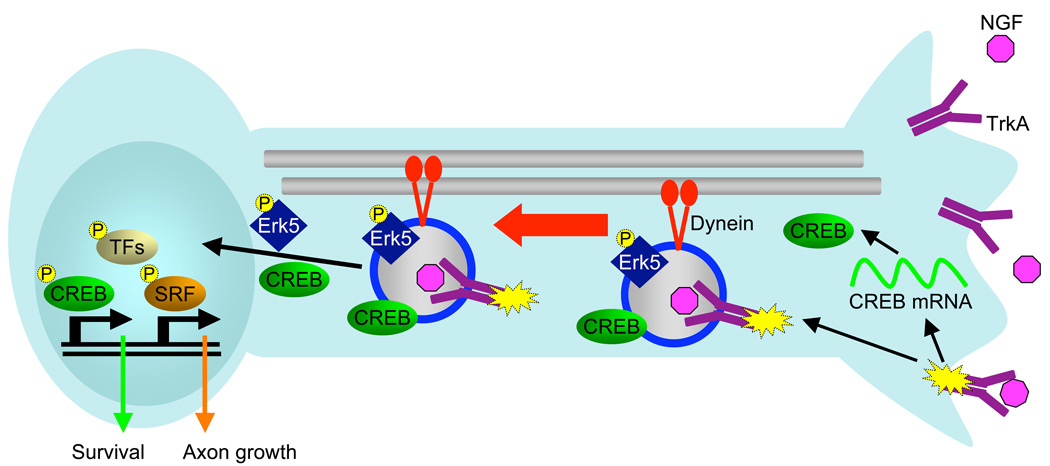
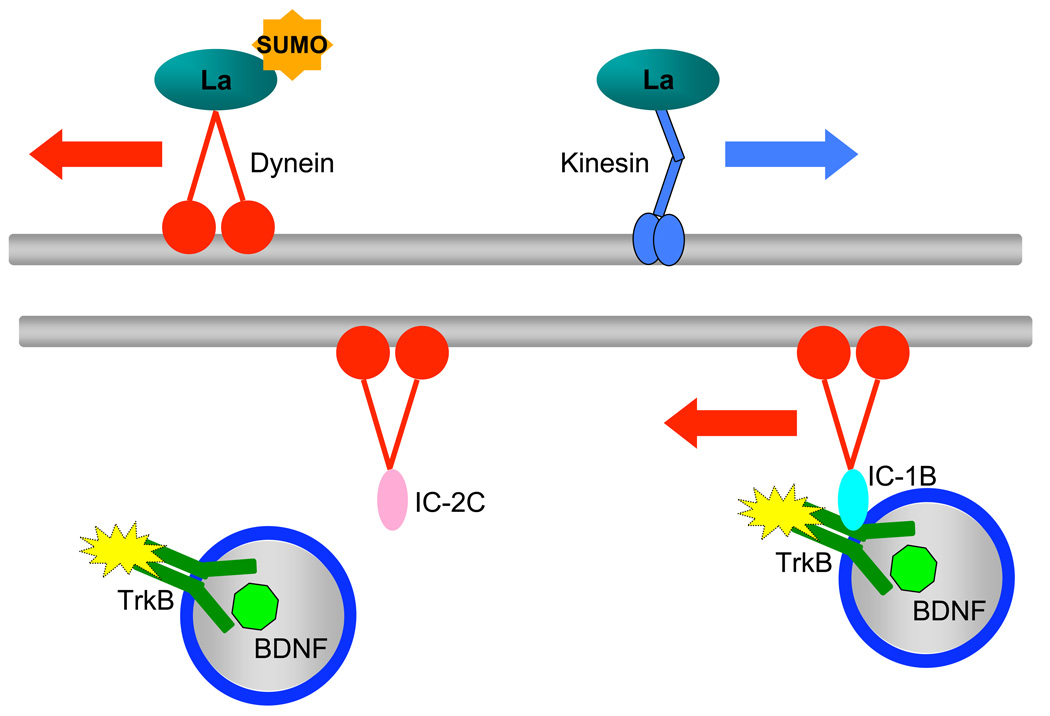
Neurons extend axonal processes over long distances, necessitating efficient transport mechanisms to convey target-derived neurotrophic survival signals from remote distal axons to cell bodies. Retrograde transport, powered by dynein motors, supplies cell bodies with survival signals in the form of 'signaling endosomes'. In this review, we will discuss new advances in our understanding of the motor proteins that bind to and move signaling components in a retrograde direction and discuss mechanisms that might specify distinct neuronal responses to spatially restricted neurotrophin signals. Disruption of retrograde transport leads to a variety of neurodegenerative diseases, highlighting the role of retrograde transport of signaling endosomes for axonal maintenance and the importance of efficient transport for neuronal survival and function.
神经元的轴突可延伸至很长的距离,因此需要高效的运输机制,以便将源自靶标的神经营养存活信号从远端轴突传递至细胞体。由动力蛋白驱动的逆向运输,以“信号内体”的形式为细胞体提供存活信号。在本综述中,我们将讨论在理解结合并逆向移动信号成分的运动蛋白方面取得的新进展,并探讨可能指定对空间受限的神经营养因子信号产生不同神经元反应的机制。逆向运输的中断会导致多种神经退行性疾病,这凸显了信号内体的逆向运输对轴突维持的作用,以及高效运输对神经元存活和功能的重要性。