Cotter Paul D, Draper Lorraine A, Lawton Elaine M, Daly Karen M, Groeger David S, Casey Pat G, Ross R Paul, Hill Colin
Department of Microbiology, University College Cork, Cork, Ireland.
PLoS Pathog. 2008 Sep 12;4(9):e1000144. doi: 10.1371/journal.ppat.1000144.
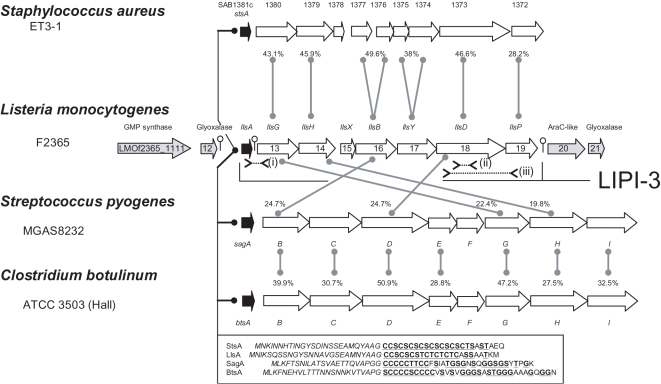
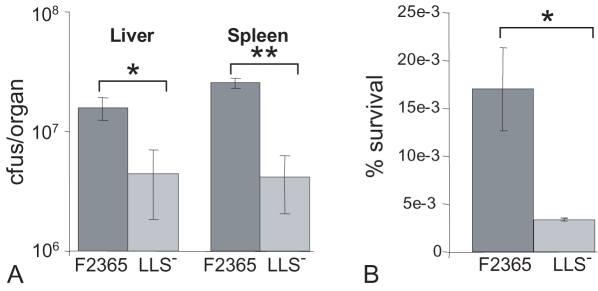
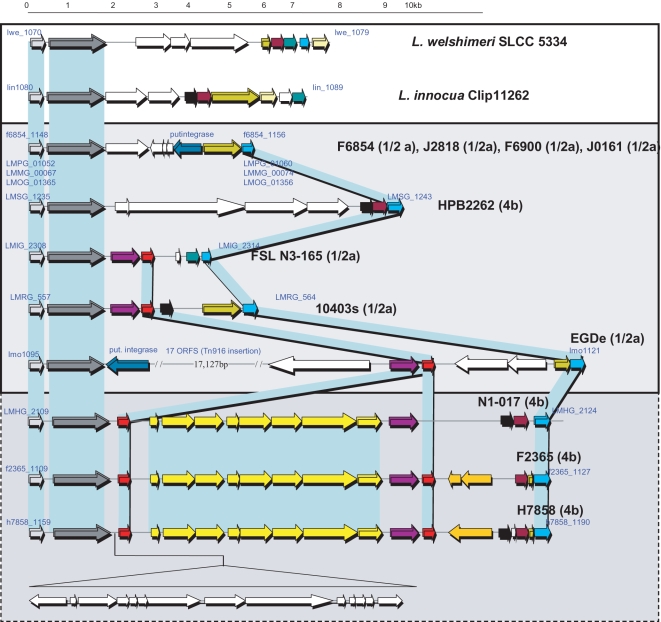
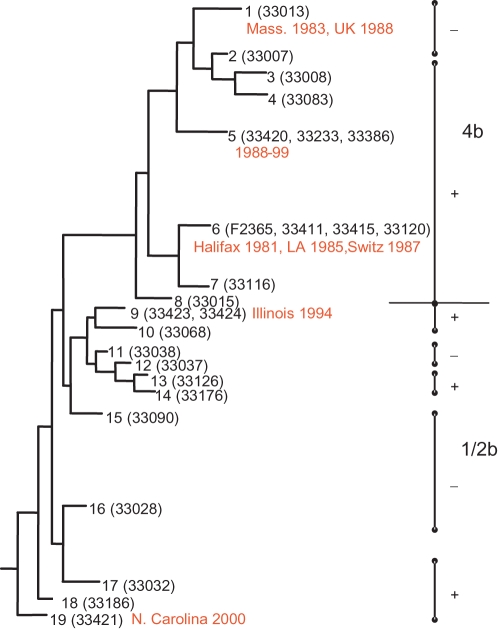
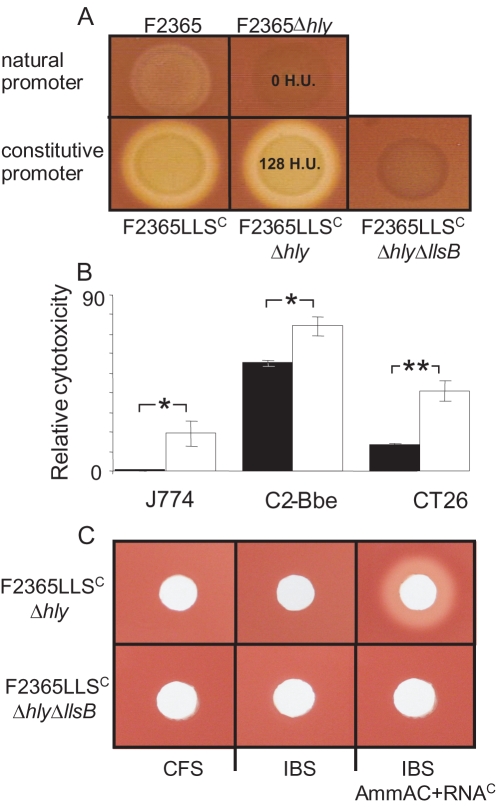
Streptolysin S (SLS) is a bacteriocin-like haemolytic and cytotoxic virulence factor that plays a key role in the virulence of Group A Streptococcus (GAS), the causative agent of pharyngitis, impetigo, necrotizing fasciitis and streptococcal toxic shock syndrome. Although it has long been thought that SLS and related peptides are produced by GAS and related streptococci only, there is evidence to suggest that a number of the most notorious Gram-positive pathogenic bacteria, including Listeria monocytogenes, Clostridium botulinum and Staphylococcus aureus, produce related peptides. The distribution of the L. monocytogenes cluster is particularly noteworthy in that it is found exclusively among a subset of lineage I strains; i.e., those responsible for the majority of outbreaks of listeriosis. Expression of these genes results in the production of a haemolytic and cytotoxic factor, designated Listeriolysin S, which contributes to virulence of the pathogen as assessed by murine- and human polymorphonuclear neutrophil-based studies. Thus, in the process of establishing the existence of an extended family of SLS-like modified virulence peptides (MVPs), the genetic basis for the enhanced virulence of a proportion of lineage I L. monocytogenes may have been revealed.
链球菌溶血素S(SLS)是一种类似细菌素的溶血和细胞毒性毒力因子,在A组链球菌(GAS)的毒力中起关键作用,GAS是咽炎、脓疱病、坏死性筋膜炎和链球菌中毒性休克综合征的病原体。长期以来人们一直认为SLS及相关肽仅由GAS和相关链球菌产生,但有证据表明,一些最臭名昭著的革兰氏阳性病原菌,包括单核细胞增生李斯特菌、肉毒梭菌和金黄色葡萄球菌,也能产生相关肽。单核细胞增生李斯特菌簇的分布尤为值得注意,因为它仅在I系菌株的一个亚群中发现;即那些导致大多数李斯特菌病暴发的菌株。这些基因的表达导致产生一种溶血和细胞毒性因子,称为李斯特菌溶血素S,通过基于小鼠和人类多形核中性粒细胞的研究评估,它有助于病原体的毒力。因此,在确定存在一个扩展的SLS样修饰毒力肽(MVP)家族的过程中,可能已经揭示了一部分I系单核细胞增生李斯特菌毒力增强的遗传基础。