Gürkov Robert, Eshetu Teferi, Miranda Isabel Barreto, Berens-Riha Nicole, Mamo Yoseph, Girma Tsinuel, Krause Eike, Schmidt Michael, Hempel John-Martin, Löscher Thomas
Department of Otorhinolaryngology Head and Neck Surgery, Ludwig Maximilians University, Munich, Germany.
Malar J. 2008 Sep 16;7:179. doi: 10.1186/1475-2875-7-179.
Due to increasing drug resistance, artemisinin-based combination chemotherapy (ACT) has become the first-line treatment of falciparum malaria in many endemic countries. However, irreversible ototoxicity associated with artemether/lumefantrine (AL) has been reported recently and suggested to be a serious limitation in the use of ACT. The aim of the study was to compare ototoxicity, tolerability, and efficacy of ACT with that of quinine and atovaquone/proguanil in the treatment of uncomplicated falciparum malaria.
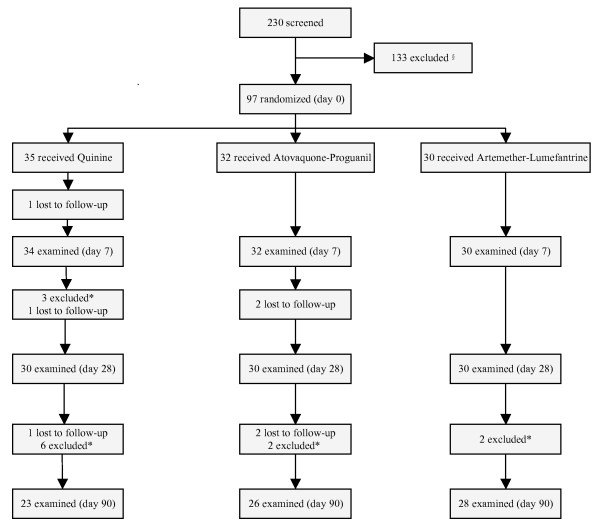
Ninety-seven patients in south-west Ethiopia with slide-confirmed malaria were randomly assigned to receive either artemether/lumefantrine or quinine or atovaquone/proguanil and followed-up for 90 days. Comprehensive audiovestibular testing by pure tone audiometry (PTA), transitory evoked (TE) and distortion product (DP) otoacoustic emissions (OAE) and brain stem evoked response audiometry (BERA) was done before enrolment and after seven, 28 and 90 days.
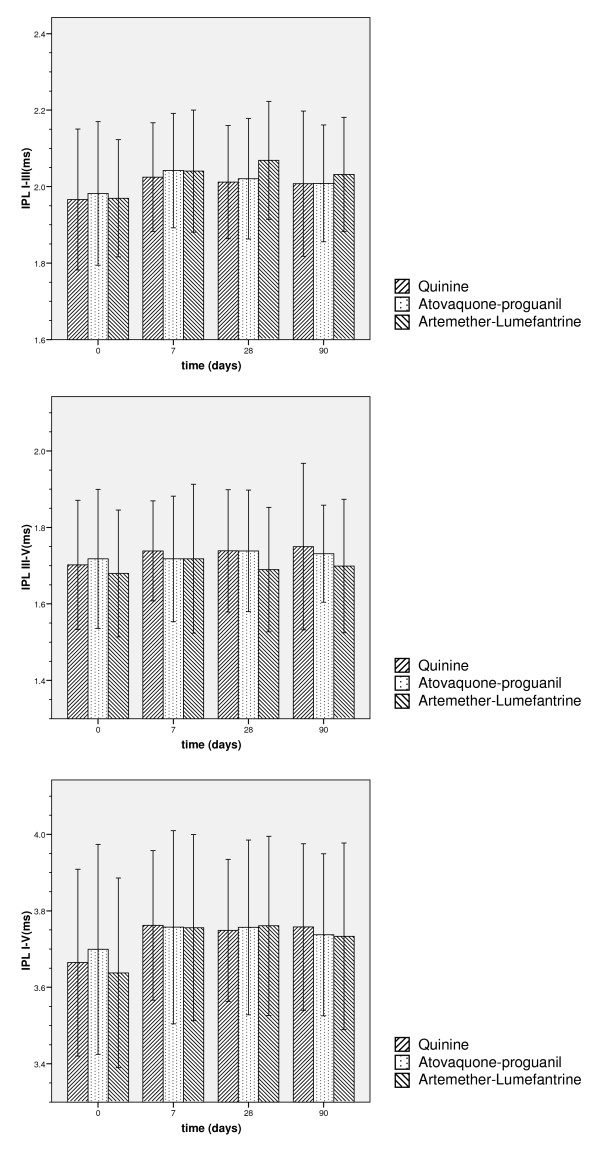
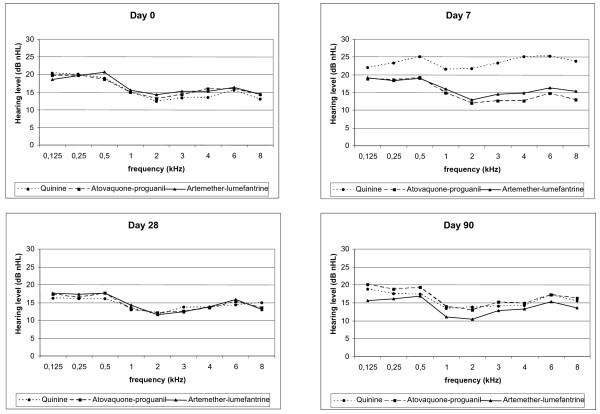
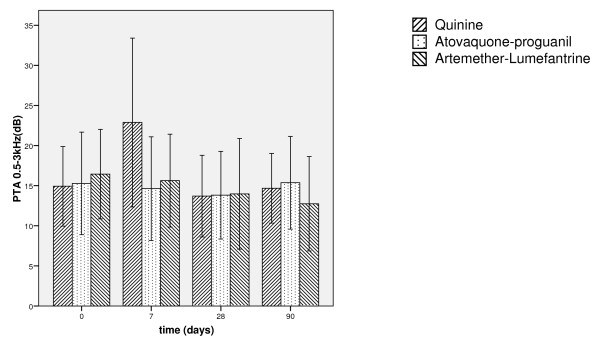
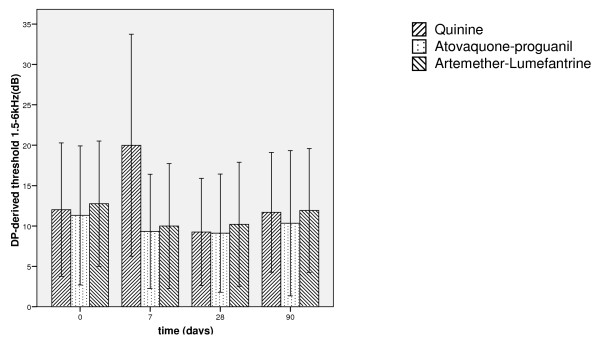
PTA and DP-OAE levels revealed transient significant cochlear hearing loss in patients treated with quinine but not in those treated with artemether/lumefantrine or atovaquone/proguanil. TE-OAE could be elicited in all examinations, except for three patients in the Q group on day 7, who suffered a transient hearing loss greater than 30 dB. There was no evidence of drug-induced brain stem lesions by BERA measurements.
There was no detrimental effect of a standard oral regimen of artemether/lumefantrine on peripheral hearing or brainstem auditory pathways in patients with uncomplicated falciparum malaria. In contrast, transient hearing loss is common after quinine therapy and due to temporary outer hair cell dysfunction.
由于耐药性不断增加,以青蒿素为基础的联合化疗(ACT)已成为许多疟疾流行国家治疗恶性疟的一线疗法。然而,最近有报告称蒿甲醚/本芴醇(AL)会导致不可逆的耳毒性,并被认为是ACT使用中的一个严重限制。本研究的目的是比较ACT与奎宁以及阿托伐醌/氯胍在治疗非复杂性恶性疟方面的耳毒性、耐受性和疗效。
埃塞俄比亚西南部97例经玻片确诊为疟疾的患者被随机分配接受蒿甲醚/本芴醇、奎宁或阿托伐醌/氯胍治疗,并随访90天。在入组前以及第7、28和90天进行了通过纯音听力测定(PTA)、瞬态诱发(TE)和畸变产物(DP)耳声发射(OAE)以及脑干诱发反应测听(BERA)进行的全面听前庭测试。
PTA和DP-OAE水平显示,奎宁治疗的患者出现短暂性明显的耳蜗性听力损失,而蒿甲醚/本芴醇或阿托伐醌/氯胍治疗的患者未出现。除Q组3例患者在第7天出现大于30 dB的短暂性听力损失外,所有检查中均可引出TE-OAE。BERA测量未发现药物诱发脑干病变的证据。
标准口服蒿甲醚/本芴醇方案对非复杂性恶性疟患者的外周听力或脑干听觉通路没有不良影响。相比之下,奎宁治疗后短暂性听力损失很常见,且是由暂时性外毛细胞功能障碍引起的。