Bodrikov Vsevolod, Sytnyk Vladimir, Leshchyns'ka Iryna, den Hertog Jeroen, Schachner Melitta
Zentrum für Molekulare Neurobiologie, Universität Hamburg, 20246 Hamburg, Germany.
J Cell Biol. 2008 Sep 22;182(6):1185-200. doi: 10.1083/jcb.200803045.
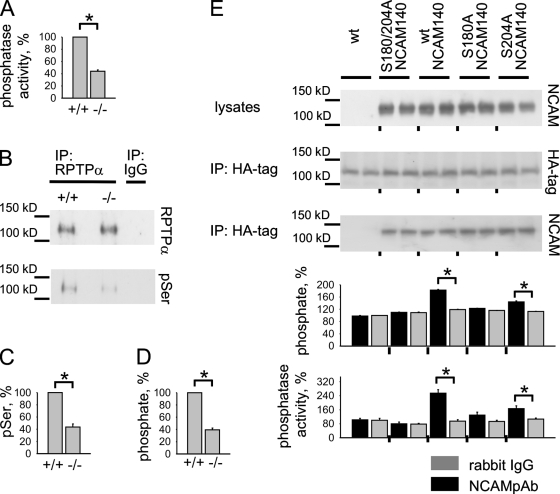
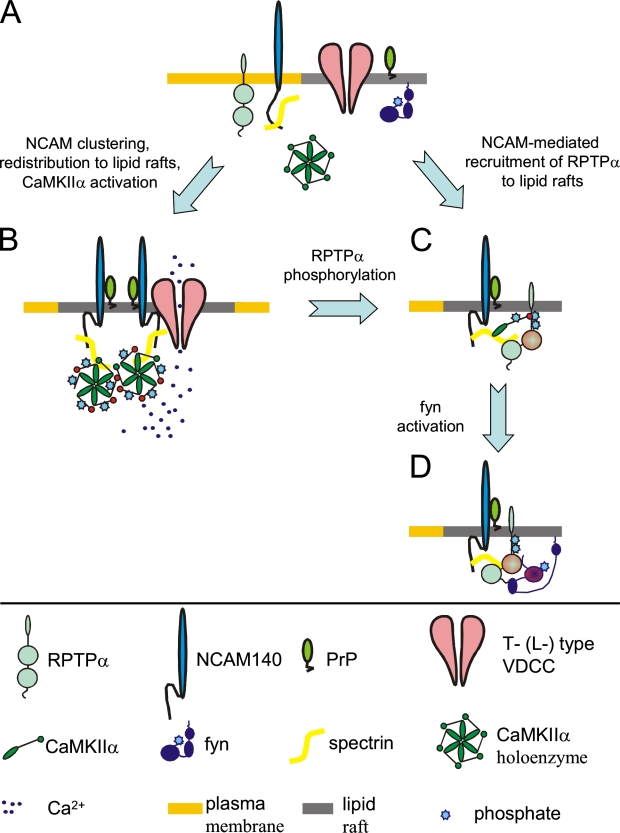
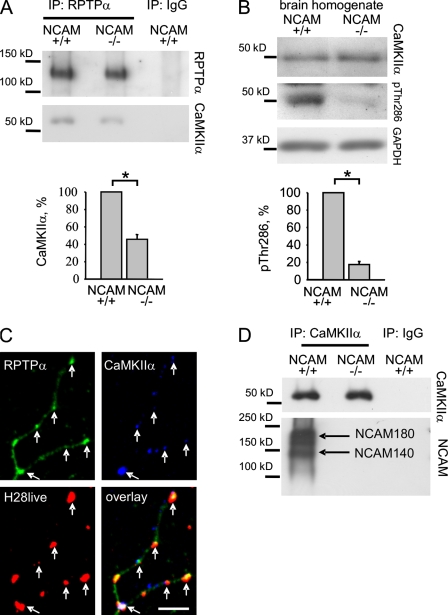
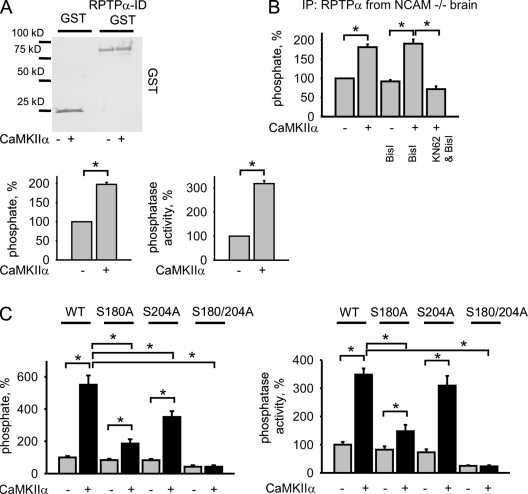
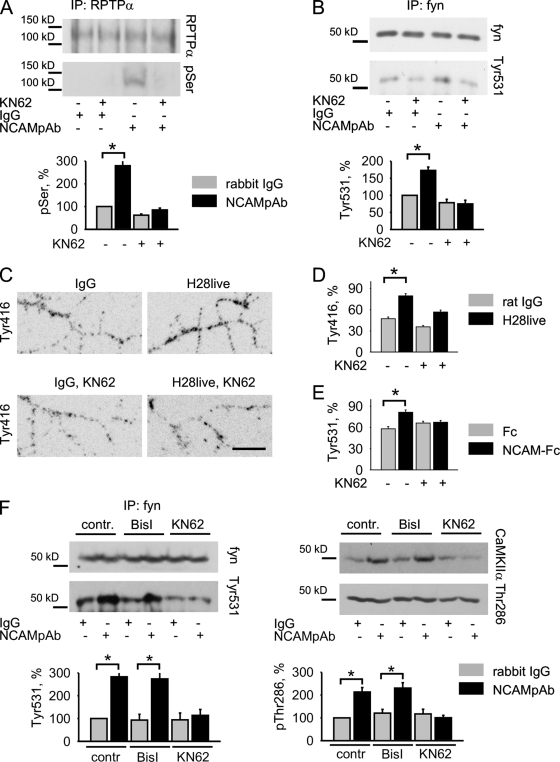
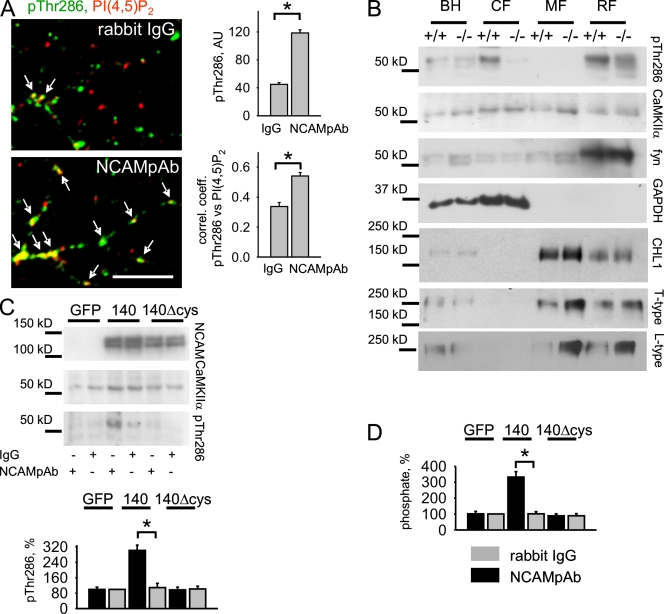
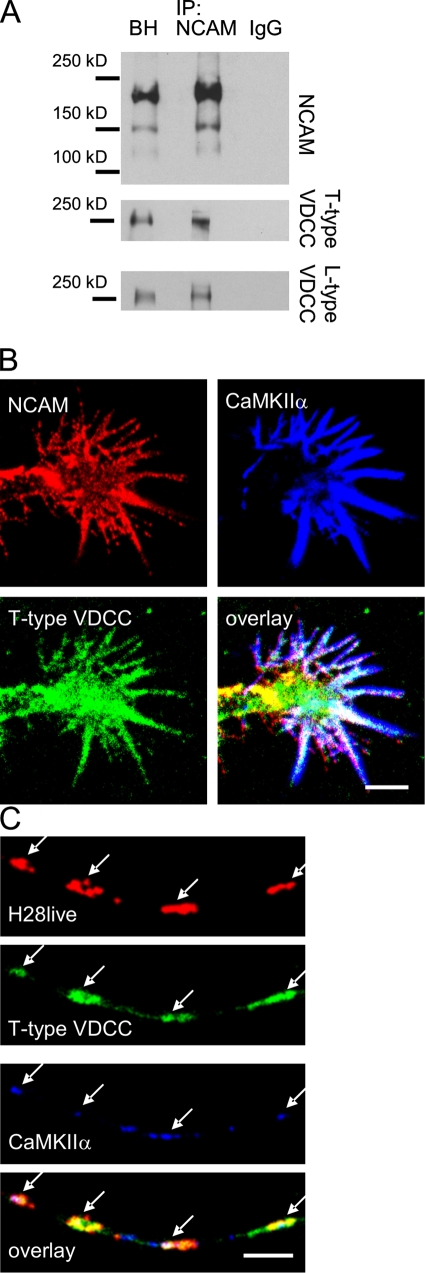
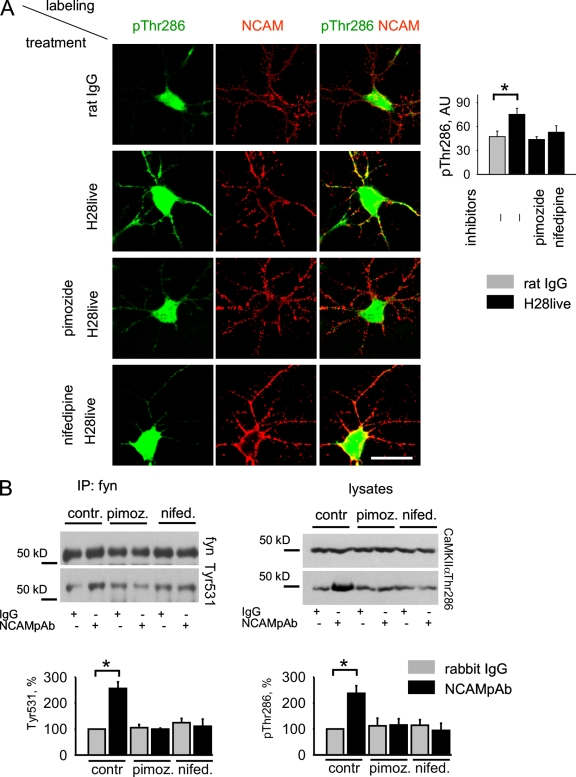
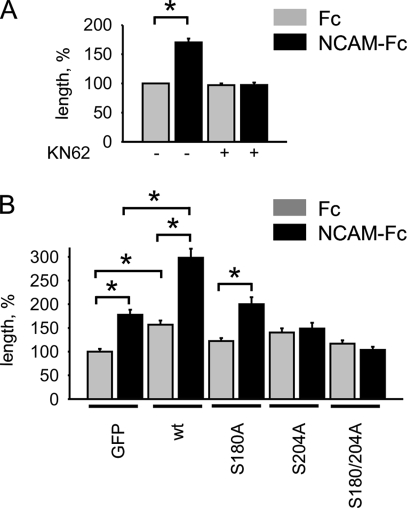
Receptor protein tyrosine phosphatase alpha (RPTPalpha) phosphatase activity is required for intracellular signaling cascades that are activated in motile cells and growing neurites. Little is known, however, about mechanisms that coordinate RPTPalpha activity with cell behavior. We show that clustering of neural cell adhesion molecule (NCAM) at the cell surface is coupled to an increase in serine phosphorylation and phosphatase activity of RPTPalpha. NCAM associates with T- and L-type voltage-dependent Ca(2+) channels, and NCAM clustering at the cell surface results in Ca(2+) influx via these channels and activation of NCAM-associated calmodulin-dependent protein kinase IIalpha (CaMKIIalpha). Clustering of NCAM promotes its redistribution to lipid rafts and the formation of a NCAM-RPTPalpha-CaMKIIalpha complex, resulting in serine phosphorylation of RPTPalpha by CaMKIIalpha. Overexpression of RPTPalpha with mutated Ser180 and Ser204 interferes with NCAM-induced neurite outgrowth, which indicates that neurite extension depends on NCAM-induced up-regulation of RPTPalpha activity. Thus, we reveal a novel function for a cell adhesion molecule in coordination of cell behavior with intracellular phosphatase activity.
受体蛋白酪氨酸磷酸酶α(RPTPα)的磷酸酶活性对于在运动细胞和生长中的神经突中激活的细胞内信号级联反应是必需的。然而,关于协调RPTPα活性与细胞行为的机制却知之甚少。我们发现,神经细胞黏附分子(NCAM)在细胞表面的聚集与RPTPα的丝氨酸磷酸化增加和磷酸酶活性增强相关联。NCAM与T型和L型电压依赖性Ca(2+)通道相关联,并且NCAM在细胞表面的聚集导致通过这些通道的Ca(2+)内流以及与NCAM相关的钙调蛋白依赖性蛋白激酶IIα(CaMKIIα)的激活。NCAM的聚集促进其重新分布到脂筏并形成NCAM-RPTPα-CaMKIIα复合物,导致CaMKIIα对RPTPα进行丝氨酸磷酸化。具有突变的Ser180和Ser204的RPTPα的过表达会干扰NCAM诱导的神经突生长,这表明神经突延伸依赖于NCAM诱导的RPTPα活性上调。因此,我们揭示了一种细胞黏附分子在协调细胞行为与细胞内磷酸酶活性方面的新功能。