School of Biochemistry and Immunology and Trinity College Institute of Neuroscience, Trinity College Dublin, Dublin, Ireland.
School of Biochemistry and Immunology and Trinity College Institute of Neuroscience, Trinity College Dublin, Dublin, Ireland; Florey Institute of Neuroscience and Mental Health, Melbourne Brain Centre, University of Melbourne, Parkville, Victoria, Australia; Child & Brain Development Program, Canadian Institute for Advanced Research (CIFAR), Toronto, Ontario, Canada.
J Biol Chem. 2022 May;298(5):101866. doi: 10.1016/j.jbc.2022.101866. Epub 2022 Mar 26.
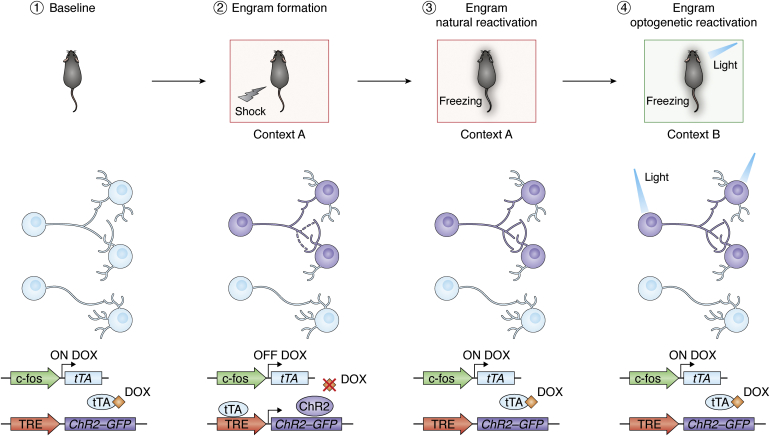
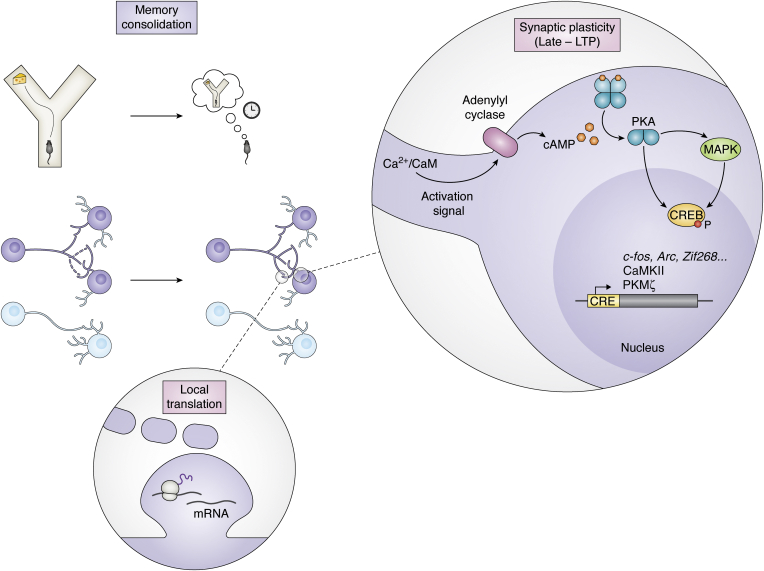
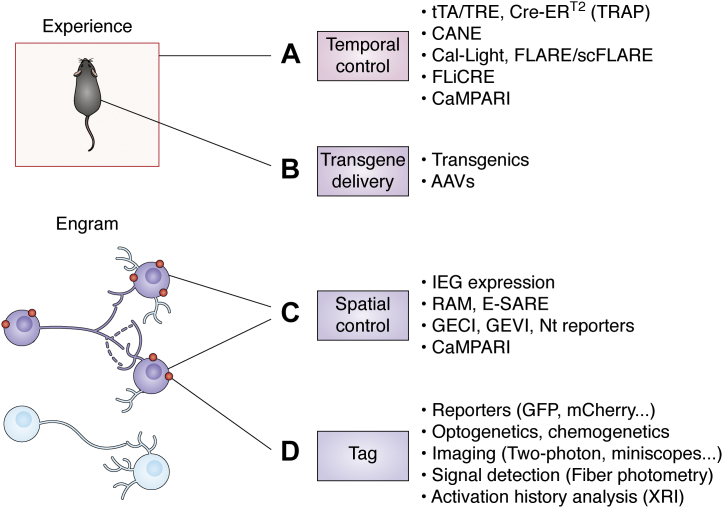
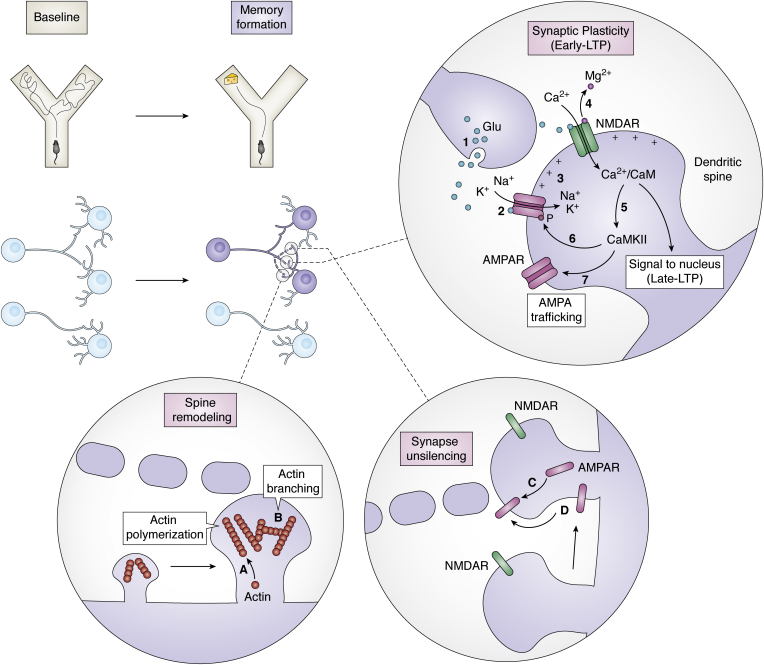
Memory, defined as the storage and use of learned information in the brain, is necessary to modulate behavior and critical for animals to adapt to their environments and survive. Despite being a cornerstone of brain function, questions surrounding the molecular and cellular mechanisms of how information is encoded, stored, and recalled remain largely unanswered. One widely held theory is that an engram is formed by a group of neurons that are active during learning, which undergoes biochemical and physical changes to store information in a stable state, and that are later reactivated during recall of the memory. In the past decade, the development of engram labeling methodologies has proven useful to investigate the biology of memory at the molecular and cellular levels. Engram technology allows the study of individual memories associated with particular experiences and their evolution over time, with enough experimental resolution to discriminate between different memory processes: learning (encoding), consolidation (the passage from short-term to long-term memories), and storage (the maintenance of memory in the brain). Here, we review the current understanding of memory formation at a molecular and cellular level by focusing on insights provided using engram technology.
记忆是指大脑中存储和使用所学信息的能力,对于动物适应环境和生存至关重要。尽管记忆是大脑功能的基石,但关于信息如何被编码、存储和回忆的分子和细胞机制的问题仍未得到充分解答。一种广泛持有的理论认为,记忆痕迹是由一组在学习过程中活跃的神经元组成的,这些神经元会发生生化和物理变化,以将信息稳定地存储起来,并且在回忆记忆时会被重新激活。在过去的十年中,记忆痕迹标记方法的发展已被证明对研究记忆的分子和细胞水平的生物学有用。记忆痕迹技术允许研究与特定经历相关的个体记忆及其随时间的演变,具有足够的实验分辨率,可以区分不同的记忆过程:学习(编码)、巩固(从短期记忆到长期记忆的过渡)和存储(在大脑中维持记忆)。在这里,我们通过关注使用记忆痕迹技术提供的见解,综述了分子和细胞水平上的记忆形成的现有认识。