Weel-Sneve Ragnhild, Bjørås Magnar, Kristiansen Knut Ivan
Centre for Molecular Biology and Neuroscience, Institute of Medical Microbiology, Rikshospitalet University Hospital, NO-0027 Oslo, Norway.
Nucleic Acids Res. 2008 Nov;36(19):6249-59. doi: 10.1093/nar/gkn633. Epub 2008 Oct 1.
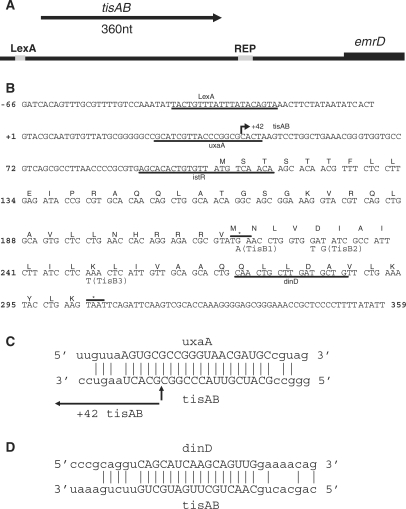
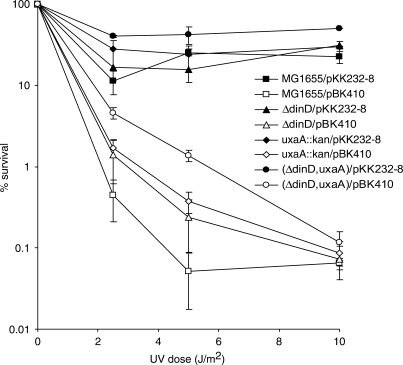
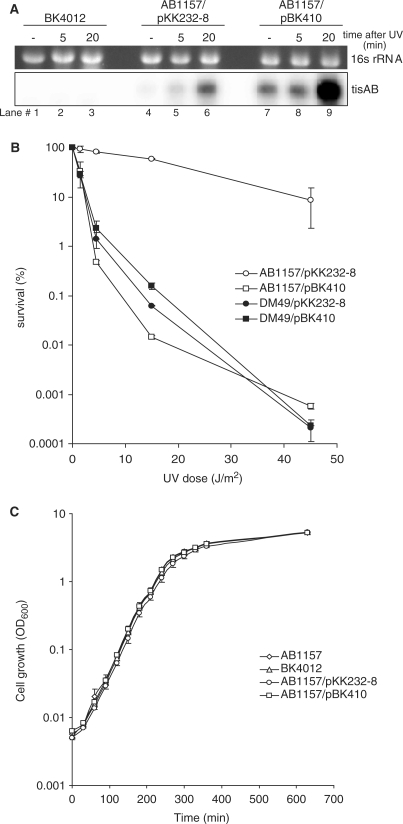
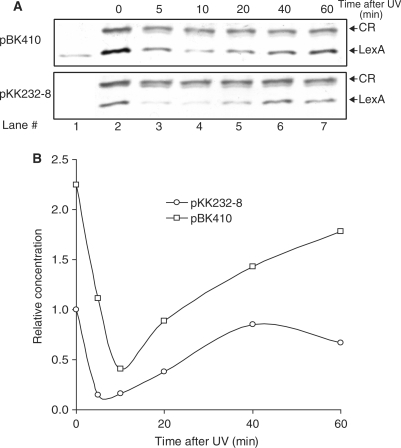
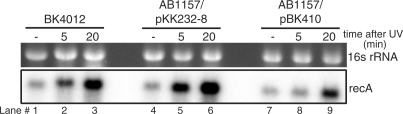
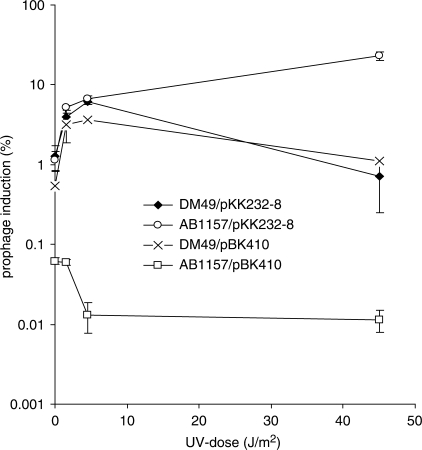
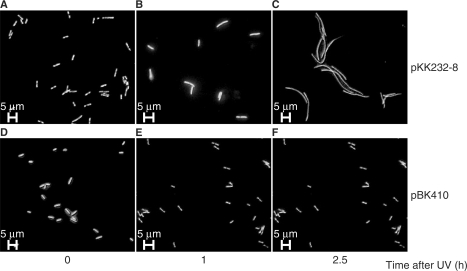
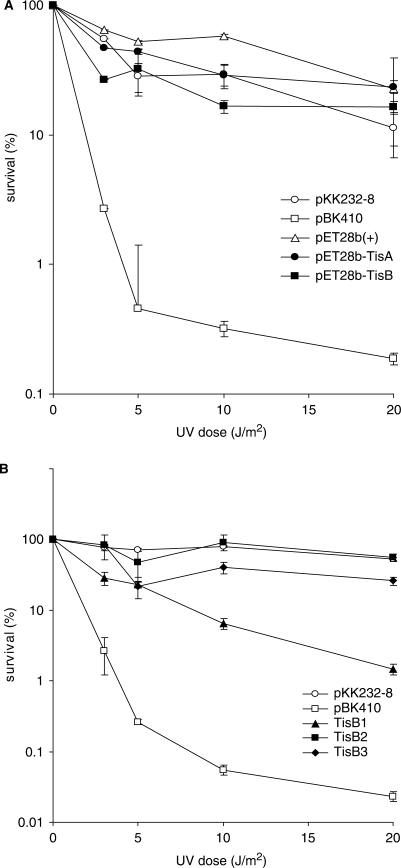
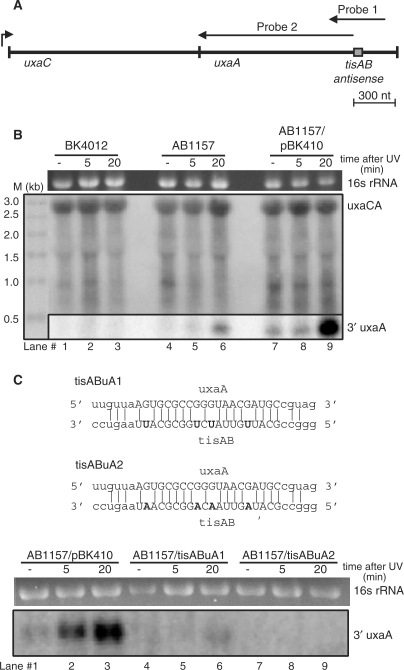
The DNA damage induced SOS response in Escherichia coli is initiated by cleavage of the LexA repressor through activation of RecA. Here we demonstrate that overexpression of the SOS-inducible tisAB gene inhibits several SOS functions in vivo. Wild-type E. coli overexpressing tisAB showed the same UV sensitivity as a lexA mutant carrying a noncleavable version of the LexA protein unable to induce the SOS response. Immunoblotting confirmed that tisAB overexpression leads to higher levels of LexA repressor and northern experiments demonstrated delayed and reduced induction of recA mRNA. In addition, induction of prophage lambda and UV-induced filamentation was inhibited by tisAB overexpression. The tisAB gene contains antisense sequences to the SOS-inducible dinD gene (16 nt) and the uxaA gene (20 nt), the latter encoding a dehydratase essential for galacturonate catabolism. Cleavage of uxaA mRNA at the antisense sequence was dependent on tisAB RNA expression. We showed that overexpression of tisAB is less able to confer UV sensitivity to the uxaA dinD double mutant as compared to wild-type, indicating that the dinD and uxaA transcripts modulate the anti-SOS response of tisAB. These data shed new light on the complexity of SOS regulation in which the uxaA gene could link sugar metabolism to the SOS response via antisense regulation of the tisAB gene.
大肠杆菌中由DNA损伤诱导的SOS反应是通过RecA的激活切割LexA阻遏物而启动的。在此我们证明,SOS诱导型tisAB基因的过表达在体内抑制了几种SOS功能。过表达tisAB的野生型大肠杆菌表现出与携带无法切割的LexA蛋白版本(无法诱导SOS反应)的lexA突变体相同的紫外线敏感性。免疫印迹证实tisAB过表达导致LexA阻遏物水平升高,Northern实验表明recA mRNA的诱导延迟且减少。此外,tisAB过表达抑制了原噬菌体λ的诱导和紫外线诱导的丝状化。tisAB基因包含与SOS诱导型dinD基因(16个核苷酸)和uxaA基因(20个核苷酸)的反义序列,后者编码半乳糖醛酸分解代谢所必需的脱水酶。uxaA mRNA在反义序列处的切割依赖于tisAB RNA的表达。我们表明,与野生型相比,tisAB过表达赋予uxaA dinD双突变体紫外线敏感性的能力较弱,这表明dinD和uxaA转录本调节tisAB的抗SOS反应。这些数据为SOS调节的复杂性提供了新的线索,其中uxaA基因可能通过tisAB基因的反义调节将糖代谢与SOS反应联系起来。