Partners for Applied Social Sciences|PASS International, Leuven, Belgium.
PLoS Negl Trop Dis. 2008;2(10):e321. doi: 10.1371/journal.pntd.0000321. Epub 2008 Oct 15.
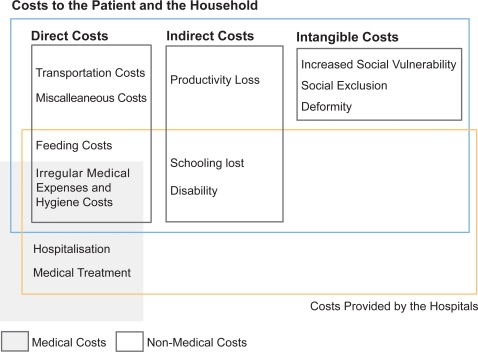
Despite free of charge biomedical treatment, the cost burden of Buruli ulcer disease (Bu) hospitalisation in Central Cameroon accounts for 25% of households' yearly earnings, surpassing the threshold of 10%, which is generally considered catastrophic for the household economy, and calling into question the sustainability of current Bu programmes. The high non-medical costs and productivity loss for Bu patients and their households make household involvement in the healing process unsustainable. 63% of households cease providing social and financial support for patients as a coping strategy, resulting in the patient's isolation at the hospital. Social isolation itself was cited by in-patients as the principal cause for abandonment of biomedical treatment. These findings demonstrate that further research and investment in Bu are urgently needed to evaluate new intervention strategies that are socially acceptable and appropriate in the local context.
尽管布隆迪溃疡病(Bu)的生物医学治疗是免费的,但中非地区 Bu 住院治疗的费用负担占家庭年收入的 25%,超过了 10%的灾难性门槛,这对家庭经济产生了重大影响,并对当前 Bu 项目的可持续性提出了质疑。Bu 患者及其家庭的非医疗费用高昂,生产力损失严重,使得家庭参与治疗过程难以为继。63%的家庭停止为患者提供社会和经济支持,作为一种应对策略,导致患者在医院被孤立。住院患者将社会孤立本身列为放弃生物医学治疗的主要原因。这些发现表明,迫切需要进一步研究和投资 Bu,以评估新的干预策略,这些策略在当地背景下是社会可接受和适当的。