Condray Ruth, Yao Jeffrey K, Steinhauer Stuart R, van Kammen Daniel P, Reddy Ravinder D, Morrow Lisa A
Western Psychiatric Institute & Clinic, Department of Psychiatry, University of Pittsburgh School of Medicine, 3811 O'Hara Street, Pittsburgh, PA 15213, United States.
Schizophr Res. 2008 Nov;106(1):13-28. doi: 10.1016/j.schres.2008.03.009. Epub 2008 Oct 16.
Semantic memory and language deficits are associated with schizophrenia. Understanding how these systems operate in this disorder will likely require a multi-factorial model that explains their linkages with cognition and modulation by dopamine. A biological factor that may provide causal convergence for these connections is cell membrane composition and dynamics.
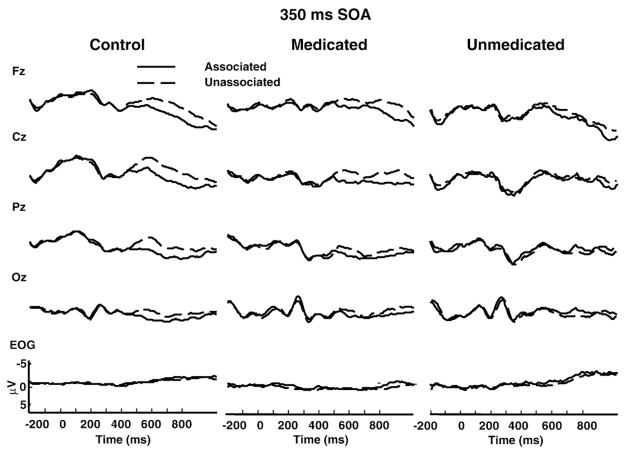
N400 is an electrophysiological measure of semantic memory and language that is sensitive to deficits in schizophrenia. Relationships among N400, cognition, dopamine, and cell membrane polyunsaturated fatty acids (PUFAs) were examined for patients tested under medicated (haloperidol only) and unmedicated (placebo) conditions. Relationships between these factors and clinical symptoms were also evaluated. The sample included 37 male schizophrenia inpatients and 34 male normal controls. The N400 priming effect was measured from visual event-related potentials recorded during a semantic priming-lexical decision task, in which semantic association (related versus unrelated words) and presentation rate (Stimulus Onset Asynchrony/SOAs: 350 and 950 ms) were varied.
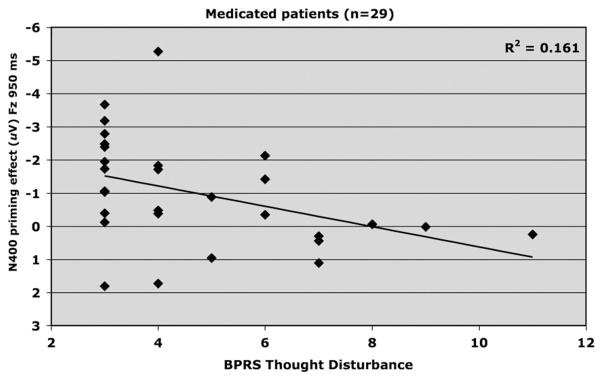
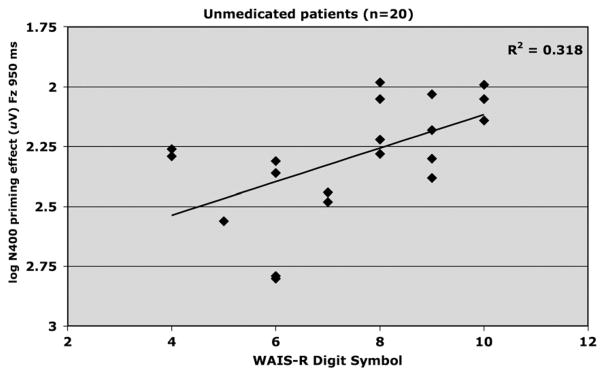
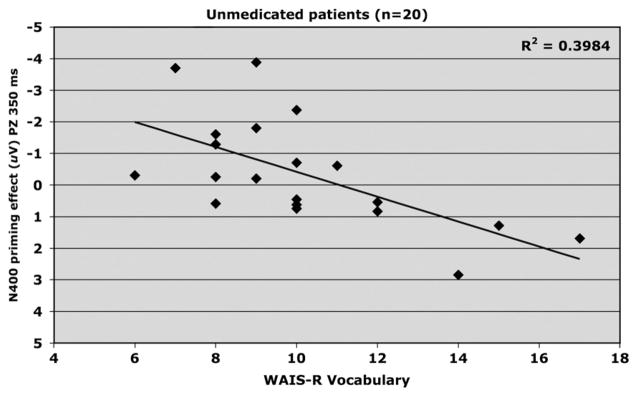
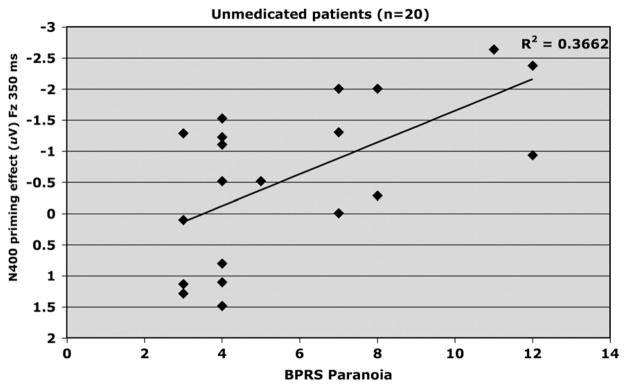
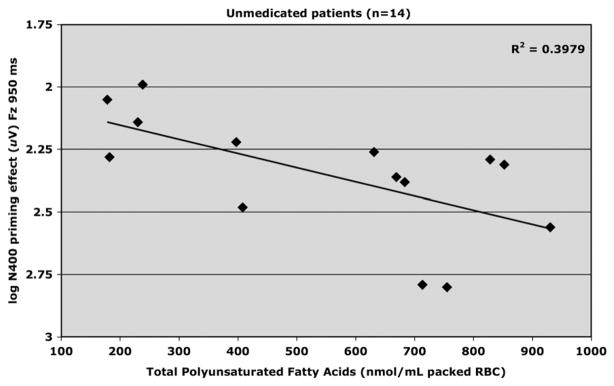
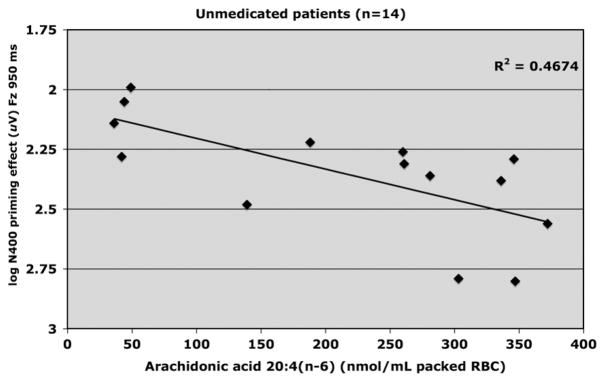
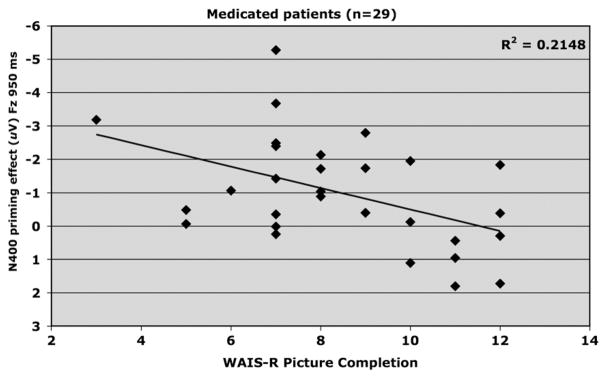
N400 was associated with cognition (speed, visuoperception, attention) in patients and controls. These relationships were influenced by SOA in both groups, and by pharmacological condition in patients. Levels of total PUFAs and arachidonic acid were associated with N400 in unmedicated patients. Clinical symptoms (paranoia, thought disturbance) were associated with N400, but not with cognition or PUFAs.
Results suggest cell membrane fatty acids are associated with semantic memory and language in schizophrenia. Findings also suggest a series of linkages that are modulated by dopamine: cell membrane fatty acids are associated with N400 semantic priming; N400 semantic priming is associated with clinical symptoms.
语义记忆和语言缺陷与精神分裂症相关。了解这些系统在该疾病中如何运作可能需要一个多因素模型,该模型能够解释它们与认知以及多巴胺调节之间的联系。一个可能为这些联系提供因果关联的生物学因素是细胞膜组成和动力学。
N400是一种对精神分裂症缺陷敏感的语义记忆和语言的电生理测量指标。研究了在药物治疗(仅使用氟哌啶醇)和未药物治疗(安慰剂)条件下接受测试的患者中N400、认知、多巴胺和细胞膜多不饱和脂肪酸(PUFA)之间的关系。还评估了这些因素与临床症状之间的关系。样本包括37名男性精神分裂症住院患者和34名男性正常对照。N400启动效应是通过在语义启动-词汇判断任务期间记录的视觉事件相关电位来测量的,其中语义关联(相关词与无关词)和呈现速率(刺激起始异步/SOA:350和950毫秒)是变化的。
在患者和对照中,N400与认知(速度、视觉感知、注意力)相关。这些关系在两组中都受到SOA的影响,在患者中还受到药物状态的影响。未药物治疗患者中总PUFA和花生四烯酸水平与N400相关。临床症状(妄想、思维紊乱)与N400相关,但与认知或PUFA无关。
结果表明细胞膜脂肪酸与精神分裂症中的语义记忆和语言相关。研究结果还表明了一系列受多巴胺调节的联系:细胞膜脂肪酸与N400语义启动相关;N400语义启动与临床症状相关。