Russell Kelly, Dryden Donna M, Liang Yuanyuan, Friesen Carol, O'Gorman Kathleen, Durec Tamara, Wild T Cameron, Klassen Terry P
Department of Pediatrics, University of Alberta, Edmonton, Canada.
BMC Pediatr. 2008 Oct 28;8:48. doi: 10.1186/1471-2431-8-48.
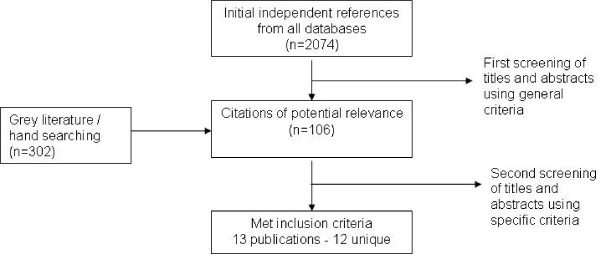
Methamphetamine (MA) is a potent stimulant that is readily available. Its effects are similar to cocaine, but the drug has a profile associated with increased acute and chronic toxicities. The objective of this systematic review was to identify and synthesize literature on risk factors that are associated with MA use among youth.More than 40 electronic databases, websites, and key journals/meeting abstracts were searched. We included studies that compared children and adolescents (< or = 18 years) who used MA to those who did not. One reviewer extracted the data and a second checked for completeness and accuracy. For discrete risk factors, odds ratios (OR) were calculated and when appropriate, a pooled OR with 95% confidence intervals (95% CI) was calculated. For continuous risk factors, mean difference and 95% CI were calculated and when appropriate, a weighted mean difference (WMD) and 95% CI was calculated. Results were presented separately by comparison group: low-risk (no previous drug abuse) and high-risk children (reported previous drug abuse or were recruited from a juvenile detention center).
Twelve studies were included. Among low-risk youth, factors associated with MA use were: history of heroin/opiate use (OR = 29.3; 95% CI: 9.8-87.8), family history of drug use (OR = 4.7; 95% CI: 2.8-7.9), risky sexual behavior (OR = 2.79; 95% CI: 2.25, 3.46) and some psychiatric disorders. History of alcohol use and smoking were also significantly associated with MA use. Among high-risk youth, factors associated with MA use were: family history of crime (OR = 2.0; 95% CI: 1.2-3.3), family history of drug use (OR = 4.7; 95% CI: 2.8-7.9), family history of alcohol abuse (OR = 3.2; 95% CI: 1.8-5.6), and psychiatric treatment (OR = 6.8; 95% CI: 3.6-12.9). Female sex was also significantly associated with MA use.
Among low-risk youth, a history of engaging in a variety of risky behaviors was significantly associated with MA use. A history of a psychiatric disorder was a risk factor for MA for both low- and high-risk youth. Family environment was also associated with MA use. Many of the included studies were cross-sectional making it difficult to assess causation. Future research should utilize prospective study designs so that temporal relationships between risk factors and MA use can be established.
甲基苯丙胺(MA)是一种容易获取的强效兴奋剂。其作用与可卡因相似,但该药物具有与急性和慢性毒性增加相关的特征。本系统评价的目的是识别和综合有关青少年使用MA的风险因素的文献。检索了40多个电子数据库、网站以及主要期刊/会议摘要。我们纳入了比较使用MA的儿童和青少年(≤18岁)与未使用MA的儿童和青少年的研究。一名评审员提取数据,另一名评审员检查数据的完整性和准确性。对于离散风险因素,计算比值比(OR),并在适当情况下计算95%置信区间(95%CI)的合并OR。对于连续风险因素,计算平均差和95%CI,并在适当情况下计算加权平均差(WMD)和95%CI。结果按比较组分别呈现:低风险组(无既往药物滥用史)和高风险组儿童(报告有既往药物滥用史或从少年拘留中心招募)。
纳入了12项研究。在低风险青少年中,与使用MA相关的因素有:海洛因/阿片类药物使用史(OR = 29.3;95%CI:9.8 - 87.8)、药物使用家族史(OR = 4.7;95%CI:2.8 - 7.9)、危险性行为(OR = 2.79;95%CI:2.25,3.46)以及一些精神疾病。饮酒史和吸烟史也与使用MA显著相关。在高风险青少年中,与使用MA相关的因素有:犯罪家族史(OR = 2.0;95%CI:1.2 - 3.3)、药物使用家族史(OR = 4.7;95%CI:2.8 - 7.9)、酒精滥用家族史(OR = 3.2;95%CI:1.8 - 5.6)以及接受精神科治疗(OR = 6.8;95%CI:3.6 - 12.9)。女性性别也与使用MA显著相关。
在低风险青少年中,有多种危险行为史与使用MA显著相关。精神疾病史是低风险和高风险青少年使用MA的一个风险因素。家庭环境也与使用MA有关。许多纳入的研究是横断面研究,难以评估因果关系。未来的研究应采用前瞻性研究设计,以便确定风险因素与使用MA之间的时间关系。