Winterbauer Neil E, Balleine Bernard W
Department of Psychology, UCLA USA.
Front Integr Neurosci. 2007 Nov 30;1:9. doi: 10.3389/neuro.07.009.2007. eCollection 2007.
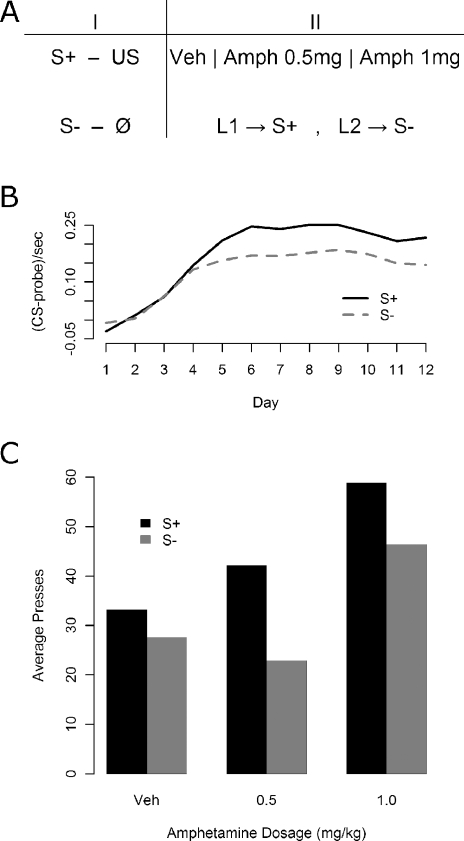
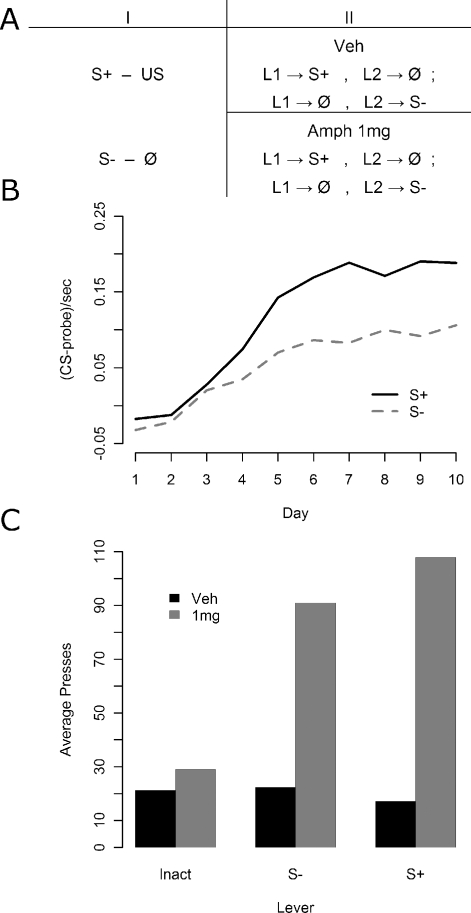
In four experiments we assessed the effect of systemic amphetamine on the ability of a stimulus paired with reward and a stimulus that was not paired with reward to support instrumental conditioning; i.e., we trained rats to press two levers, one followed by a stimulus that had been trained in a predictive relationship with a food outcome and the other by a stimulus unpaired with that reward. Here we show, in general accord with predictions from the dopamine re-selection hypothesis [Redgrave and Gurney (2006). Nat. Rev. Neurosci. 7, 967-975], that systemic amphetamine greatly enhanced the performance of lever press responses that delivered a visual stimulus whether that stimulus had been paired with reward or not. In contrast, amphetamine had no effect on the performance of responses on an inactive lever that had no stimulus consequences. These results support the notion that dopaminergic activity serves to mark or tag actions associated with stimulus change for subsequent selection (or re-selection) and stand against the more specific suggestion that dopaminergic activity is solely related to the prediction of reward.
在四项实验中,我们评估了全身性苯丙胺对与奖励配对的刺激以及未与奖励配对的刺激支持工具性条件反射能力的影响;也就是说,我们训练大鼠按压两个杠杆,一个杠杆按压后会出现与食物结果具有预测关系的刺激,另一个杠杆按压后会出现与该奖励未配对的刺激。在此我们表明,总体上符合多巴胺重新选择假说[雷德格雷夫和格尼(2006年)。《自然神经科学评论》。7,967 - 975]的预测,即全身性苯丙胺极大地增强了无论该视觉刺激是否与奖励配对的情况下,按压能产生该视觉刺激的杠杆的反应表现。相比之下,苯丙胺对无刺激后果的非活动杠杆上的反应表现没有影响。这些结果支持了多巴胺能活动用于标记或标记与刺激变化相关的动作以便后续选择(或重新选择)的观点,并反对多巴胺能活动仅与奖励预测相关的更具体观点。