Biswas Sunita, Russell Robyn J, Jackson Colin J, Vidovic Maria, Ganeshina Olga, Oakeshott John G, Claudianos Charles
University of Queensland, Queensland Brain Institute, Brisbane, Queensland, Australia.
PLoS One. 2008;3(10):e3542. doi: 10.1371/journal.pone.0003542. Epub 2008 Oct 31.
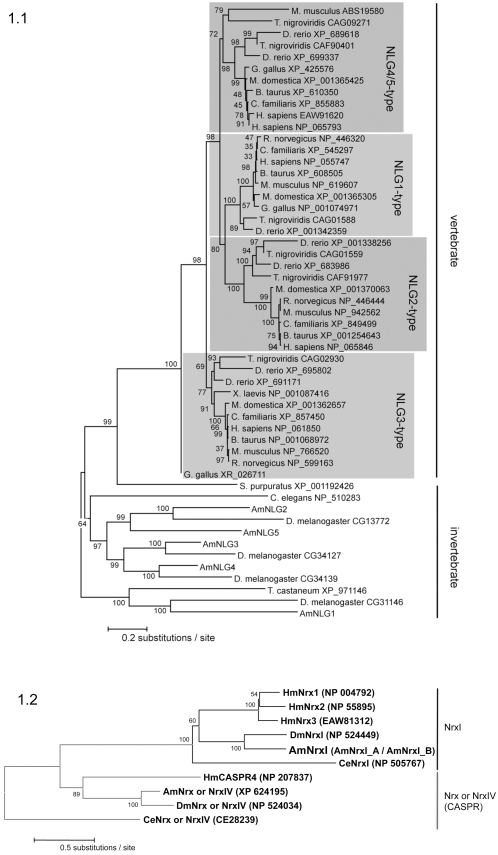
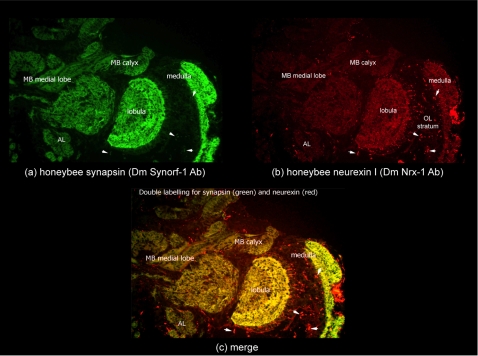
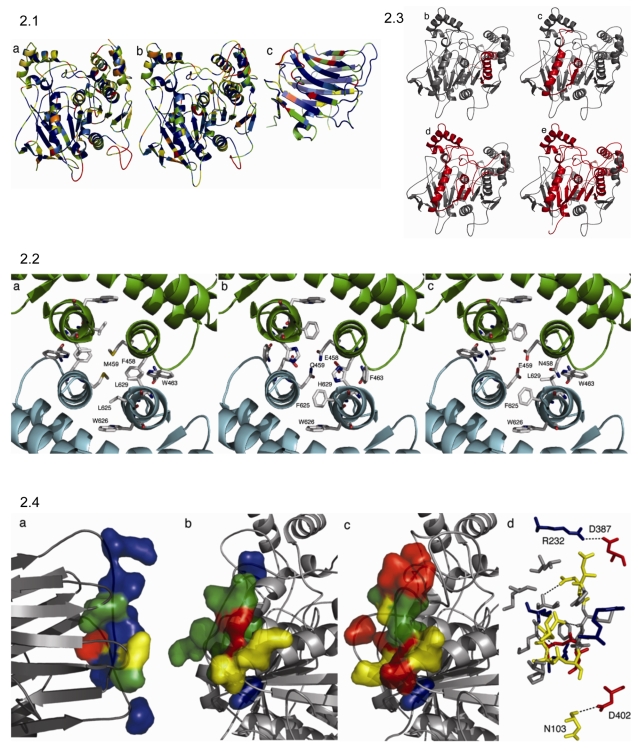
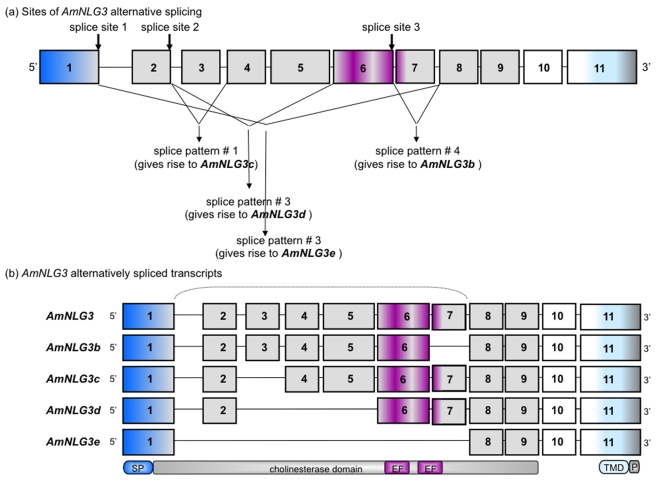
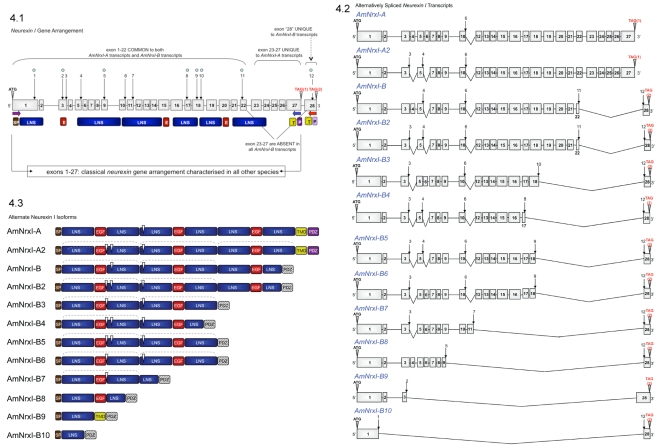
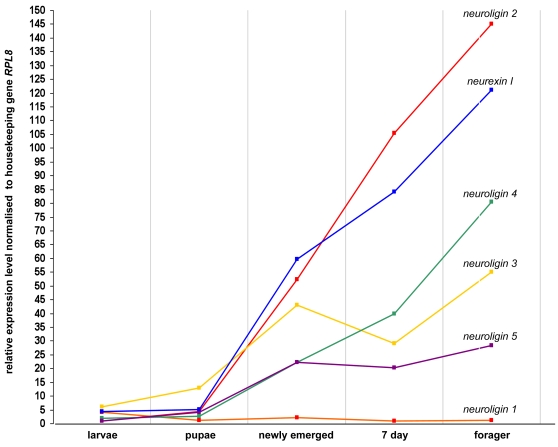
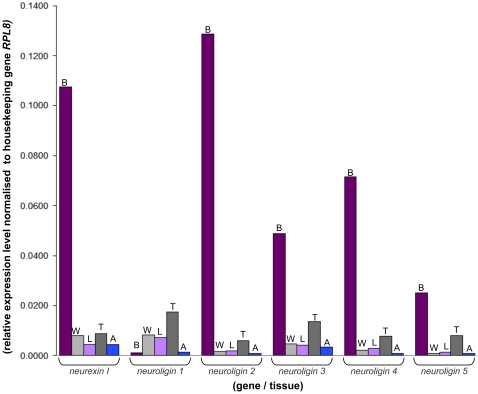
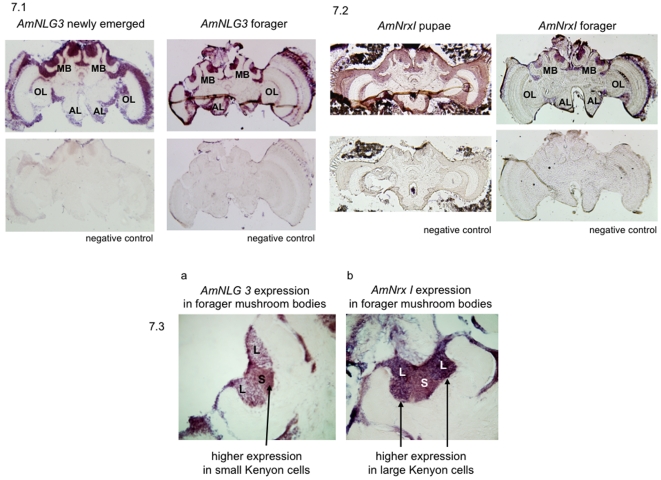
Vertebrate studies show neuroligins and neurexins are binding partners in a trans-synaptic cell adhesion complex, implicated in human autism and mental retardation disorders. Here we report a genetic analysis of homologous proteins in the honey bee. As in humans, the honeybee has five large (31-246 kb, up to 12 exons each) neuroligin genes, three of which are tightly clustered. RNA analysis of the neuroligin-3 gene reveals five alternatively spliced transcripts, generated through alternative use of exons encoding the cholinesterase-like domain. Whereas vertebrates have three neurexins the bee has just one gene named neurexin I (400 kb, 28 exons). However alternative isoforms of bee neurexin I are generated by differential use of 12 splice sites, mostly located in regions encoding LNS subdomains. Some of the splice variants of bee neurexin I resemble the vertebrate alpha- and beta-neurexins, albeit in vertebrates these forms are generated by alternative promoters. Novel splicing variations in the 3' region generate transcripts encoding alternative trans-membrane and PDZ domains. Another 3' splicing variation predicts soluble neurexin I isoforms. Neurexin I and neuroligin expression was found in brain tissue, with expression present throughout development, and in most cases significantly up-regulated in adults. Transcripts of neurexin I and one neuroligin tested were abundant in mushroom bodies, a higher order processing centre in the bee brain. We show neuroligins and neurexins comprise a highly conserved molecular system with likely similar functional roles in insects as vertebrates, and with scope in the honeybee to generate substantial functional diversity through alternative splicing. Our study provides important prerequisite data for using the bee as a model for vertebrate synaptic development.
脊椎动物研究表明,神经连接蛋白和神经突触素是跨突触细胞粘附复合体中的结合伴侣,与人类自闭症和智力障碍疾病有关。在此,我们报告了对蜜蜂同源蛋白的遗传分析。与人类一样,蜜蜂有五个大的(31 - 246 kb,每个最多12个外显子)神经连接蛋白基因,其中三个紧密聚集。对神经连接蛋白3基因的RNA分析揭示了五种可变剪接转录本,它们是通过对编码胆碱酯酶样结构域的外显子的交替使用产生的。脊椎动物有三种神经突触素,而蜜蜂只有一个名为神经突触素I的基因(400 kb,28个外显子)。然而,蜜蜂神经突触素I的可变异构体是通过对12个剪接位点的不同使用产生的,这些剪接位点大多位于编码LNS亚结构域的区域。蜜蜂神经突触素I的一些剪接变体类似于脊椎动物的α - 和β - 神经突触素,尽管在脊椎动物中这些形式是由不同的启动子产生的。3'区域的新型剪接变异产生了编码交替跨膜和PDZ结构域的转录本。另一种3'剪接变异预测了可溶性神经突触素I异构体。在脑组织中发现了神经突触素I和神经连接蛋白的表达,其表达在整个发育过程中都存在,并且在大多数情况下,在成虫中显著上调。所测试的神经突触素I和一种神经连接蛋白的转录本在蘑菇体中丰富,蘑菇体是蜜蜂大脑中的一个高级处理中心。我们表明,神经连接蛋白和神经突触素构成了一个高度保守的分子系统,在昆虫中可能具有与脊椎动物类似的功能作用,并且在蜜蜂中通过可变剪接有产生大量功能多样性的空间。我们的研究为将蜜蜂用作脊椎动物突触发育模型提供了重要的前提数据。