Ulrich Robert G
Laboratory of Molecular Immunology, Army Medical Research Institute of Infectious Diseases, 1425 Porter Street, Frederick, Maryland 21702, USA.
J Immune Based Ther Vaccines. 2008 Oct 31;6:8. doi: 10.1186/1476-8518-6-8.
The gram-positive bacterium Streptococcus pyogenes is a common pathogen of humans that causes invasive infections, toxic-shock syndrome, rheumatic fever, necrotizing fasciitis and other diseases. Detection of antibiotic resistance in clinical isolates has renewed interest in development of new vaccine approaches for control S. pyogenes sepsis. In the study presented, a novel protein vaccine was examined. The vaccine was based on a recombinant protein fusion between streptococcal pyrogenic exotoxin B (SpeB), a cysteinyl protease expressed by all clinical isolates, and streptococcal pyrogenic exotoxin A (SpeA), a superantigen produced by a large subset of isolates.
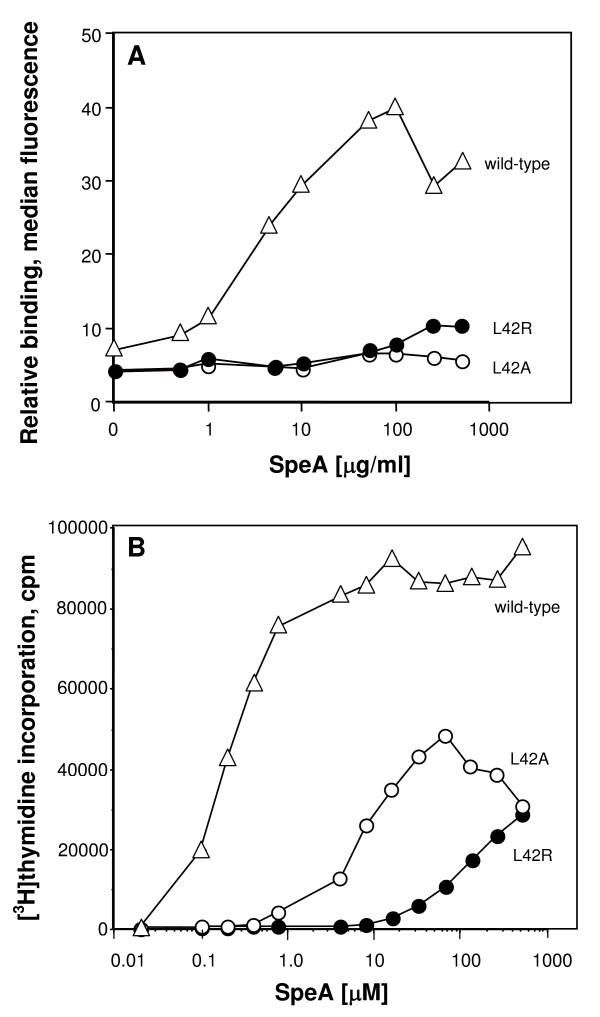
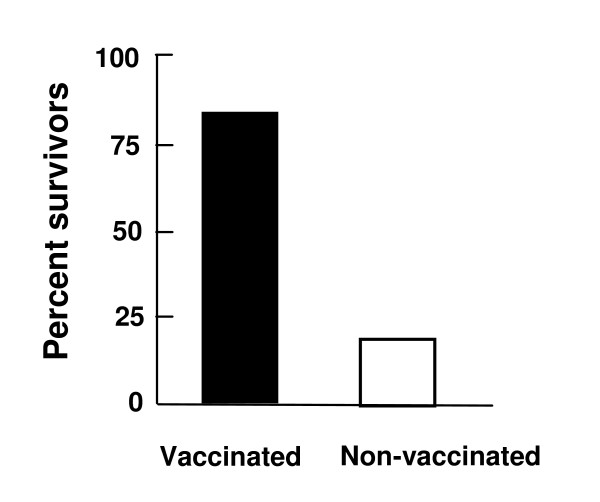
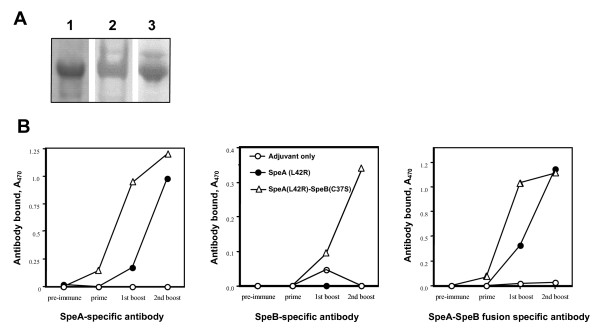
A novel protein was produced by mutating the catalytic site of SpeB and the receptor binding surface of SpeA in a fusion of the two polypeptides. Vaccination of HLA-DQ8 transgenic mice with the SpeA-SpeB fusion protein protected against a challenge with the wild-type SpeA that was lethal to naïve controls, and vaccinated mice were protected from an otherwise lethal S. pyogenes infection.
These results suggest that the genetically attenuated SpeA-SpeB fusion protein may be useful for controlling S. pyogenes infections. Vaccination with the SpeA-SpeB fusion protein described in this study may potentially result in protective immunity against multiple isolates of S. pyogenes due to the extensive antibody cross-reactivity previously observed among all sequence variants of SpeB and the high frequency of SpeA-producing strains.
革兰氏阳性细菌化脓性链球菌是人类常见的病原体,可引起侵袭性感染、中毒性休克综合征、风湿热、坏死性筋膜炎和其他疾病。临床分离株中抗生素耐药性的检测重新激发了人们对开发控制化脓性链球菌败血症新疫苗方法的兴趣。在本研究中,对一种新型蛋白疫苗进行了检测。该疫苗基于化脓性链球菌热外毒素B(SpeB,所有临床分离株均表达的一种半胱氨酸蛋白酶)与化脓性链球菌热外毒素A(SpeA,大部分分离株产生的一种超抗原)之间的重组蛋白融合体。
通过在两种多肽的融合体中突变SpeB的催化位点和SpeA的受体结合表面,产生了一种新型蛋白。用SpeA-SpeB融合蛋白对HLA-DQ8转基因小鼠进行免疫接种,可保护其免受对未免疫对照小鼠致死的野生型SpeA的攻击,且接种疫苗的小鼠可免受原本致死性的化脓性链球菌感染。
这些结果表明,基因减毒的SpeA-SpeB融合蛋白可能有助于控制化脓性链球菌感染。由于先前在SpeB的所有序列变体中观察到广泛的抗体交叉反应以及产生SpeA菌株的高频率,用本研究中描述的SpeA-SpeB融合蛋白进行疫苗接种可能会产生针对多种化脓性链球菌分离株的保护性免疫。