Wang Huating, Garzon Ramiro, Sun Hao, Ladner Katherine J, Singh Ravi, Dahlman Jason, Cheng Alfred, Hall Brett M, Qualman Stephen J, Chandler Dawn S, Croce Carlo M, Guttridge Denis C
Department of Molecular Virology, Human Cancer Genetics Program, The Ohio State University, Columbus, OH 43210, USA.
Cancer Cell. 2008 Nov 4;14(5):369-81. doi: 10.1016/j.ccr.2008.10.006.
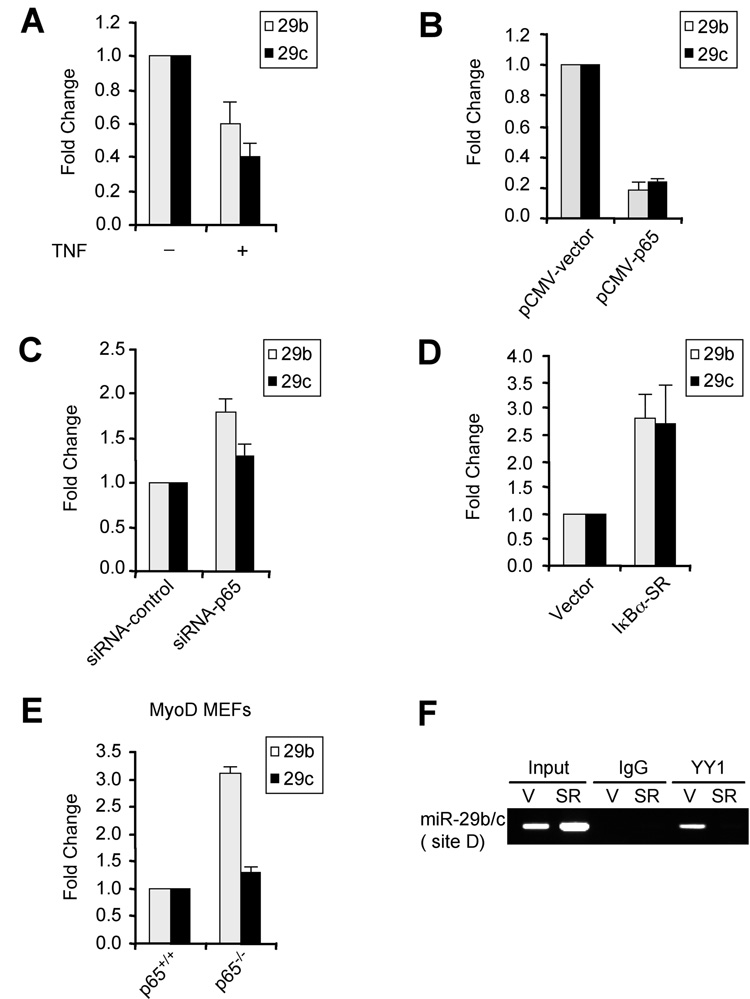
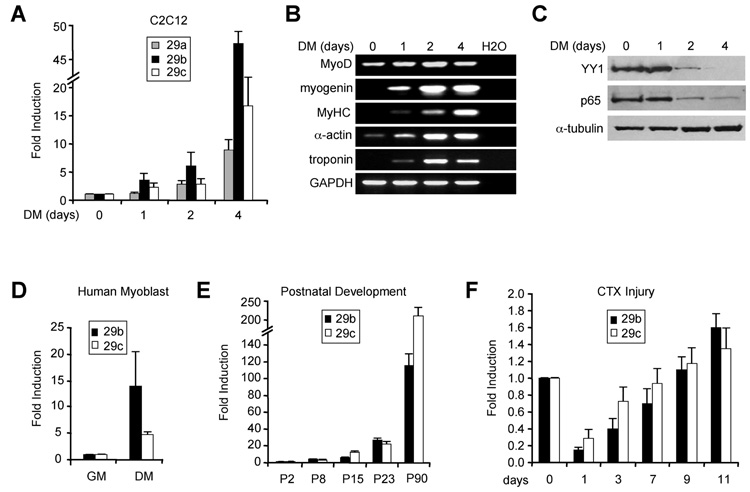
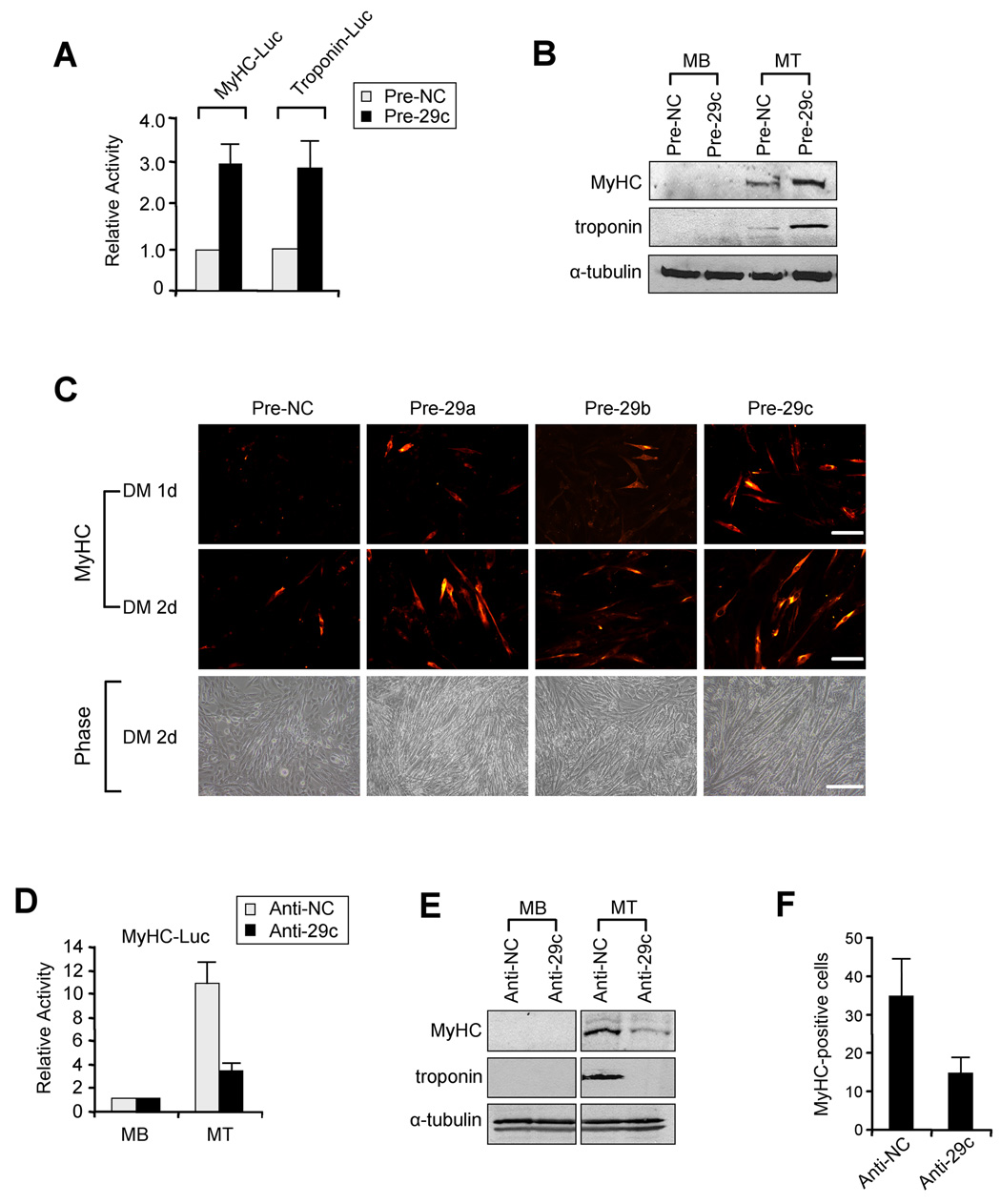
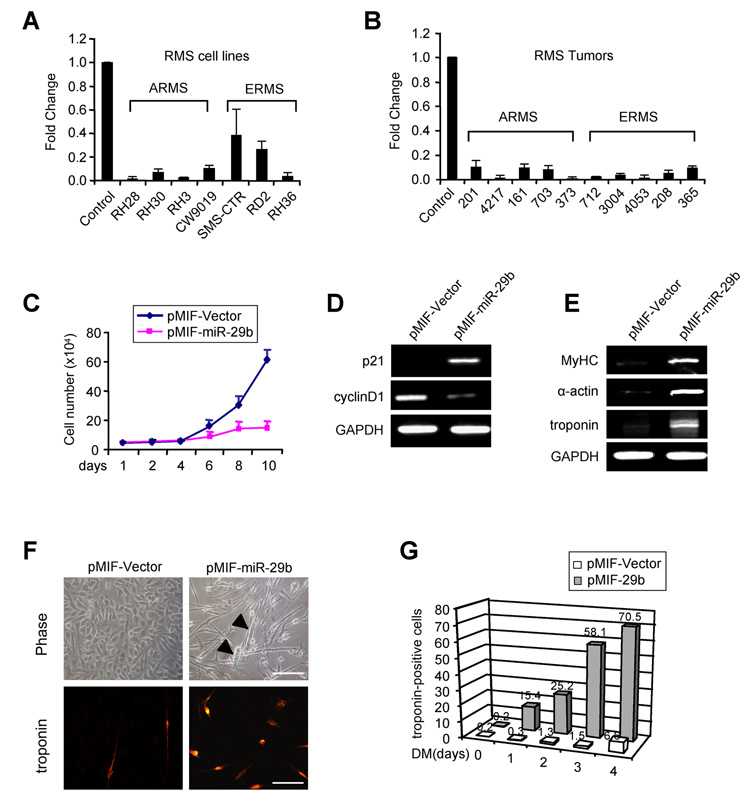
Studies support the importance of microRNAs in physiological and pathological processes. Here we describe the regulation and function of miR-29 in myogenesis and rhabdomyosarcoma (RMS). Results demonstrate that in myoblasts, miR-29 is repressed by NF-kappaB acting through YY1 and the Polycomb group. During myogenesis, NF-kappaB and YY1 downregulation causes derepression of miR-29, which in turn accelerates differentiation by targeting its repressor YY1. However, in RMS cells and primary tumors that possess impaired differentiation, miR-29 is epigenetically silenced by an activated NF-kappaB-YY1 pathway. Reconstitution of miR-29 in RMS in mice inhibits tumor growth and stimulates differentiation, suggesting that miR-29 acts as a tumor suppressor through its promyogenic function. Together, these results identify a NF-kappaB-YY1-miR-29 regulatory circuit whose disruption may contribute to RMS.
研究支持微小RNA在生理和病理过程中的重要性。在此,我们描述了miR-29在成肌作用和横纹肌肉瘤(RMS)中的调控及功能。结果表明,在成肌细胞中,miR-29受通过YY1和多梳蛋白家族起作用的核因子κB抑制。在成肌过程中,核因子κB和YY1的下调导致miR-29去抑制,进而通过靶向其抑制因子YY1加速分化。然而,在分化受损的RMS细胞和原发性肿瘤中,miR-29通过激活的核因子κB-YY1途径发生表观遗传沉默。在小鼠RMS中重建miR-29可抑制肿瘤生长并刺激分化,表明miR-29通过其促肌生成功能发挥肿瘤抑制作用。总之,这些结果确定了一个核因子κB-YY1-miR-29调控回路,其破坏可能与RMS有关。