Jones R Brad, Ndhlovu Lishomwa C, Barbour Jason D, Sheth Prameet M, Jha Aashish R, Long Brian R, Wong Jessica C, Satkunarajah Malathy, Schweneker Marc, Chapman Joan M, Gyenes Gabor, Vali Bahareh, Hyrcza Martin D, Yue Feng Yun, Kovacs Colin, Sassi Aref, Loutfy Mona, Halpenny Roberta, Persad Desmond, Spotts Gerald, Hecht Frederick M, Chun Tae-Wook, McCune Joseph M, Kaul Rupert, Rini James M, Nixon Douglas F, Ostrowski Mario A
Department of Immunology, University of Toronto, Toronto, ON, Canada.
J Exp Med. 2008 Nov 24;205(12):2763-79. doi: 10.1084/jem.20081398. Epub 2008 Nov 10.
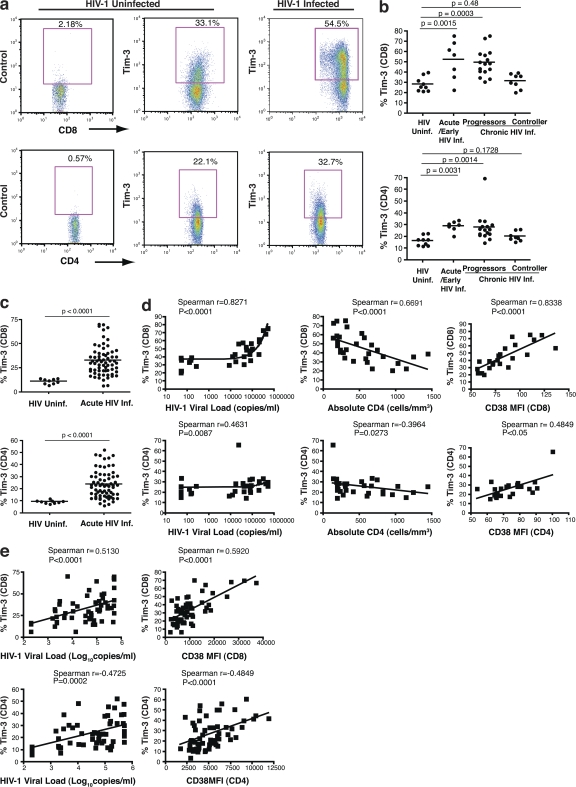
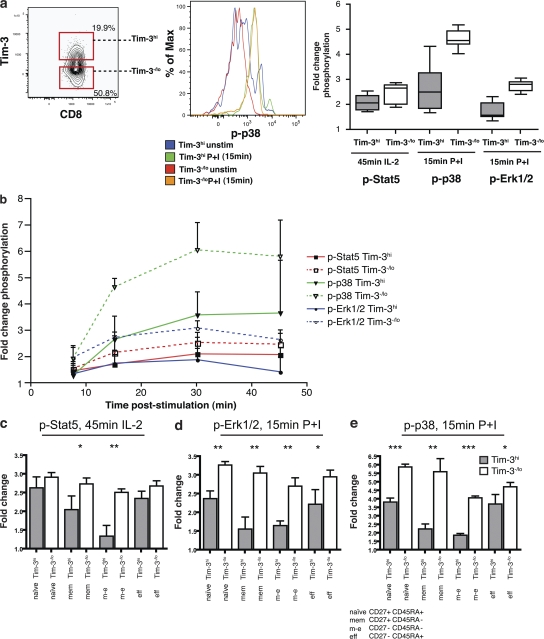
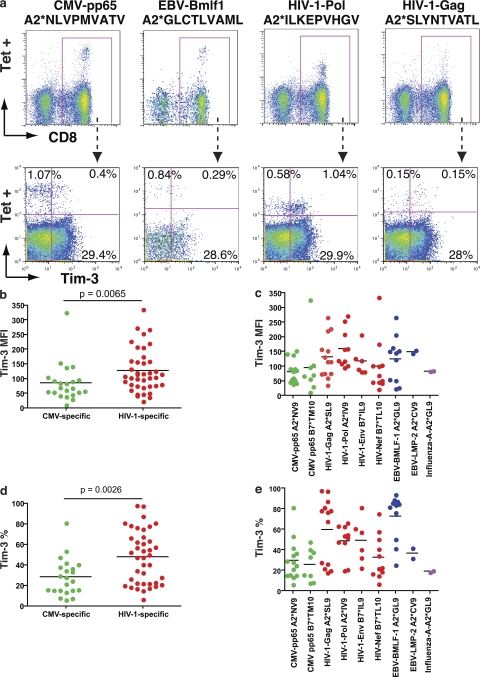
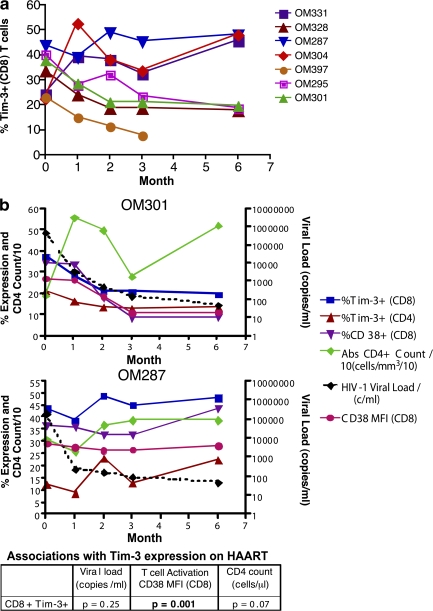
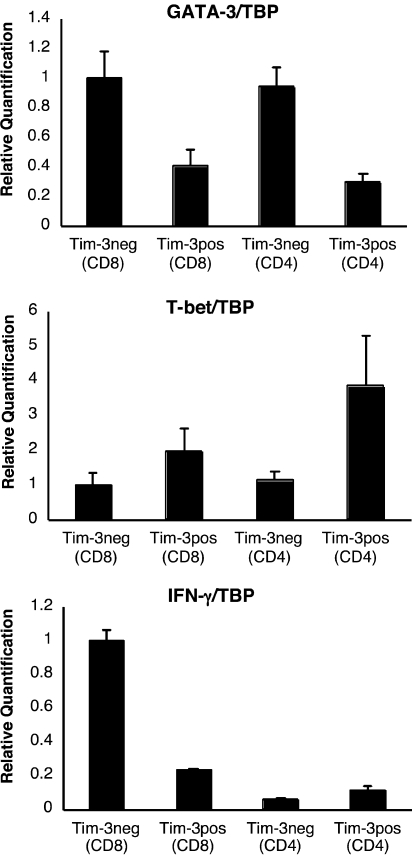
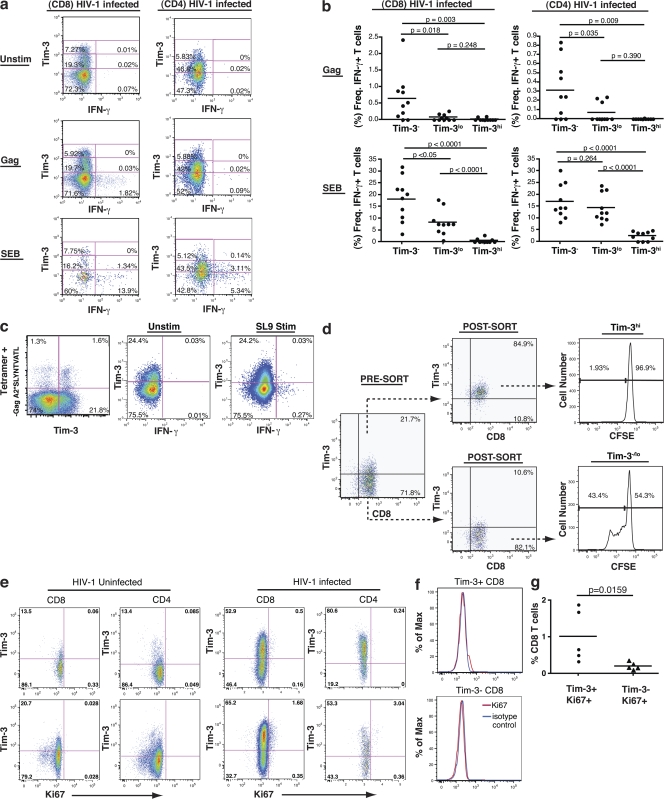
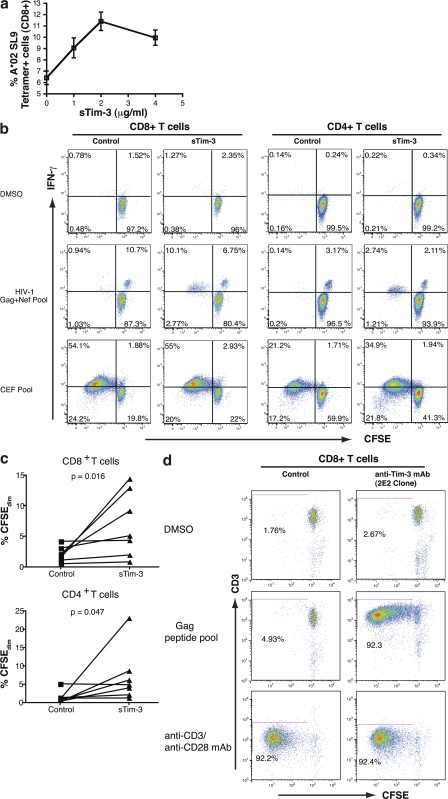
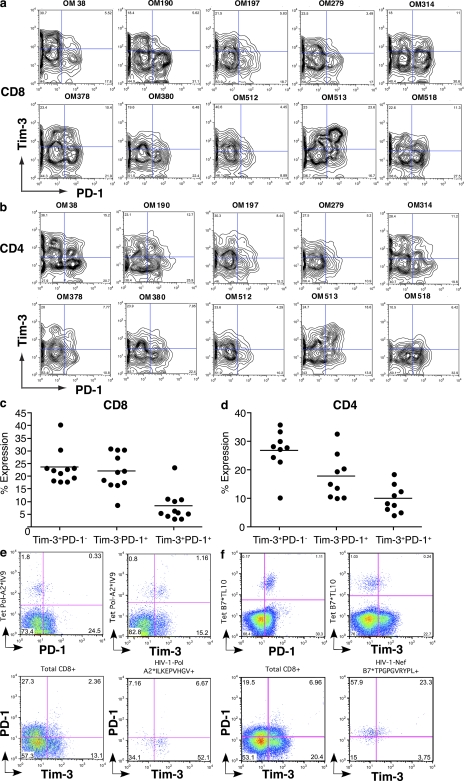
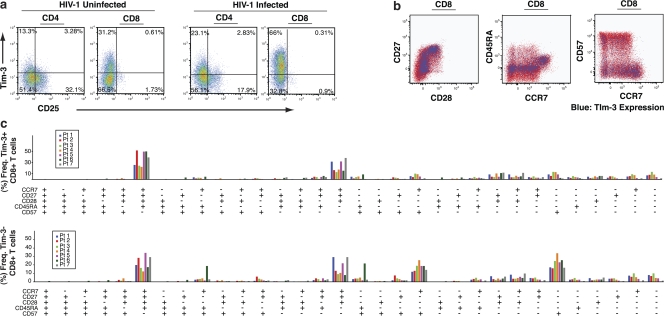
Progressive loss of T cell functionality is a hallmark of chronic infection with human immunodeficiency virus 1 (HIV-1). We have identified a novel population of dysfunctional T cells marked by surface expression of the glycoprotein Tim-3. The frequency of this population was increased in HIV-1-infected individuals to a mean of 49.4 +/- SD 12.9% of CD8(+) T cells expressing Tim-3 in HIV-1-infected chronic progressors versus 28.5 +/- 6.8% in HIV-1-uninfected individuals. Levels of Tim-3 expression on T cells from HIV-1-infected inviduals correlated positively with HIV-1 viral load and CD38 expression and inversely with CD4(+) T cell count. In progressive HIV-1 infection, Tim-3 expression was up-regulated on HIV-1-specific CD8(+) T cells. Tim-3-expressing T cells failed to produce cytokine or proliferate in response to antigen and exhibited impaired Stat5, Erk1/2, and p38 signaling. Blocking the Tim-3 signaling pathway restored proliferation and enhanced cytokine production in HIV-1-specific T cells. Thus, Tim-3 represents a novel target for the therapeutic reversal of HIV-1-associated T cell dysfunction.
T细胞功能的进行性丧失是人类免疫缺陷病毒1型(HIV-1)慢性感染的一个标志。我们已经鉴定出一群以糖蛋白Tim-3的表面表达为特征的功能失调的T细胞。在HIV-1感染的个体中,这群细胞的频率增加,在HIV-1感染的慢性进展者中,表达Tim-3的CD8(+) T细胞平均占49.4 +/-标准差12.9%,而在未感染HIV-1的个体中为28.5 +/- 6.8%。来自HIV-1感染个体的T细胞上Tim-3的表达水平与HIV-1病毒载量和CD38表达呈正相关,与CD4(+) T细胞计数呈负相关。在进行性HIV-1感染中,HIV-1特异性CD8(+) T细胞上的Tim-3表达上调。表达Tim-3的T细胞不能产生细胞因子或对抗原作出增殖反应,并且Stat5、Erk1/2和p38信号传导受损。阻断Tim-3信号通路可恢复HIV-1特异性T细胞的增殖并增强细胞因子的产生。因此,Tim-3代表了逆转HIV-1相关T细胞功能障碍的一个新的治疗靶点。