Afonso Philippe V, Ozden Simona, Cumont Marie-Christine, Seilhean Danielle, Cartier Luis, Rezaie Payam, Mason Sarah, Lambert Sophie, Huerre Michel, Gessain Antoine, Couraud Pierre-Olivier, Pique Claudine, Ceccaldi Pierre-Emmanuel, Romero Ignacio A
Unité d'Epidémiologie et Physiopathologie des Virus Oncogènes, CNRS URA3015, Institut Pasteur, Paris, France.
PLoS Pathog. 2008 Nov;4(11):e1000205. doi: 10.1371/journal.ppat.1000205. Epub 2008 Nov 14.
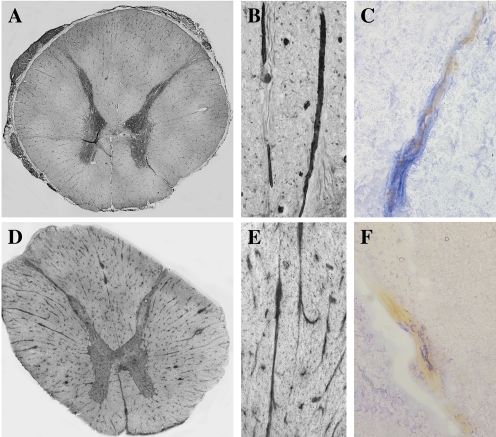
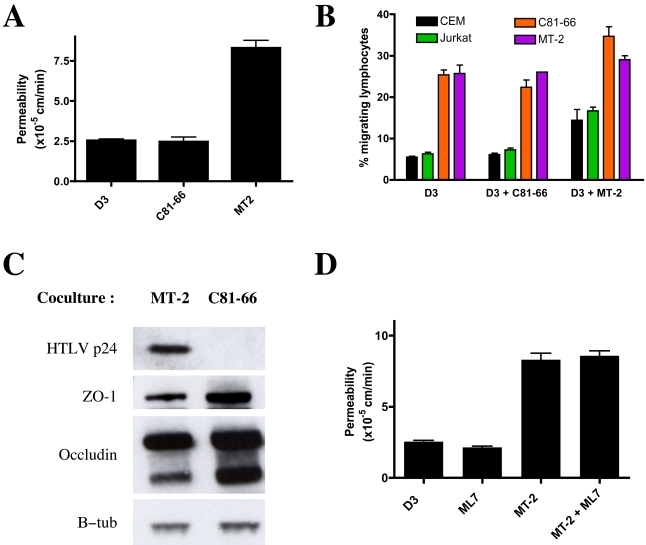
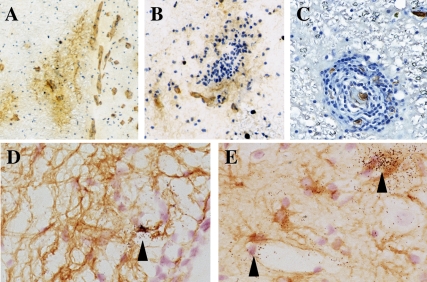
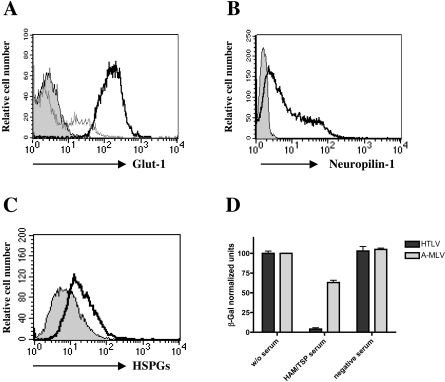
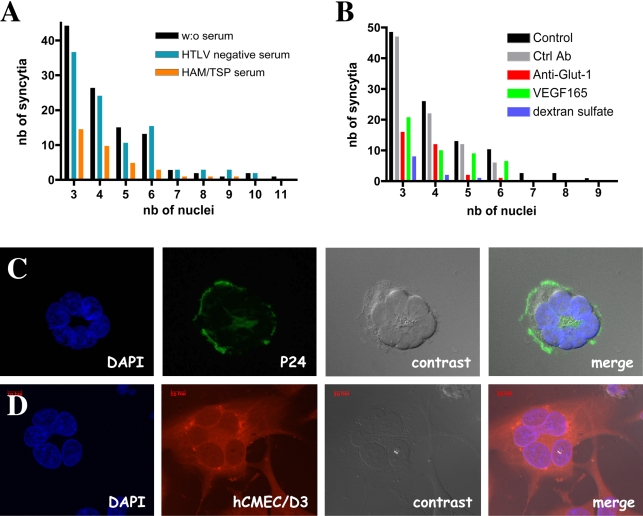
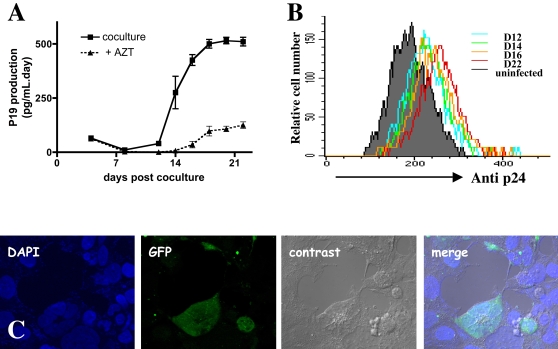
The blood-brain barrier (BBB), which forms the interface between the blood and the cerebral parenchyma, has been shown to be disrupted during retroviral-associated neuromyelopathies. Human T Lymphotropic Virus (HTLV-1) Associated Myelopathy/Tropical Spastic Paraparesis (HAM/TSP) is a slowly progressive neurodegenerative disease associated with BBB breakdown. The BBB is composed of three cell types: endothelial cells, pericytes and astrocytes. Although astrocytes have been shown to be infected by HTLV-1, until now, little was known about the susceptibility of BBB endothelial cells to HTLV-1 infection and the impact of such an infection on BBB function. We first demonstrated that human cerebral endothelial cells express the receptors for HTLV-1 (GLUT-1, Neuropilin-1 and heparan sulfate proteoglycans), both in vitro, in a human cerebral endothelial cell line, and ex vivo, on spinal cord autopsy sections from HAM/TSP and non-infected control cases. In situ hybridization revealed HTLV-1 transcripts associated with the vasculature in HAM/TSP. We were able to confirm that the endothelial cells could be productively infected in vitro by HTLV-1 and that blocking of either HSPGs, Neuropilin 1 or Glut1 inhibits this process. The expression of the tight-junction proteins within the HTLV-1 infected endothelial cells was altered. These cells were no longer able to form a functional barrier, since BBB permeability and lymphocyte passage through the monolayer of endothelial cells were increased. This work constitutes the first report of susceptibility of human cerebral endothelial cells to HTLV-1 infection, with implications for HTLV-1 passage through the BBB and subsequent deregulation of the central nervous system homeostasis. We propose that the susceptibility of cerebral endothelial cells to retroviral infection and subsequent BBB dysfunction is an important aspect of HAM/TSP pathogenesis and should be considered in the design of future therapeutics strategies.
血脑屏障(BBB)构成了血液与脑实质之间的界面,研究表明在逆转录病毒相关的神经脊髓病期间它会遭到破坏。人类嗜T淋巴细胞病毒1型(HTLV-1)相关脊髓病/热带痉挛性截瘫(HAM/TSP)是一种与血脑屏障破坏相关的缓慢进展性神经退行性疾病。血脑屏障由三种细胞类型组成:内皮细胞、周细胞和星形胶质细胞。尽管已证明星形胶质细胞会被HTLV-1感染,但到目前为止,关于血脑屏障内皮细胞对HTLV-1感染的易感性以及这种感染对血脑屏障功能的影响知之甚少。我们首先证明,在体外,在人脑血管内皮细胞系中,以及在体内,在HAM/TSP和未感染对照病例的脊髓尸检切片上,人脑内皮细胞均表达HTLV-1的受体(葡萄糖转运蛋白1、神经纤毛蛋白-1和硫酸乙酰肝素蛋白聚糖)。原位杂交显示HAM/TSP中与脉管系统相关的HTLV-1转录本。我们能够证实内皮细胞在体外可被HTLV-1有效感染,并且阻断硫酸乙酰肝素蛋白聚糖、神经纤毛蛋白1或葡萄糖转运蛋白1中的任何一种均可抑制这一过程。HTLV-1感染的内皮细胞内紧密连接蛋白的表达发生了改变。这些细胞不再能够形成功能性屏障,因为血脑屏障通透性和淋巴细胞穿过内皮细胞单层的能力增加。这项工作首次报道了人脑内皮细胞对HTLV-1感染的易感性,这对HTLV-1穿过血脑屏障以及随后中枢神经系统稳态失调具有重要意义。我们提出,脑内皮细胞对逆转录病毒感染的易感性以及随后的血脑屏障功能障碍是HAM/TSP发病机制的一个重要方面,在未来治疗策略的设计中应予以考虑。