Fejer György, Drechsel Lisa, Liese Jan, Schleicher Ulrike, Ruzsics Zsolt, Imelli Nicola, Greber Urs F, Keck Simone, Hildenbrand Bernd, Krug Anne, Bogdan Christian, Freudenberg Marina A
Max-Planck-Institute for Immunobiology, Freiburg, Germany.
PLoS Pathog. 2008 Nov;4(11):e1000208. doi: 10.1371/journal.ppat.1000208. Epub 2008 Nov 14.
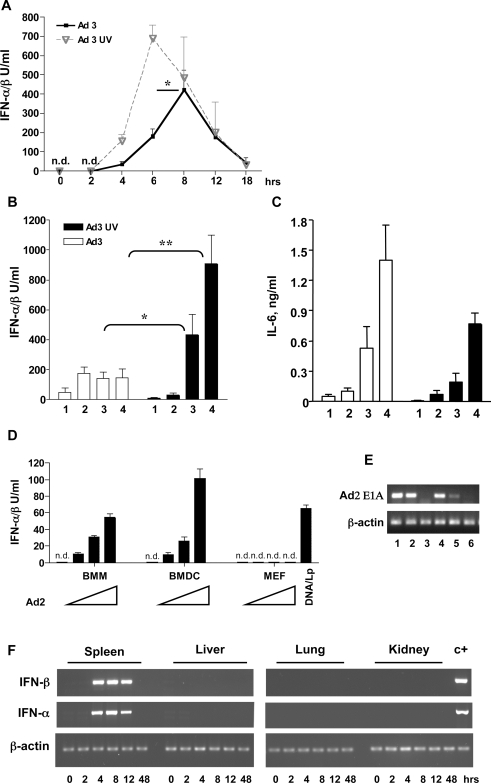
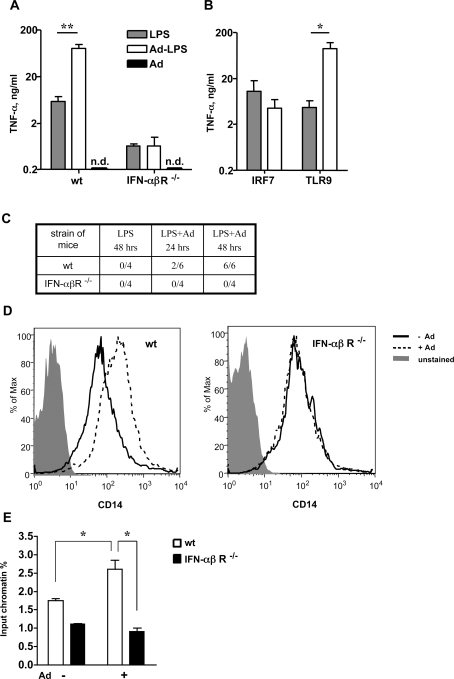
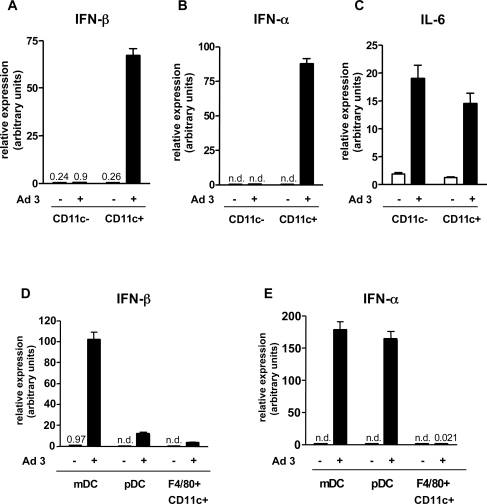
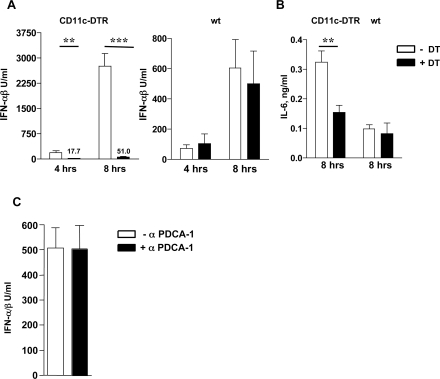
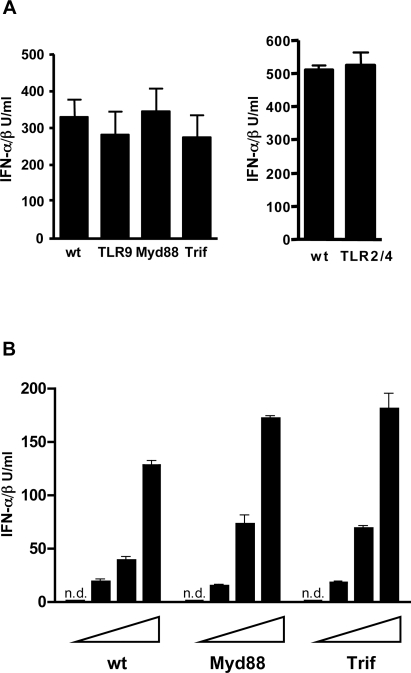
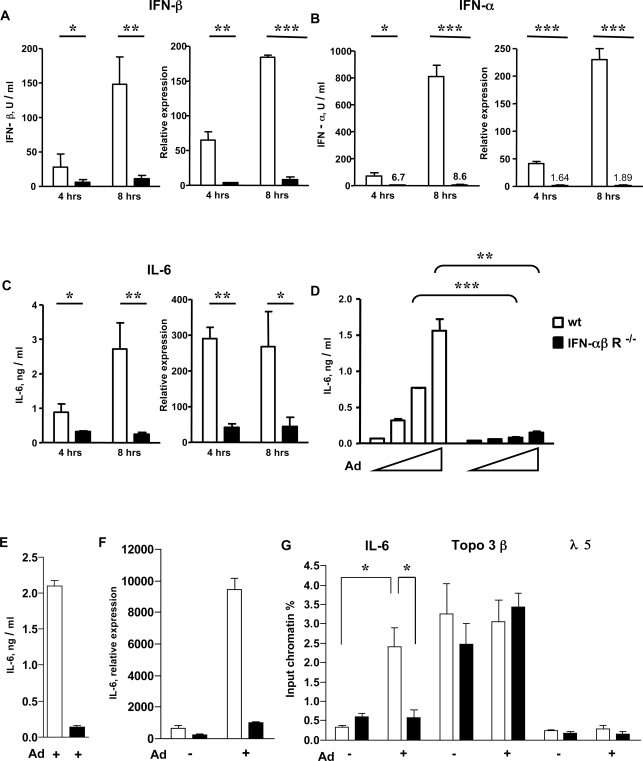
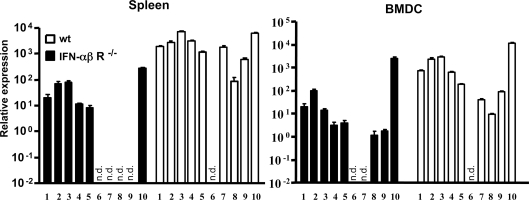
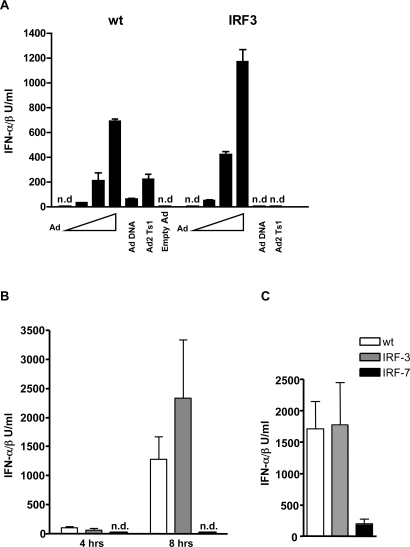
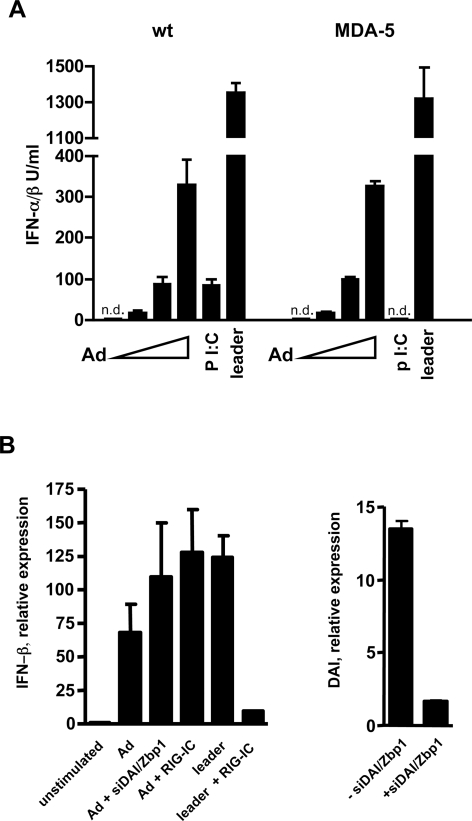
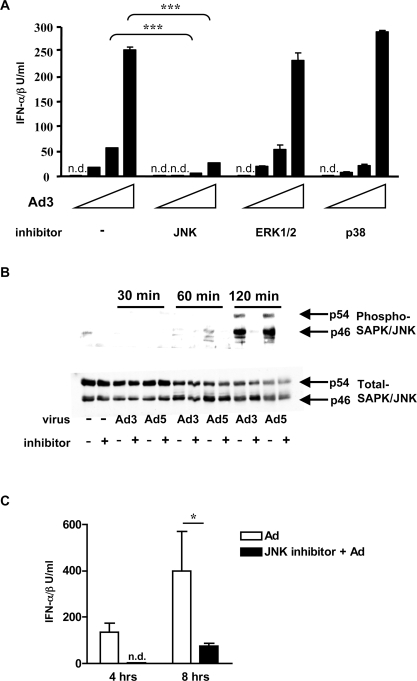
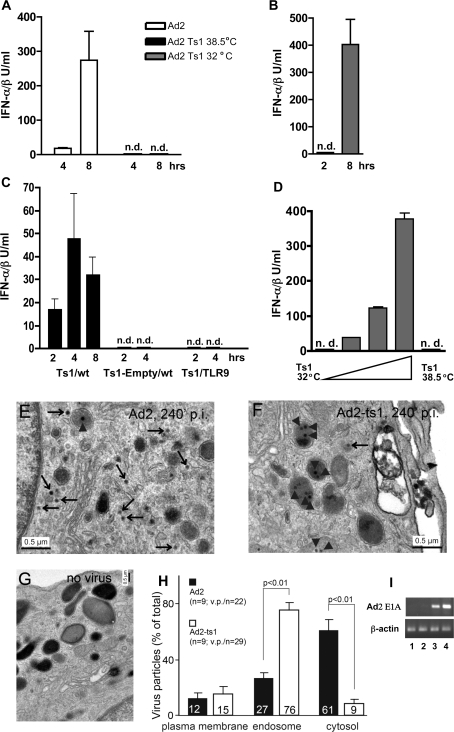
The early systemic production of interferon (IFN)-alphabeta is an essential component of the antiviral host defense mechanisms, but is also thought to contribute to the toxic side effects accompanying gene therapy with adenoviral vectors. Here we investigated the IFN-alphabeta response to human adenoviruses (Ads) in mice. By comparing the responses of normal, myeloid (m)DC- and plasmacytoid (p)DC-depleted mice and by measuring IFN-alphabeta mRNA expression in different organs and cells types, we show that in vivo, Ads elicit strong and rapid IFN-alphabeta production, almost exclusively in splenic mDCs. Using knockout mice, various strains of Ads (wild type, mutant and UV-inactivated) and MAP kinase inhibitors, we demonstrate that the Ad-induced IFN-alphabeta response does not require Toll-like receptors (TLR), known cytosolic sensors of RNA (RIG-I/MDA-5) and DNA (DAI) recognition and interferon regulatory factor (IRF)-3, but is dependent on viral endosomal escape, signaling via the MAP kinase SAPK/JNK and IRF-7. Furthermore, we show that Ads induce IFN-alphabeta and IL-6 in vivo by distinct pathways and confirm that IFN-alphabeta positively regulates the IL-6 response. Finally, by measuring TNF-alpha responses to LPS in Ad-infected wild type and IFN-alphabetaR(-/-) mice, we show that IFN-alphabeta is the key mediator of Ad-induced hypersensitivity to LPS. These findings indicate that, like endosomal TLR signaling in pDCs, TLR-independent virus recognition in splenic mDCs can also produce a robust early IFN-alphabeta response, which is responsible for the bulk of IFN-alphabeta production induced by adenovirus in vivo. The signaling requirements are different from known TLR-dependent or cytosolic IFN-alphabeta induction mechanisms and suggest a novel cytosolic viral induction pathway. The hypersensitivity to components of the microbial flora and invading pathogens may in part explain the toxic side effects of adenoviral gene therapy and contribute to the pathogenesis of adenoviral disease.
干扰素(IFN)-αβ的早期全身产生是抗病毒宿主防御机制的重要组成部分,但也被认为与腺病毒载体基因治疗伴随的毒副作用有关。在此,我们研究了小鼠对人腺病毒(Ads)的IFN-αβ反应。通过比较正常小鼠、髓样(m)DC和浆细胞样(p)DC缺失小鼠的反应,并测量不同器官和细胞类型中IFN-αβ mRNA的表达,我们发现,在体内,Ads几乎仅在脾脏mDC中引发强烈且快速的IFN-αβ产生。使用基因敲除小鼠、各种毒株的Ads(野生型、突变型和紫外线灭活型)以及丝裂原活化蛋白激酶抑制剂,我们证明Ad诱导的IFN-αβ反应不需要Toll样受体(TLR)、已知的RNA胞质传感器(RIG-I/MDA-5)和DNA识别(DAI)以及干扰素调节因子(IRF)-3,但依赖于病毒的内体逃逸、通过丝裂原活化蛋白激酶SAPK/JNK和IRF-7的信号传导。此外,我们表明Ads通过不同途径在体内诱导IFN-αβ和IL-6,并证实IFN-αβ正向调节IL-6反应。最后,通过测量Ad感染的野生型和IFN-αβR(-/-)小鼠对脂多糖(LPS)的TNF-α反应,我们表明IFN-αβ是Ad诱导的对LPS超敏反应的关键介质。这些发现表明,与pDC中的内体TLR信号传导一样,脾脏mDC中不依赖TLR的病毒识别也可产生强大的早期IFN-αβ反应,这是腺病毒在体内诱导产生的大部分IFN-αβ的原因。其信号传导要求不同于已知的依赖TLR或胞质IFN-αβ诱导机制,并提示了一种新的胞质病毒诱导途径。对微生物群落成分和入侵病原体的超敏反应可能部分解释了腺病毒基因治疗的毒副作用,并有助于腺病毒疾病的发病机制。