Krause W J, Cutts J H, Leeson C R
J Anat. 1977 Feb;123(Pt 1):21-45.
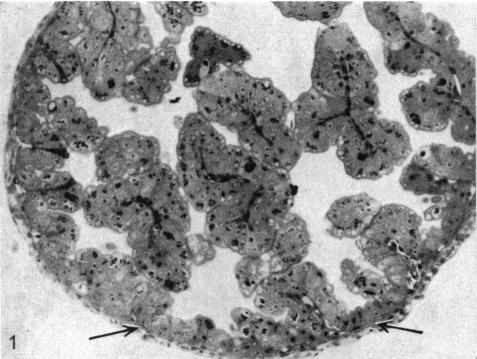
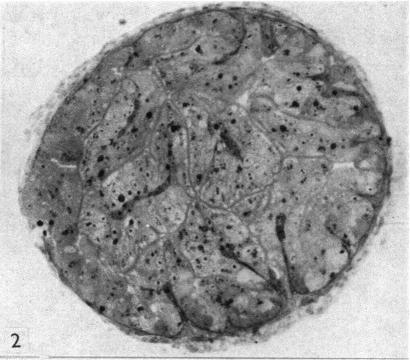
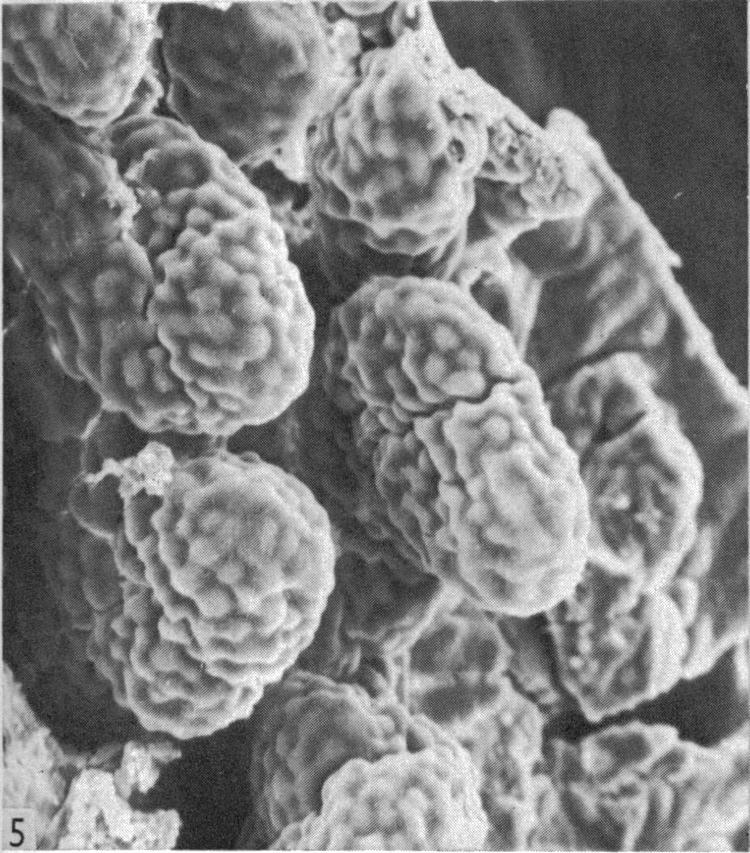
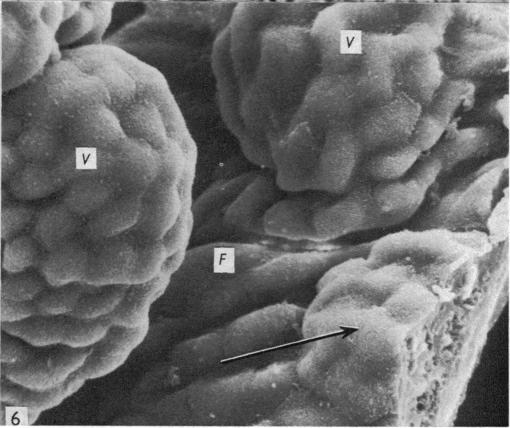
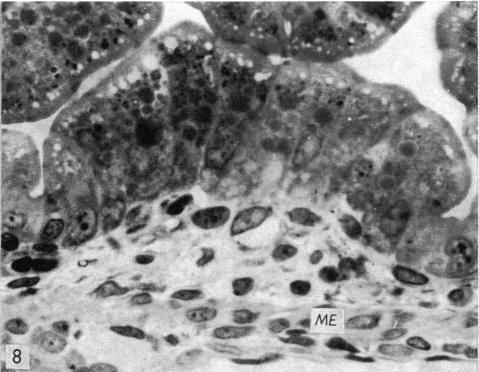
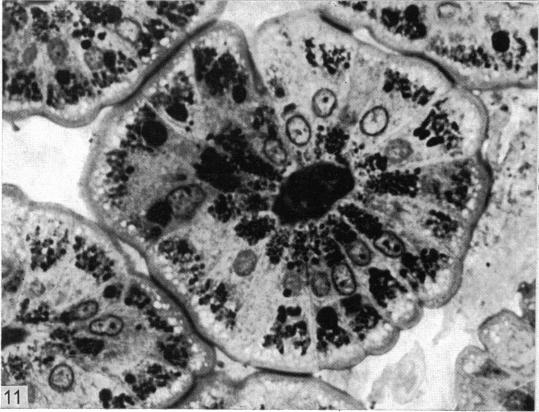
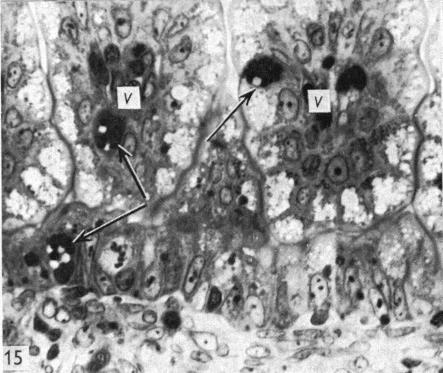
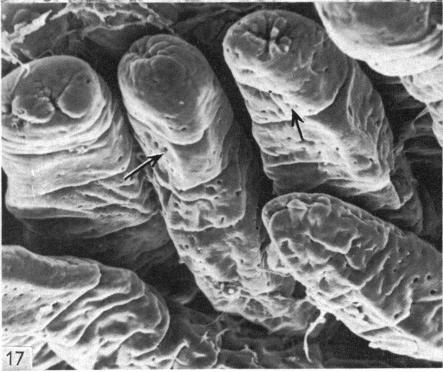
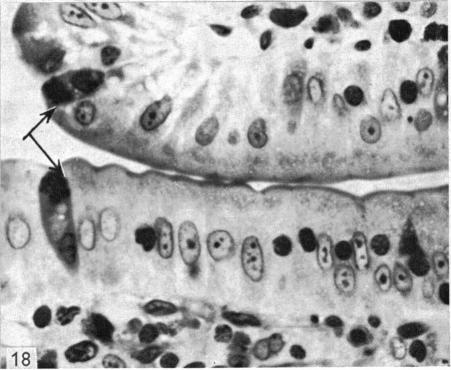
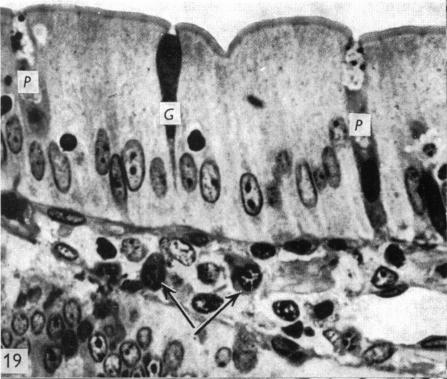
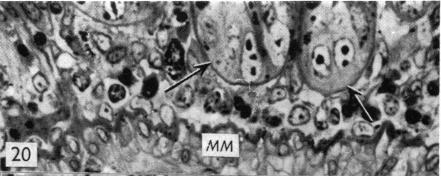
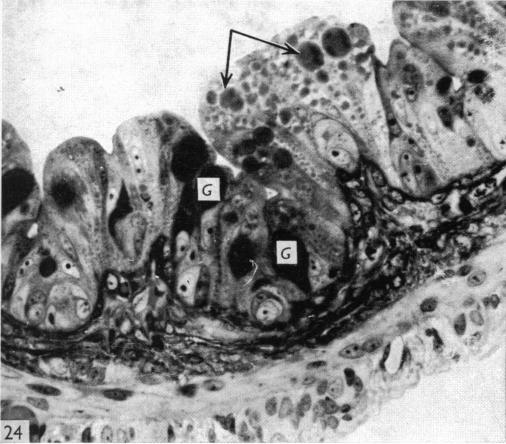
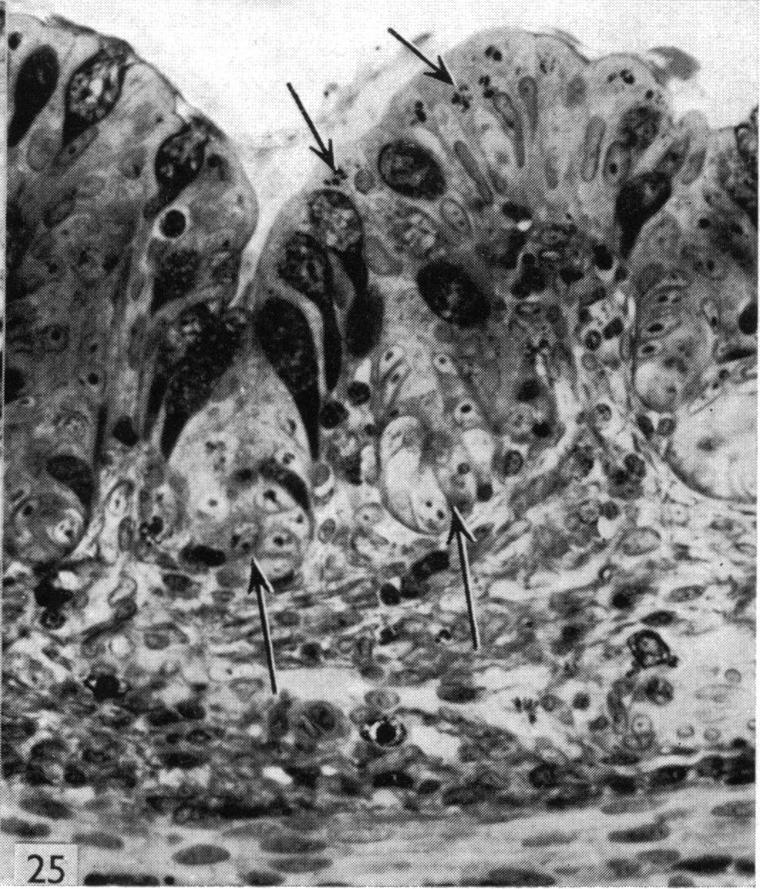
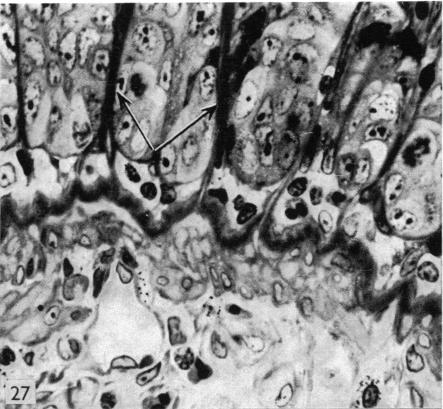
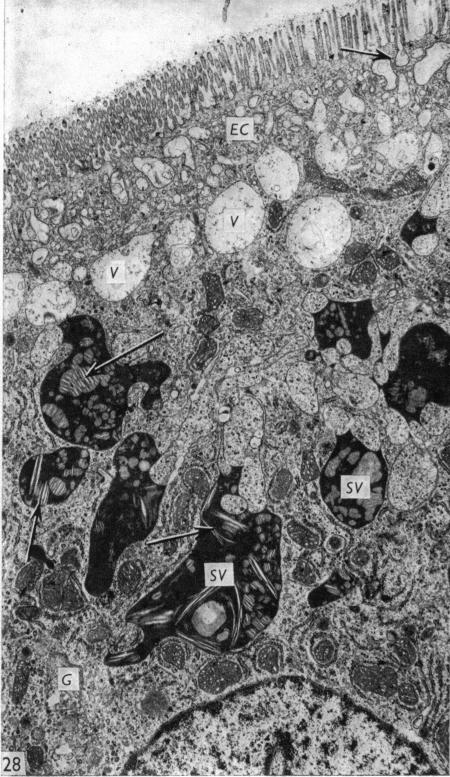
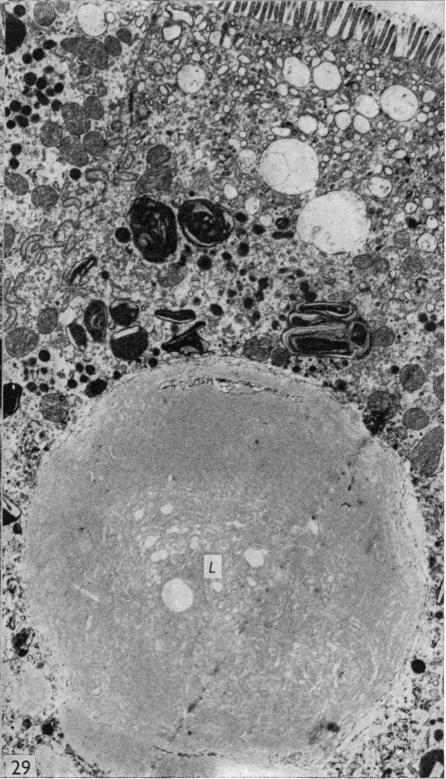
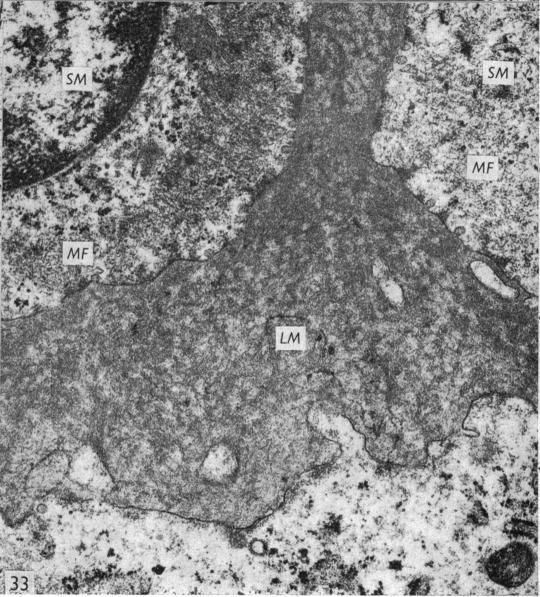
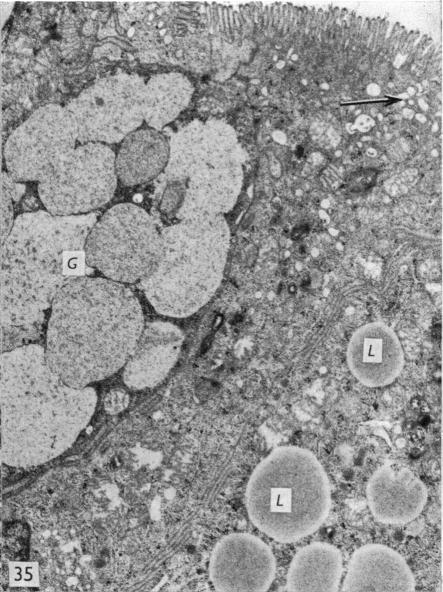
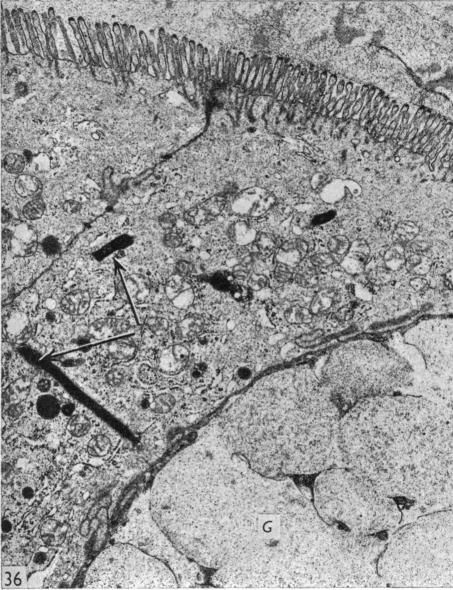
The duodenum of the newborn opossum exhibits a patent lumen containing scattered elongate villi, whereas the distal segments of the small intestine are smaller in diameter and are filled with short immature villi. The muscularis externa through the small intestine consists of a single layer of myoblasts. Interposed between the intestinal lining epithelium and the muscularis externa is an extensive capillary bed that occupies a considerable proportion of the intestinal wall. Additional villi appear to form during the postnatal period as a result of evaginations of the epithelium, together with underlying connective tissue and vasculature, into the intestinal lumen. Intestinal glands are not observed until 8.5cm, and are shallow in depth even in the adult. The epithelium of the entire small intestine is modified for absorption until just prior to weaning. The principal intestinal lining cells show an extensive apical endocytic complex, large supranuclear vacuoles and numerous cytoplasmic inclusions. Intestinal epithelial cells of the colon also appear to be modified for absorption during the first two weeks after birth. Although goblet cells and Paneth cells are present during the suckling period, they do not comprise a significant population in the intestinal epithelium until after weaning. In contrast to the small intestine, goblet cells are numerous in the colon by the ninth postnatal day. The significance of macromolecular absorption and the possibility of passive immunity being transmitted in the opossum during suckling are discussed and related to similar events that occur in the slckling young of several eutherian species. The possible functional significance of two large membranes that develop in the lamina propria of the intestines after weaning also is discussed.
新生负鼠的十二指肠呈现出一个管腔通畅的结构,其中含有散在的细长绒毛,而小肠的远端部分直径较小,充满了短小的未成熟绒毛。贯穿小肠的外肌层由单层成肌细胞组成。在肠内衬上皮和外肌层之间是一个广泛的毛细血管床,它占据了肠壁相当大的比例。出生后,由于上皮连同其下方的结缔组织和脉管系统向肠腔内突出,额外的绒毛似乎开始形成。直到肠长达到8.5厘米时才观察到肠腺,即使在成年个体中肠腺也很浅。在断奶前,整个小肠的上皮都经过修饰以进行吸收。主要的肠内衬细胞显示出广泛的顶端内吞复合体、大的核上空泡和众多的细胞质内含物。结肠的肠上皮细胞在出生后的头两周似乎也经过修饰以进行吸收。尽管在哺乳期间存在杯状细胞和潘氏细胞,但直到断奶后它们在肠上皮中才占显著比例。与小肠不同,到出生后第九天结肠中的杯状细胞就很多了。本文讨论了负鼠在哺乳期间大分子吸收的意义以及被动免疫传递的可能性,并将其与几种真兽类物种的哺乳幼崽中发生的类似事件相关联。还讨论了断奶后在肠固有层中形成的两个大膜可能具有的功能意义。