Ishak Sairatul D, Tan Sze-Huey, Khong Hou-Keat, Jaya-Ram Annette, Enyu Yee-Ling, Kuah Meng-Kiat, Shu-Chien Alexander Chong
School of Biological Sciences, Universiti Sains Malaysia, Penang.
Reprod Biol Endocrinol. 2008 Nov 24;6:56. doi: 10.1186/1477-7827-6-56.
Although unsaturated fatty acids such as eicosapentaenoic acid (EPA, C20:5n-3), docosahexaenoic acid (DHA, C22:6n-3) and arachidonic acid (ARA, C20:4n-6), collectively known as the highly unsaturated fatty acids (HUFA), play pivotal roles in vertebrate reproduction, very little is known about their synthesis in the ovary. The zebrafish (Danio rerio) display capability to synthesize all three HUFA via pathways involving desaturation and elongation of two precursors, the linoleic acid (LA, C18:2n-6) and linolenic acid (LNA, C18:3n-3). As a prerequisite to gain full understanding on the importance and regulation of ovarian HUFA synthesis, we described here the mRNA expression pattern of two enzymes; desaturase (fadsd6) and elongase (elovl5), involved in HUFA biosynthesis pathway, in different zebrafish ovarian follicle stages. Concurrently, the fatty acid profile of each follicle stage was also analyzed.
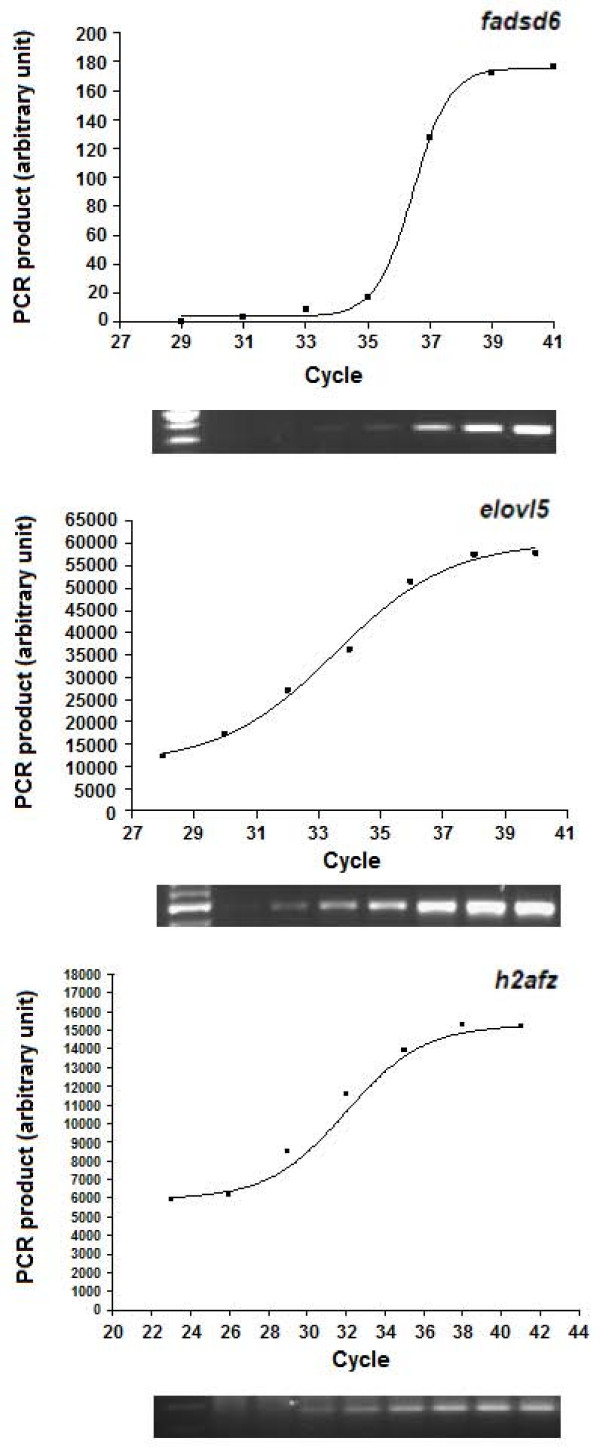
mRNA levels of fadsd6 and elovl5 in different ovarian follicle stages were determined by semi-quantitative reverse transcription-polymerase chain reaction (RT-PCR) assays. For analysis of the ovarian follicular fatty acid composition, gas chromatography was used.
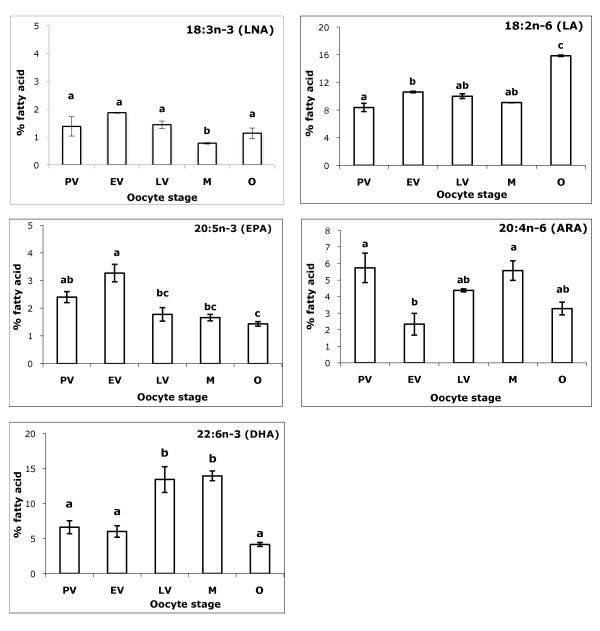
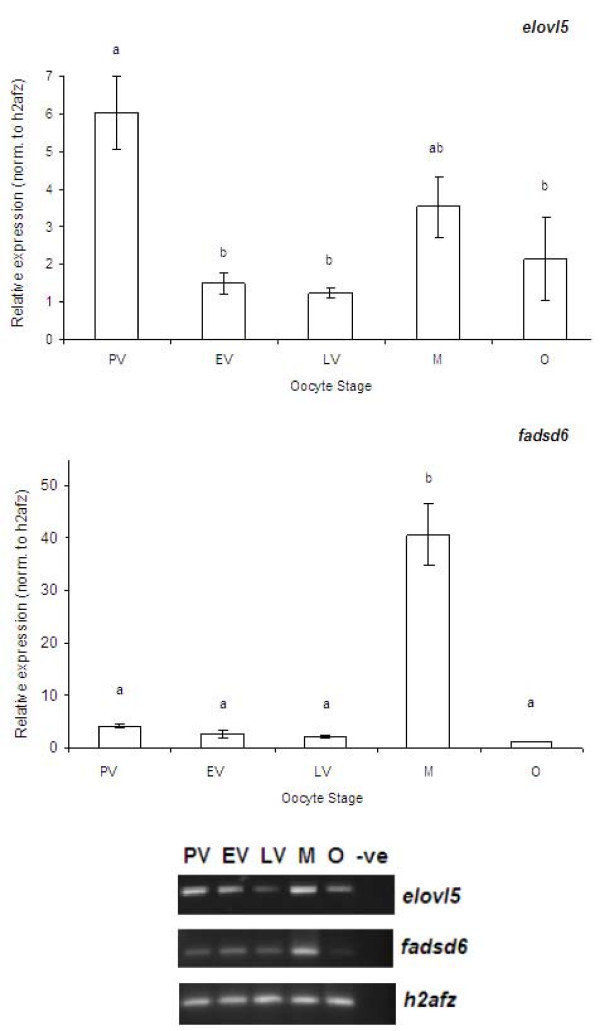
Our results have shown that desaturase displayed significant upregulation in expression during the oocyte maturation stage. Expression of elongase was significantly highest in pre-vitellogenic follicles, followed by maturation stage. Fatty acid composition analysis of different ovarian follicle stages also showed that ARA level was significantly highest in pre-vitellogenic and matured follicles. DHA level was highest in both late vitellogenic and maturation stage.
Collectively, our findings seem to suggest the existence of a HUFA synthesis system, which could be responsible for the synthesis of HUFA to promote oocyte maturation and possibly ovulation processes. The many advantages of zebrafish as model system to understand folliculogenesis will be useful platform to further elucidate the regulatory and mechanism aspects of ovarian HUFA synthesis.
虽然不饱和脂肪酸,如二十碳五烯酸(EPA,C20:5n-3)、二十二碳六烯酸(DHA,C22:6n-3)和花生四烯酸(ARA,C20:4n-6),统称为高度不饱和脂肪酸(HUFA),在脊椎动物繁殖中发挥着关键作用,但关于它们在卵巢中的合成却知之甚少。斑马鱼(Danio rerio)能够通过涉及两种前体——亚油酸(LA,C18:2n-6)和亚麻酸(LNA,C18:3n-3)的去饱和和延长途径合成所有三种HUFA。作为全面了解卵巢HUFA合成的重要性和调控的前提,我们在此描述了参与HUFA生物合成途径的两种酶——去饱和酶(fadsd6)和延长酶(elovl5)在不同斑马鱼卵巢卵泡阶段的mRNA表达模式。同时,还分析了每个卵泡阶段的脂肪酸谱。
通过半定量逆转录-聚合酶链反应(RT-PCR)测定不同卵巢卵泡阶段fadsd6和elovl5的mRNA水平。使用气相色谱分析卵巢卵泡脂肪酸组成。
我们的结果表明,去饱和酶在卵母细胞成熟阶段表达显著上调。延长酶的表达在卵黄生成前卵泡中显著最高,其次是成熟阶段。不同卵巢卵泡阶段的脂肪酸组成分析还表明,ARA水平在卵黄生成前和成熟卵泡中显著最高。DHA水平在卵黄生成后期和成熟阶段均最高。
总体而言,我们的研究结果似乎表明存在一个HUFA合成系统,该系统可能负责HUFA的合成,以促进卵母细胞成熟和可能的排卵过程。斑马鱼作为理解卵泡发生的模型系统的诸多优势,将是进一步阐明卵巢HUFA合成的调控和机制方面的有用平台。