Braun K P J, Bulder M M M, Chabrier S, Kirkham F J, Uiterwaal C S P, Tardieu M, Sébire G
Department of Child Neurology, Rudolf Magnus Institute of Neuroscience, Wilhelmina Children's Hospital, University Medical Center Utrecht, Utrecht, The Netherlands.
Brain. 2009 Feb;132(Pt 2):544-57. doi: 10.1093/brain/awn313. Epub 2008 Nov 27.
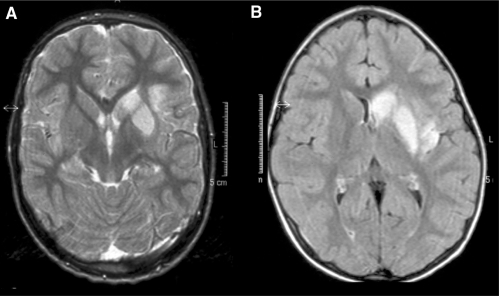
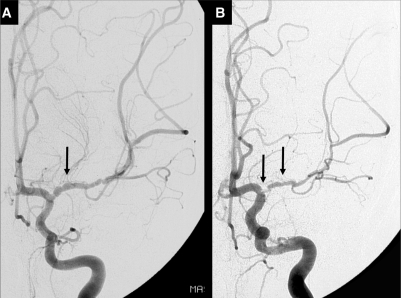
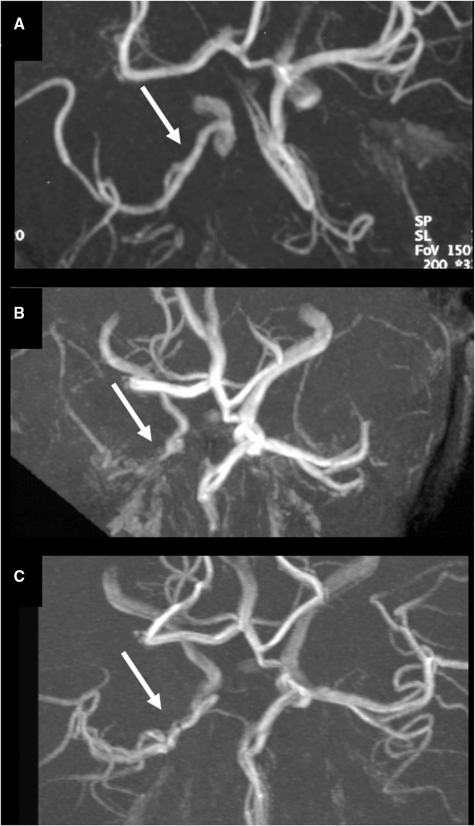
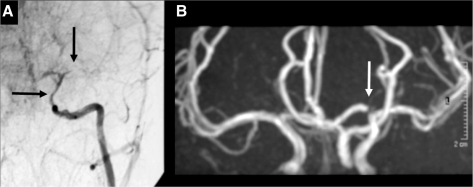
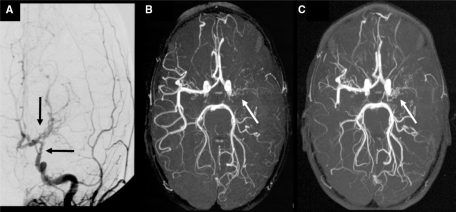
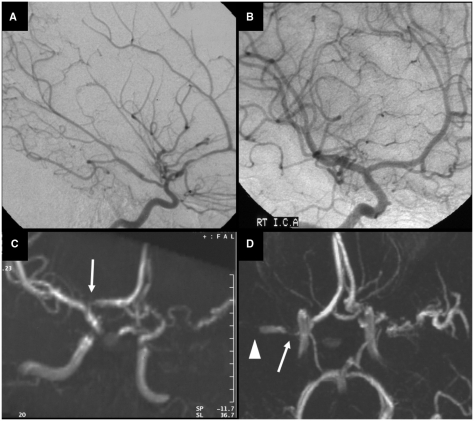
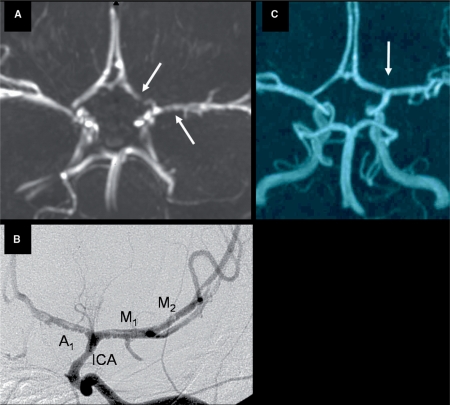
Arteriopathies are the commonest cause of arterial ischaemic stroke (AIS) in children. Repeated vascular imaging in children with AIS demonstrated the existence of a 'transient cerebral arteriopathy' (TCA), characterized by lenticulostriate infarction due to non-progressive unilateral arterial disease affecting the supraclinoid internal carotid artery and its proximal branches. To further characterize the course of childhood arteriopathies, and to differentiate TCA from progressive arterial disease, we studied the long-term evolution of unilateral anterior circulation arteriopathy, and explored predictors of stroke outcome and recurrence. From three consecutive cohorts in London, Paris and Utrecht, we reviewed radiological studies and clinical charts of 79 previously healthy children with anterior circulation AIS and unilateral intracranial arteriopathy of the internal carotid bifurcation, who underwent repeated vascular imaging. The long-term evolution of arteriopathy was classified as progressive or TCA. Clinical and imaging characteristics were compared between both groups. Logistic regression modelling was used to determine possible predictors of the course of arteriopathy, functional outcome and recurrence. After a median follow-up of 1.4 years, 5 of 79 children (6%) had progressive arteriopathy, with increasing unilateral disease or bilateral involvement. In the others (94%), the course of arteriopathy was classified as TCA. In 23% of TCA patients, follow-up vascular imaging showed complete normalization, the remaining 77% had residual arterial abnormalities, with improvement in 45% and stabilization in 32%. Stroke was preceded by chickenpox in 44% of TCA patients, and in none of the patients with progressive arteriopathies. Most infarcts were localized in the basal ganglia. In 14 (19%) of TCA patients, transient worsening of the arterial lesion was demonstrated before the arteriopathy stabilized or improved. Thirteen TCA patients (18%) had a recurrent stroke or TIA. Thirty TCA patients (41%) had a good neurological outcome, compared with none of the five patients with progressive arteriopathy. Arterial occlusion, moyamoya vessels and ACA involvement were more frequent in progressive arteriopathies. Cortical infarct localization was significantly associated with poor neurological outcome (OR 6.14, 95% CI 1.29-29.22, P = 0.02), while there was a trend for occlusive arterial disease to predict poor outcome (OR 3.00, 95% CI 0.98-9.23, P = 0.06). Progressive arteriopathy was associated with recurrence (OR 18.77, 95%CI 1.94-181.97, P = 0.01). The majority of childhood unilateral intracranial anterior circulation arteriopathies (94%) have a course that is consistent with TCA, in which transient worsening is common. Although the arterial inflammation probably causing TCA is 'transient', most children are left with permanent arterial abnormalities and residual neurological deficits.
动脉病变是儿童动脉缺血性卒中(AIS)最常见的病因。对患有AIS的儿童进行反复血管成像检查发现存在一种“短暂性脑动脉病变”(TCA),其特征是由于影响鞍上颈内动脉及其近端分支的非进行性单侧动脉疾病导致豆纹状梗死。为了进一步明确儿童动脉病变的病程,并将TCA与进行性动脉疾病区分开来,我们研究了单侧前循环动脉病变的长期演变情况,并探讨了卒中结局和复发的预测因素。我们回顾了伦敦、巴黎和乌得勒支三个连续队列中79例既往健康、患有前循环AIS且存在颈内动脉分叉处单侧颅内动脉病变并接受反复血管成像检查的儿童的放射学研究和临床病历。动脉病变的长期演变被分为进行性或TCA。比较了两组的临床和影像学特征。采用逻辑回归模型确定动脉病变病程、功能结局和复发的可能预测因素。中位随访1.4年后,79例儿童中有5例(6%)患有进行性动脉病变,表现为单侧疾病进展或双侧受累。其他儿童(94%)的动脉病变病程被归类为TCA。在23%的TCA患者中,随访血管成像显示完全正常化,其余77%有残余动脉异常,其中45%有所改善,32%病情稳定。44%的TCA患者在卒中前患过水痘,而进行性动脉病变患者中无一例出现这种情况。大多数梗死位于基底节。在14例(19%)TCA患者中,在动脉病变稳定或改善之前出现了动脉病变的短暂恶化。13例(18%)TCA患者发生了复发性卒中或短暂性脑缺血发作(TIA)。30例(41%)TCA患者有良好的神经功能结局,而5例进行性动脉病变患者均无良好结局。进行性动脉病变中动脉闭塞、烟雾病血管和大脑前动脉受累更为常见。皮质梗死定位与不良神经功能结局显著相关(比值比6.14,95%可信区间1.29 - 29.22,P = 0.02),而闭塞性动脉疾病有预测不良结局的趋势(比值比3.00,95%可信区间0.98 - 9.23,P = 0.06)。进行性动脉病变与复发相关(比值比18.77,95%可信区间1.94 - 181.97,P = 0.01)。大多数儿童单侧颅内前循环动脉病变(94%)的病程与TCA一致,其中短暂恶化很常见。尽管可能导致TCA的动脉炎症是“短暂的”,但大多数儿童仍遗留永久性动脉异常和残余神经功能缺损。