Core Leighton J, Waterfall Joshua J, Lis John T
Department of Molecular Biology and Genetics, Cornell University, Ithaca, NY 14853, USA.
Science. 2008 Dec 19;322(5909):1845-8. doi: 10.1126/science.1162228. Epub 2008 Dec 4.
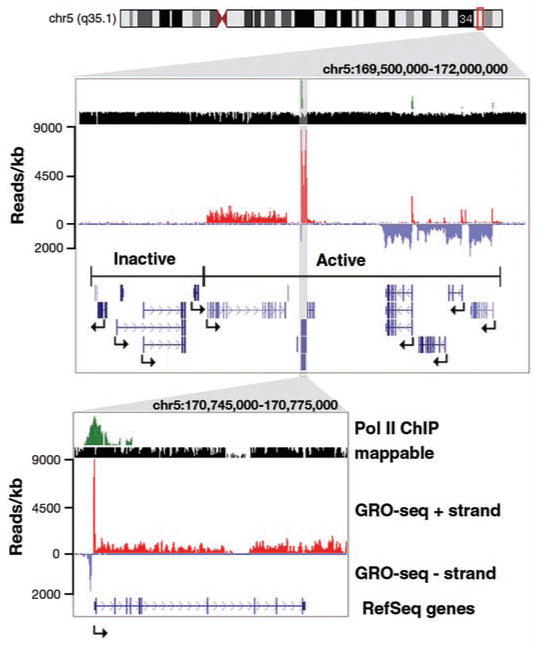
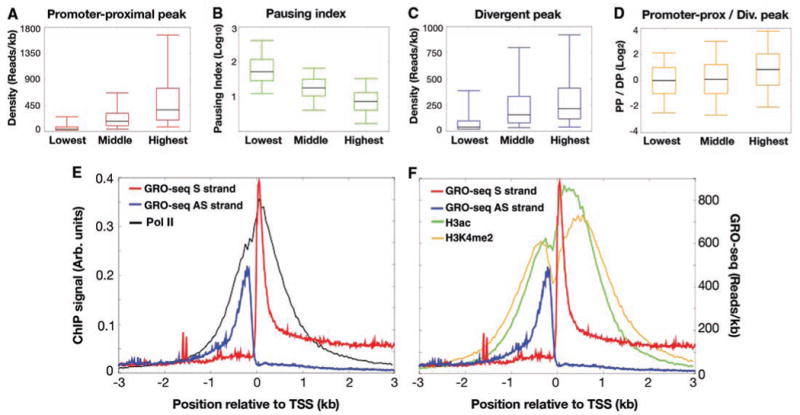
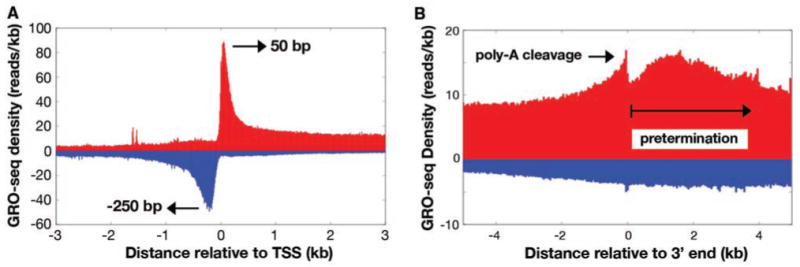
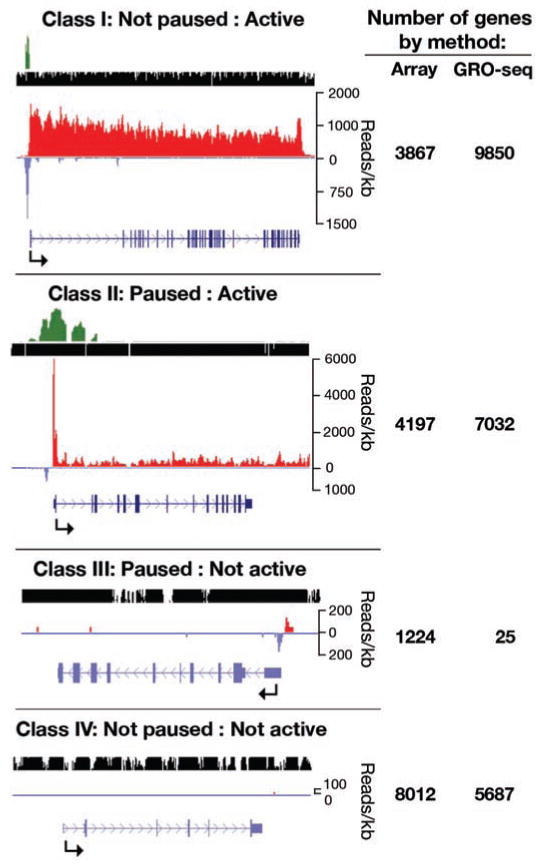
RNA polymerases are highly regulated molecular machines. We present a method (global run-on sequencing, GRO-seq) that maps the position, amount, and orientation of transcriptionally engaged RNA polymerases genome-wide. In this method, nuclear run-on RNA molecules are subjected to large-scale parallel sequencing and mapped to the genome. We show that peaks of promoter-proximal polymerase reside on approximately 30% of human genes, transcription extends beyond pre-messenger RNA 3' cleavage, and antisense transcription is prevalent. Additionally, most promoters have an engaged polymerase upstream and in an orientation opposite to the annotated gene. This divergent polymerase is associated with active genes but does not elongate effectively beyond the promoter. These results imply that the interplay between polymerases and regulators over broad promoter regions dictates the orientation and efficiency of productive transcription.
RNA聚合酶是受到高度调控的分子机器。我们提出了一种方法(全局运行测序,GRO-seq),该方法可在全基因组范围内绘制转录活跃的RNA聚合酶的位置、数量和方向。在这种方法中,核运行RNA分子经过大规模平行测序并映射到基因组上。我们发现,启动子近端聚合酶的峰位于约30%的人类基因上,转录延伸超出前体信使RNA 3'切割位点,并且反义转录普遍存在。此外,大多数启动子在其上游有一个活跃的聚合酶,且方向与注释基因相反。这种分歧性聚合酶与活跃基因相关,但在启动子之外无法有效延伸。这些结果表明,在广泛的启动子区域内,聚合酶与调节因子之间的相互作用决定了有效转录的方向和效率。