Zhang Nenggang, Kuznetsov Sergey G, Sharan Shyam K, Li Kaiyi, Rao Pulivarthi H, Pati Debananda
Department of Pediatric Hematology/Oncology, Texas Children's Cancer Center, Baylor College of Medicine, Houston, TX 77030, USA.
J Cell Biol. 2008 Dec 15;183(6):1019-31. doi: 10.1083/jcb.200801157.
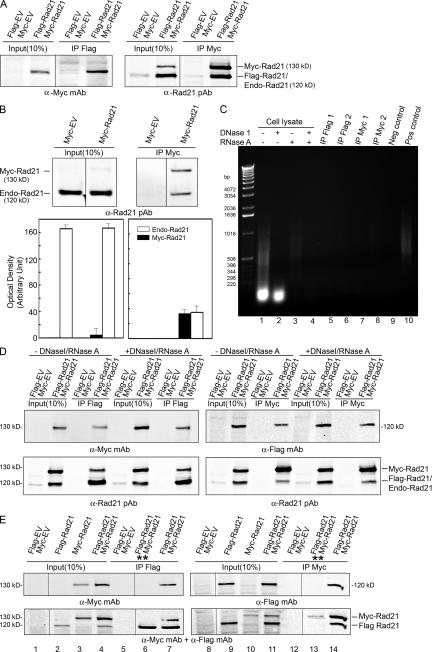
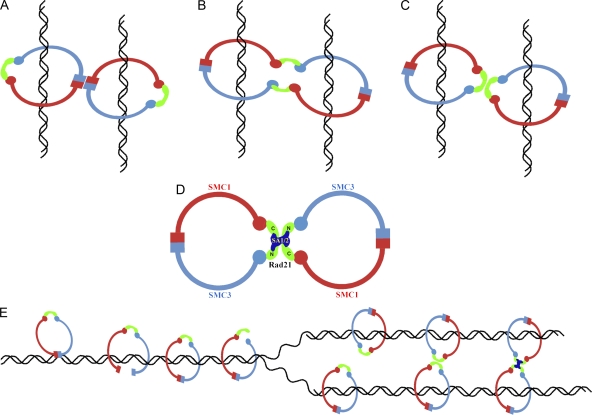
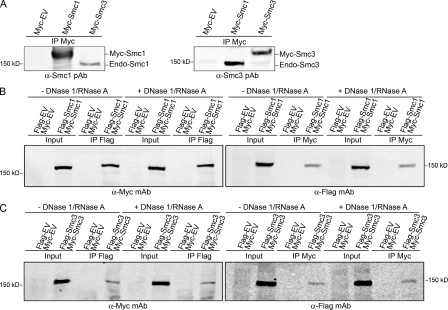
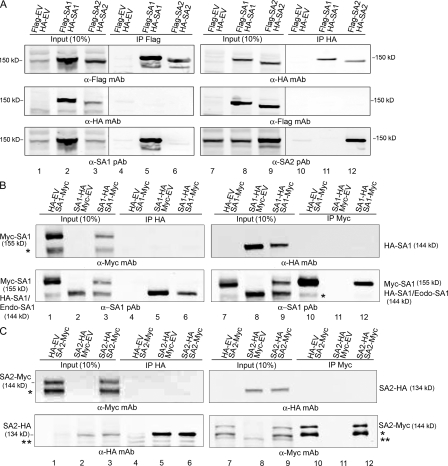
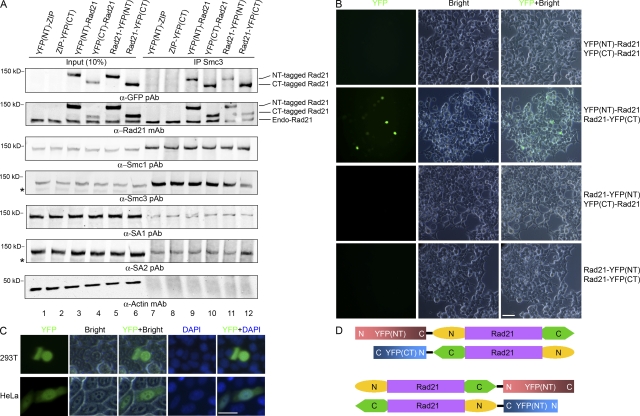
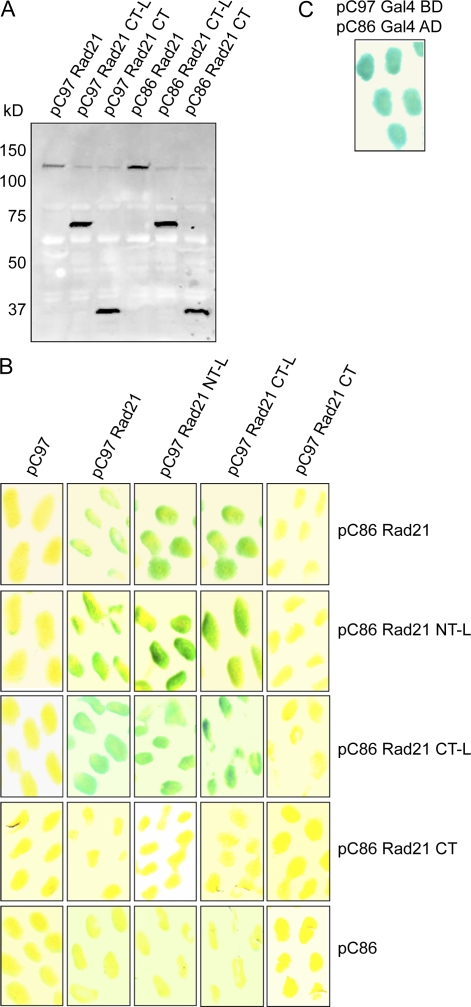
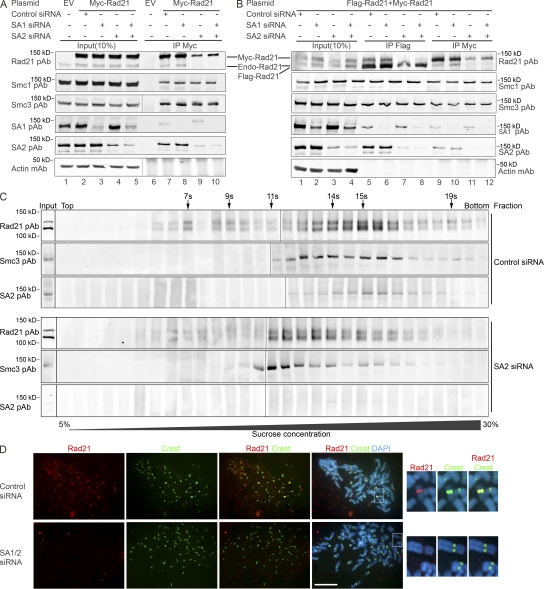
The cohesin complex is responsible for the accurate separation of sister chromatids into two daughter cells. Several models for the cohesin complex have been proposed, but the one-ring embrace model currently predominates the field. However, the static configuration of the embrace model is not flexible enough for cohesins to perform their functions during DNA replication, transcription, and DNA repair. We used coimmunoprecipitation, a protein fragment complement assay, and a yeast two-hybrid assay to analyze the protein-protein interactions among cohesin subunits. The results show that three of the four human cohesin core subunits (Smc1, Smc3, and Rad21) interact with themselves in an Scc3 (SA1/SA2)-dependent manner. These data support a two-ring handcuff model for the cohesin complex, which is flexible enough to establish and maintain sister chromatid cohesion as well as ensure the fidelity of chromosome segregation in higher eukaryotes.
黏连蛋白复合体负责将姐妹染色单体准确分离到两个子细胞中。目前已经提出了几种关于黏连蛋白复合体的模型,但单环拥抱模型目前在该领域占主导地位。然而,拥抱模型的静态构型对于黏连蛋白在DNA复制、转录和DNA修复过程中发挥其功能来说不够灵活。我们使用了免疫共沉淀、蛋白质片段互补分析和酵母双杂交分析来分析黏连蛋白亚基之间的蛋白质-蛋白质相互作用。结果表明,四个人类黏连蛋白核心亚基中的三个(Smc1、Smc3和Rad21)以依赖Scc3(SA1/SA2)的方式与自身相互作用。这些数据支持了黏连蛋白复合体的双环手铐模型,该模型足够灵活,能够建立和维持姐妹染色单体的黏连,并确保高等真核生物中染色体分离的准确性。