von Gunten Stephan, Bochner Bruce S
Department of Medicine, Division of Allergy and Clinical Immunology, The Johns Hopkins University School of Medicine, Johns Hopkins Asthma and Allergy Center, Baltimore, MD 21224-6821, USA.
Ann N Y Acad Sci. 2008 Nov;1143:61-82. doi: 10.1196/annals.1443.011.
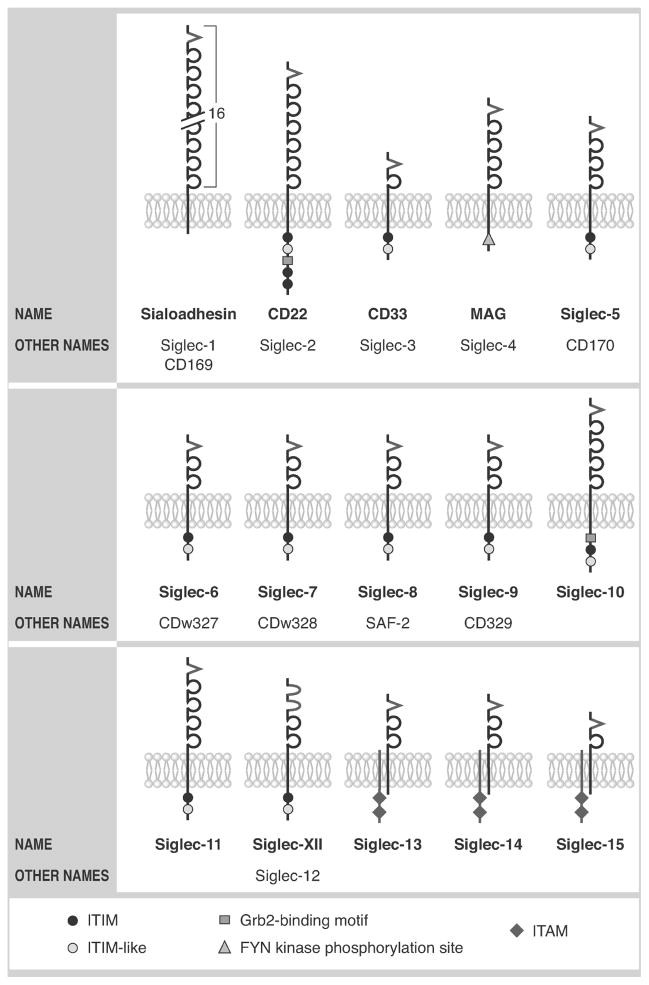
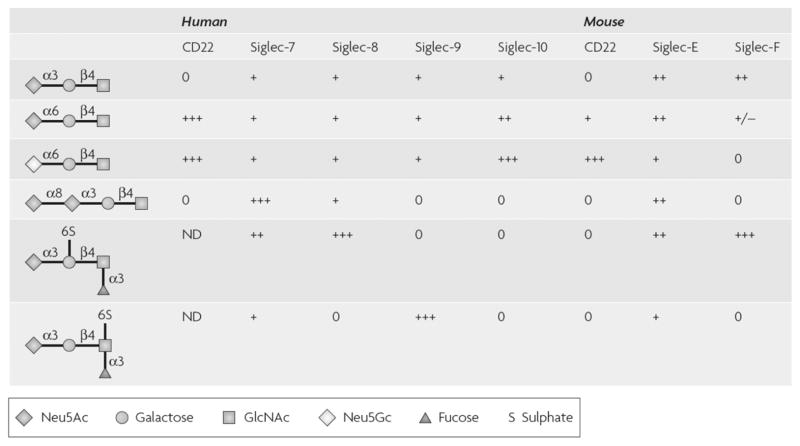
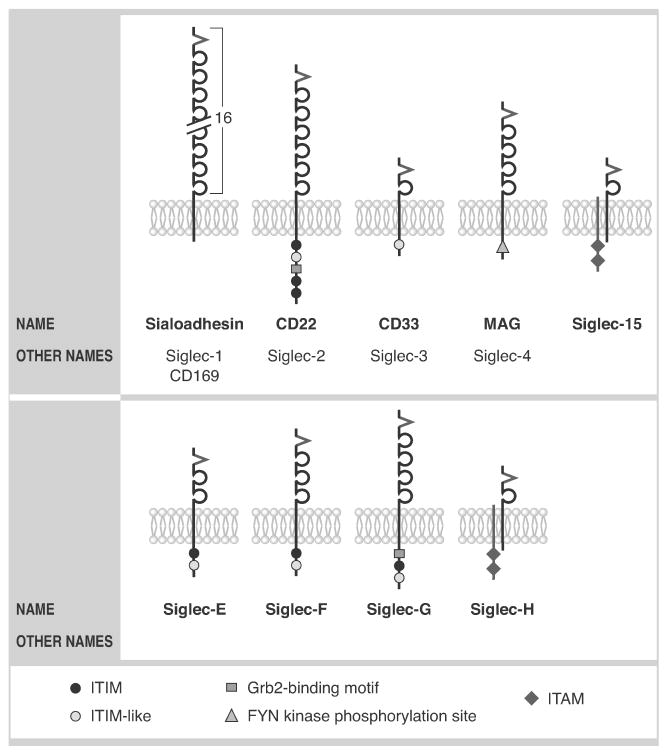
Siglecs are cell-surface proteins found primarily on hematopoietic cells. By definition, they are members of the immunoglobulin gene super-family and bind sialic acid. Most contain cytoplasmic tyrosine motifs implicated in cell signaling. This review will first summarize characteristics common and unique to Siglecs, followed by a discussion of each human Siglec in numerical order, mentioning in turn its closest murine ortholog or paralog. Each section will describe its pattern of cellular expression, latest known immune functions, ligands, and signaling pathways, with the focus being predominantly on CD33-related Siglecs. Potential clinical and therapeutic implications of each Siglec will also be covered.
唾液酸结合免疫球蛋白样凝集素(Siglecs)是主要存在于造血细胞表面的蛋白质。根据定义,它们是免疫球蛋白基因超家族的成员,能结合唾液酸。大多数含有与细胞信号传导有关的细胞质酪氨酸基序。本综述首先将总结Siglecs的共同特征和独特特征,然后按数字顺序依次讨论每个人类Siglec,并提及与其最接近的小鼠直系同源物或旁系同源物。每个部分将描述其细胞表达模式、最新已知的免疫功能、配体和信号通路,重点主要放在与CD33相关的Siglecs上。还将涵盖每个Siglec潜在的临床和治疗意义。